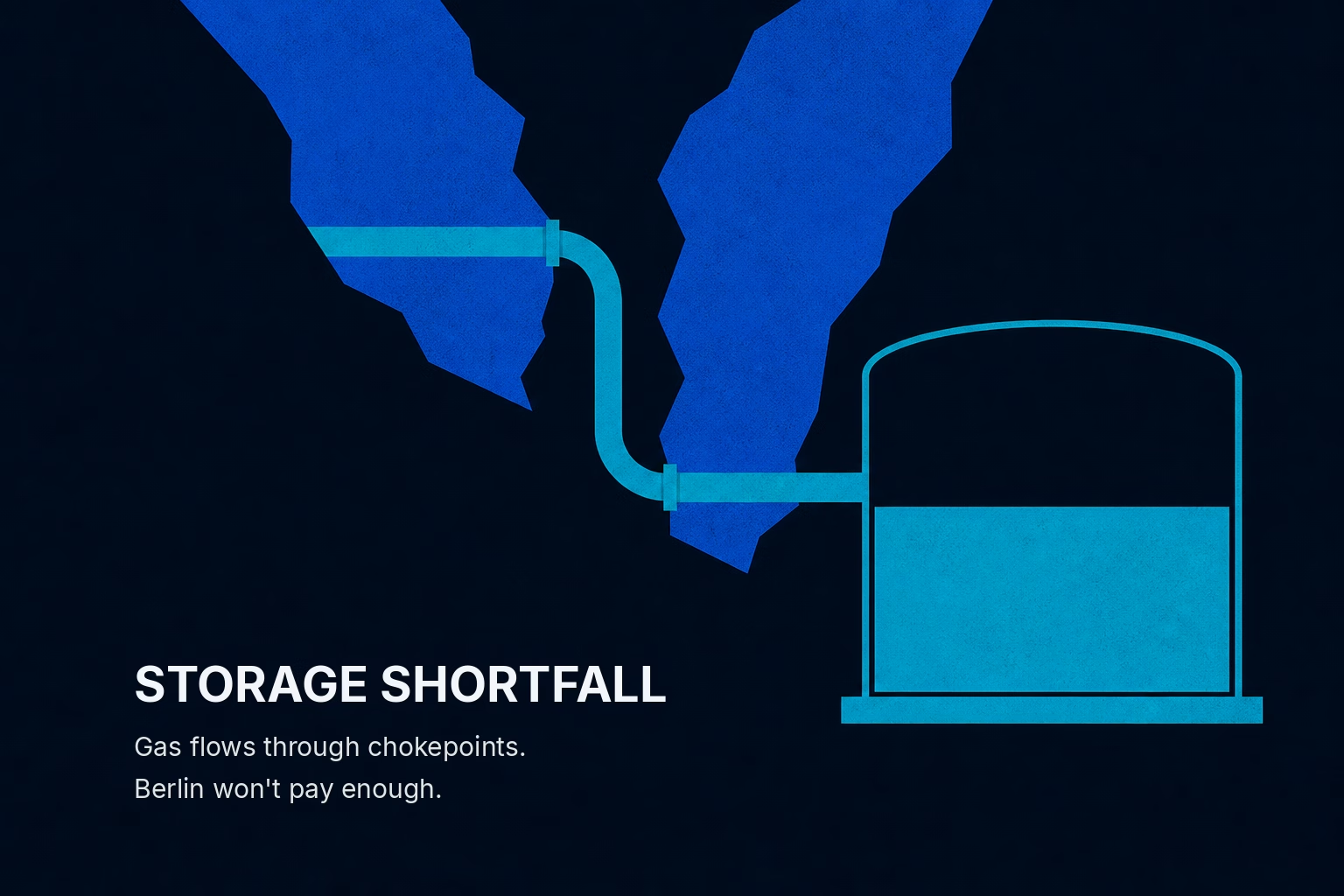
Germany is not short of gas because of the cold. It is short of gas because it has lost a bidding war it refuses to admit it is fighting. That is the me...
Germany is not short of gas because of the cold. It is short of gas because it has lost a bidding war it refuses to admit it is fighting. That is the mechanism worth understanding, and it is the one place the popular framing gets it backwards. The winter narrative treats a mild season as salvation and a harsh one as catastrophe, as though weather were the independent variable. It is not. Weather sets the size of the demand call. Price sets whether Europe wins the cargoes to meet it. This winter, the second lever has slipped out of Berlin's hands, and no amount of favorable temperature fixes a structural inability to outbid Asia for marginal LNG.
The Marginal Cargo Sets the Price, and Germany No Longer Wins It
Start with the number that reframes everything: European buyers are paying more than ten times the US Henry Hub price for gas at the Dutch TTF benchmark, and still losing auctions for incremental LNG cargoes to more aggressive Asian bidders. Hold those two facts together, because their combination is the entire thesis. A ten-times premium that fails to secure supply is not a pricing signal that the market is well-supplied at a high clearing level. It is a signal that the clearing price is being set somewhere else, by someone willing to pay more, and that Europe is the residual buyer taking what is left after Asia has bought first.
This is the part intuition gets wrong. Most observers read a high European gas price as evidence of scarcity that will, at some price, call forth supply. In a normally functioning global LNG market that would be true. But LNG is not a commodity that flows to the highest posted price instantly; it flows to the buyer who commits, on the right terms, to the specific vessel already at sea or the specific liquefaction slot months out. When Asian utilities bid more aggressively for those physical cargoes, the TTF benchmark can rise indefinitely without a single additional molecule arriving in Wilhelmshaven. Price and volume decouple. Germany can afford to look rich on the screen and go cold in the pipe.
Why Hormuz Became a German Problem
The catalyst that tightened the screw was not made in Berlin. The closure of the Strait of Hormuz and the indefinite loss of Qatar's LNG export volumes removed a large, reliable slice of globally traded gas from the pool that Asian and European buyers draw from. Qatar is not a swing supplier Europe can replace with a phone call. When its cargoes come off the market, every remaining cargo becomes more contested, and the buyers with the deepest structural need and the fewest alternatives bid hardest. Asian demand, backstopped by long-term contracts and utilities that pass fuel costs through to captive ratepayers, is precisely that kind of buyer.
Merz did not close the strait. He does not own the war that closed it. What he owns is the response, and the response was inaction. As it became clear that European leaders would not implement emergency measures to prepare for winter, front-month TTF drifted steadily higher. The decision to roll the dice on the weather is a decision, not a default. It is the choice to treat a structural supply shock as a temporary weather bet, and it is the specific error the 2021 to 2022 crisis was supposed to have taught European policymakers to never repeat.
Storage Is a Rate Problem, Not a Level Problem
The instinct when assessing gas security is to check the storage gauge: how full are the tanks going into winter. That level matters, but it is the wrong primary variable this year. The variable that binds is the refill rate, and the refill rate is a function of whether Germany can win cargoes at a price it is politically able to pay through the drawdown season.
A storage stack is not a fixed reservoir you deplete in a straight line. It is a buffer you draw down on cold days and, critically, top back up on mild days and shoulder weeks, provided the marginal cargo is available and affordable. Sever that refill mechanism and the buffer stops behaving like a cushion and starts behaving like a countdown. If every cargo lost to an Asian bidder is a cargo that does not refill the German buffer, then a level that looks adequate in November can become a genuine emergency by February, not because demand spiked but because the tank never got refilled between cold spells. This is why the same starting inventory can produce a calm winter or a crisis depending entirely on the bidding dynamic that sits underneath it. Germany has walked into the drawdown season with the refill lever compromised.
Where the Argument Could Be Wrong
The honest countercase is that weather still matters enormously, and a genuinely mild winter would let the existing buffer stretch far enough that the refill problem never becomes acute. If demand stays low, the drawdown is shallow, and even a compromised refill rate is sufficient to limp to spring. That is a real path, and it is the path European leaders are betting on. The thesis here is not that a crisis is certain; it is that policy has made the outcome dependent on a variable no one controls, which is a different and worse position than being prepared regardless of weather.
The second counterargument is that high prices eventually do pull supply. US export capacity is expanding, and over a long enough horizon more liquefaction comes online and the marginal-cargo squeeze eases. True, but the relevant horizon is this winter, and new capacity commissioning in 2026 or later does nothing for a February 2025 auction lost to Asia. The mechanism operates on a timescale that structural supply growth cannot answer.
To ground the price stakes concretely rather than lean on a proxy, 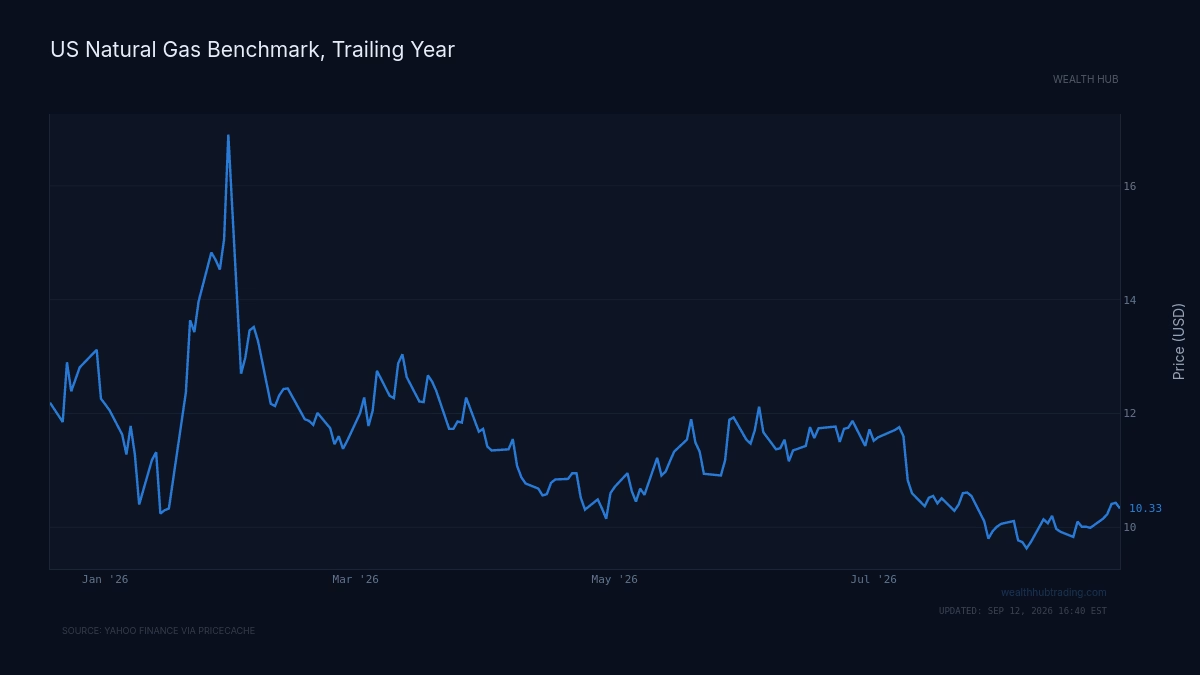
The Condition That Confirms or Breaks the Read
Watch the refill, not the thermometer. The observable that confirms this thesis is a period of mild weather during which German and broader EU storage fails to recover meaningfully, because cargoes that should be topping up the buffer are being lost to Asian bidders at auction. If storage climbs on mild days, the bidding constraint has loosened and the weather bet is working. If storage stays flat or keeps drawing down even when demand eases, the mechanism described here is binding, and the political question stops being whether Merz survives the winter and becomes whether the government survives the heating bills.
The thesis breaks the moment Europe starts winning marginal cargoes again at a price it can sustain, whether because Qatari volumes return, Asian demand softens, or new capacity arrives early. Until one of those changes, a ten-times premium that still loses the auction is the cleaner reading of the evidence than any story that puts the weather in charge.