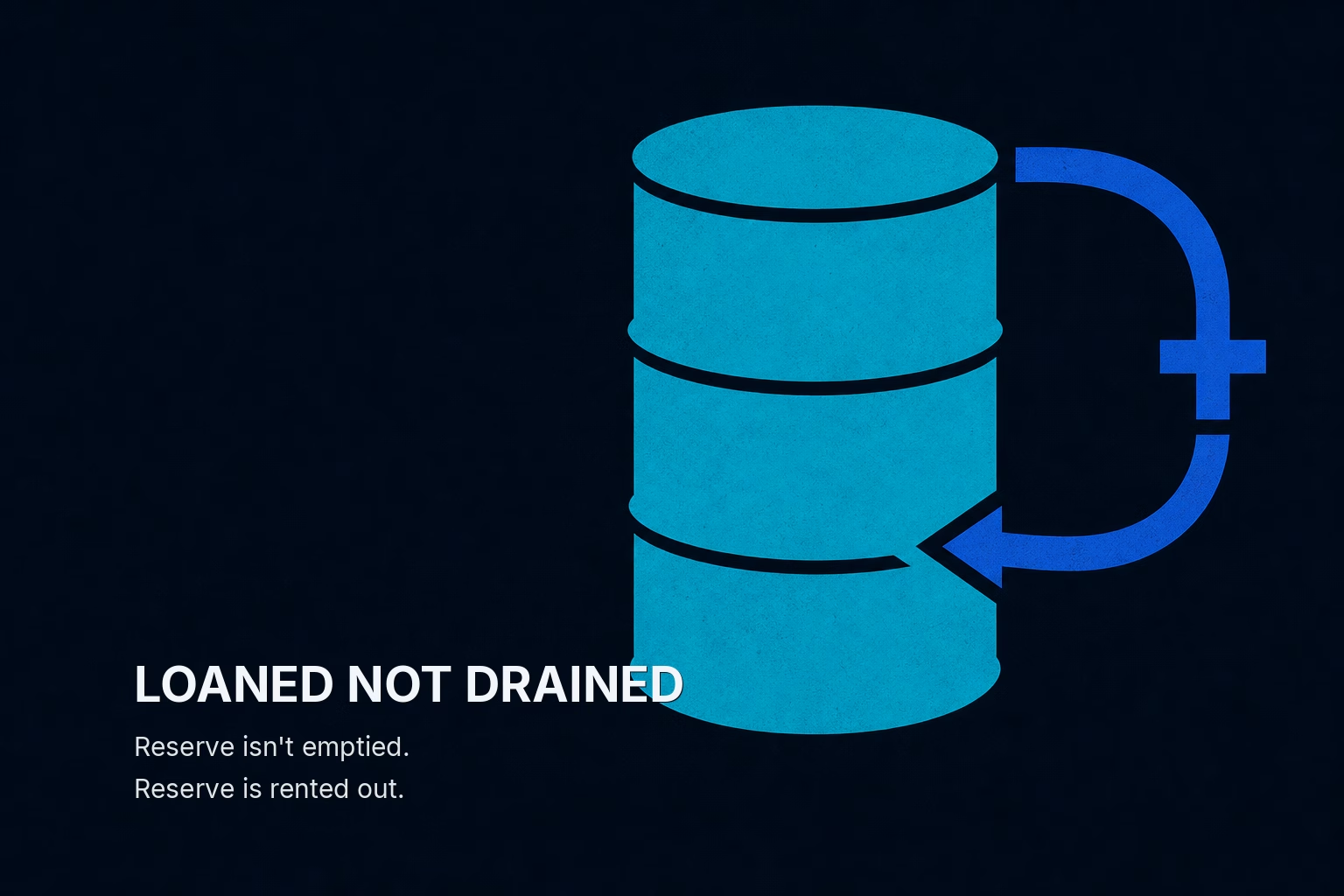
The most quoted claim about the Strategic Petroleum Reserve right now is also the most confused: that the United States sold its energy insurance policy into an Iran oil shock and is running the tank toward zero. The mechanism actually in motion is the opposite. The Department of Energy is refilling the SPR without spending a dollar, using an oil exchange program that functions as a physical calendar spread, and the premiums it collects are booked in barrels rather than cash. Understand that one structural feature and three-quarters of the current SPR panic dissolves.
What a Molecular Loan Actually Is
Strip away the political framing and the exchange program is a simple lending arrangement denominated in oil. A refiner or trader borrows physical crude from the reserve today, uses it to meet demand during a supply squeeze, and contracts to return the original volume later, plus interest paid as additional barrels. Energy Secretary Chris Wright has described premiums running as high as 24%, with roughly 35 to 40 million barrels of extra oil expected back over this year and next in the form of those premiums.
The reason this matters is procedural as much as financial. An outright sale of SPR crude generates cash, and cash flowing back to the Treasury generally invites congressional oversight of how it is used. An exchange moves molecules out and molecules back with no cash leg, which sidesteps that appropriations question entirely. Wright is not liquidating the reserve the way his predecessor Jennifer Granholm did during the 2022 release. He is running a lending book against it.
Framing it as a calendar spread is the cleanest way to see the economics. In a normal spread, a trader is long the near-dated leg and short the far-dated leg, capturing the difference when the curve is in backwardation. The SPR is effectively short crude today (barrels leave the reserve) and long crude at a future date (barrels come back, plus premium). When near-term prices spike, as they did during the disruption, the reserve gets paid for supplying liquidity into the panic and is repaid in a market where the acute stress has passed. The 24% premium is the compensation for bearing that timing risk. It is not a giveaway; it is the price of scarcity, collected in kind.
Why "Running on Empty" Misreads the Ledger
The commentary treating the SPR as a tank approaching its operational floor is measuring the wrong thing. A drawdown that will be repaid with interest is not a depletion; it is an open position with a positive expected return, denominated in the exact asset the reserve exists to hold. The barrels are not gone. They are out on loan.
There is a genuine operational floor below which the SPR cannot pump crude at rated rates, and it is fair to ask how close inventories sit to it. But the exchange structure changes the trajectory. Instead of a one-way sale that permanently lowers the level and requires a future cash appropriation to refill, the program builds in its own repayment schedule. The reserve is contractually set to receive more oil than it lent. That is the difference between spending down an insurance policy and writing a covered position against it.
The tell in the loudest version of this argument is that its proponents appear to want the breakdown they forecast. A prediction that the economy collapses once the SPR hits some mythical bottom only pays off if the collapse arrives. When the analysis and the desired outcome point the same direction, the analysis deserves extra scrutiny, not deference.
The Pump-Price Confusion and the Canadian Crude Knot
Two related errors travel alongside the SPR panic, and both come from treating the US oil complex as a single undifferentiated barrel.
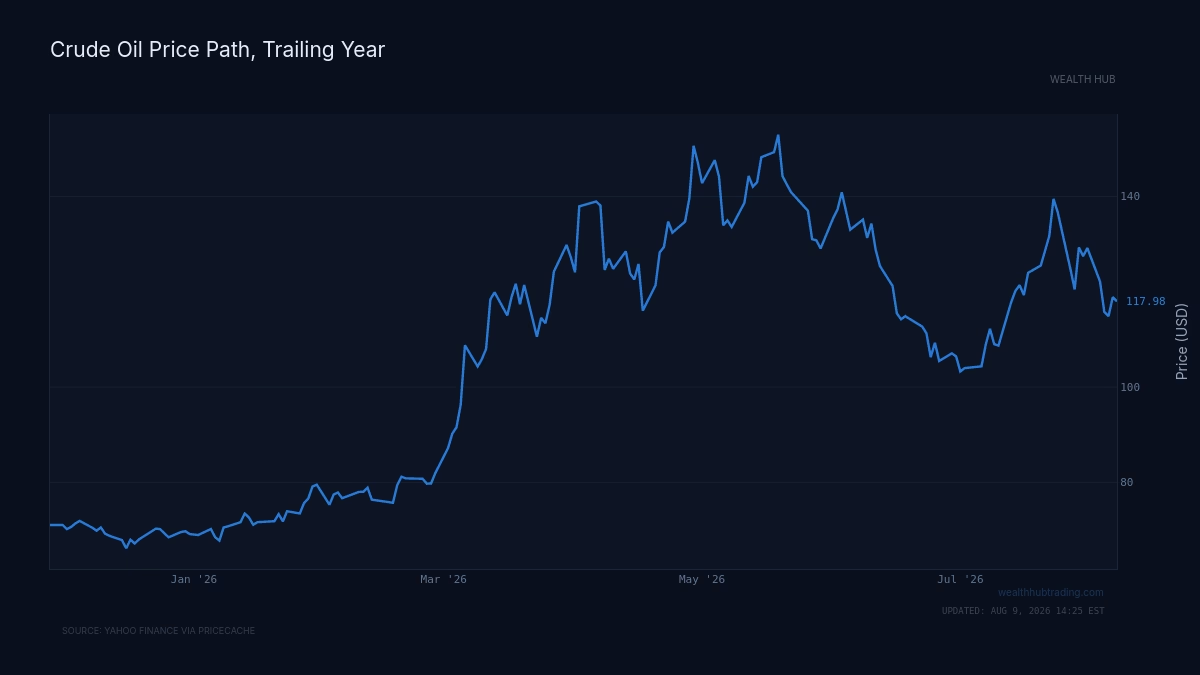
The first is the assumption that a rising national average at the pump maps cleanly onto a domestic supply shortfall. Retail gasoline prices are set at the end of a long chain that runs through global crude benchmarks, refinery margins, regional logistics, seasonal blend requirements, and taxes. A geopolitical shock that lifts the international price of crude raises the input cost for refiners regardless of how much oil sits in Texas or the SPR. Blaming the pump on reserve levels confuses one small input with the whole cost stack.
The second is the persistent misunderstanding of the relationship between US and Canadian production. The two are not competitors racing to fill the same barrel; they are complements bound by the physical design of the US refining system. A large share of the American refining colossus, particularly on the Gulf Coast and in the Midwest, was engineered to process heavy, sour crude. Canadian oil sands output is precisely that grade. Domestic shale, by contrast, is overwhelmingly light and sweet. The country produces enormous volumes of the wrong kind of crude for much of its own refining base, which is why heavy Canadian barrels flow south even as US production sets records. Treating Canadian imports as a sign of American weakness inverts the actual engineering. The imports are a feature of a refining fleet optimized for a slate the domestic wellhead does not supply.
Venezuela as the Other Half of the Supply Strategy
The exchange program does not sit in isolation. It runs alongside a quieter effort to rebuild heavy-crude supply from Venezuela, whose output has climbed materially. Venezuelan oil exports surpassed 1 million barrels per day for a third consecutive month in July, up from roughly half that level as recently as December. Venezuelan crude is heavy and sour, the same grade the Gulf Coast refiners are built to run and the same grade Canada supplies from the north.
Read together, the SPR lending book and the Venezuelan ramp are two levers on the same problem: keeping the correct grade of crude flowing to a refining system that cannot run cheaply on domestic shale alone. The strategy is coherent in a way the barrel-counting critique cannot see, because the critique never distinguishes light from heavy in the first place.
The Fact That Would Break the Read
The optimistic reading depends on repayment. An exchange is only superior to a sale if the borrowed barrels actually come back with their premiums intact. The thesis breaks if borrowers default on their oil obligations, if the return schedule slips materially, or if a fresh price spike makes returning physical crude uneconomic enough that counterparties walk. A calendar spread that never settles is just a sale dressed in better language.
There is also the disbursement question hanging over the Venezuelan side, where how the proceeds of a revitalized energy sector get distributed remains unresolved and politically fraught. That is a real overhang, and it is honest to leave it open rather than wave it away.
The observable condition to watch is the return leg. If the 35 to 40 million barrels of premium oil arrive on the schedule Wright has described, the exchange will have done exactly what it was designed to do: supply liquidity into a shock and get repaid in kind for the service. If those barrels do not show up, the critics counting an empty tank will have been right for the wrong reason. Until the repayment slips, the reserve is not being drained. It is being lent.