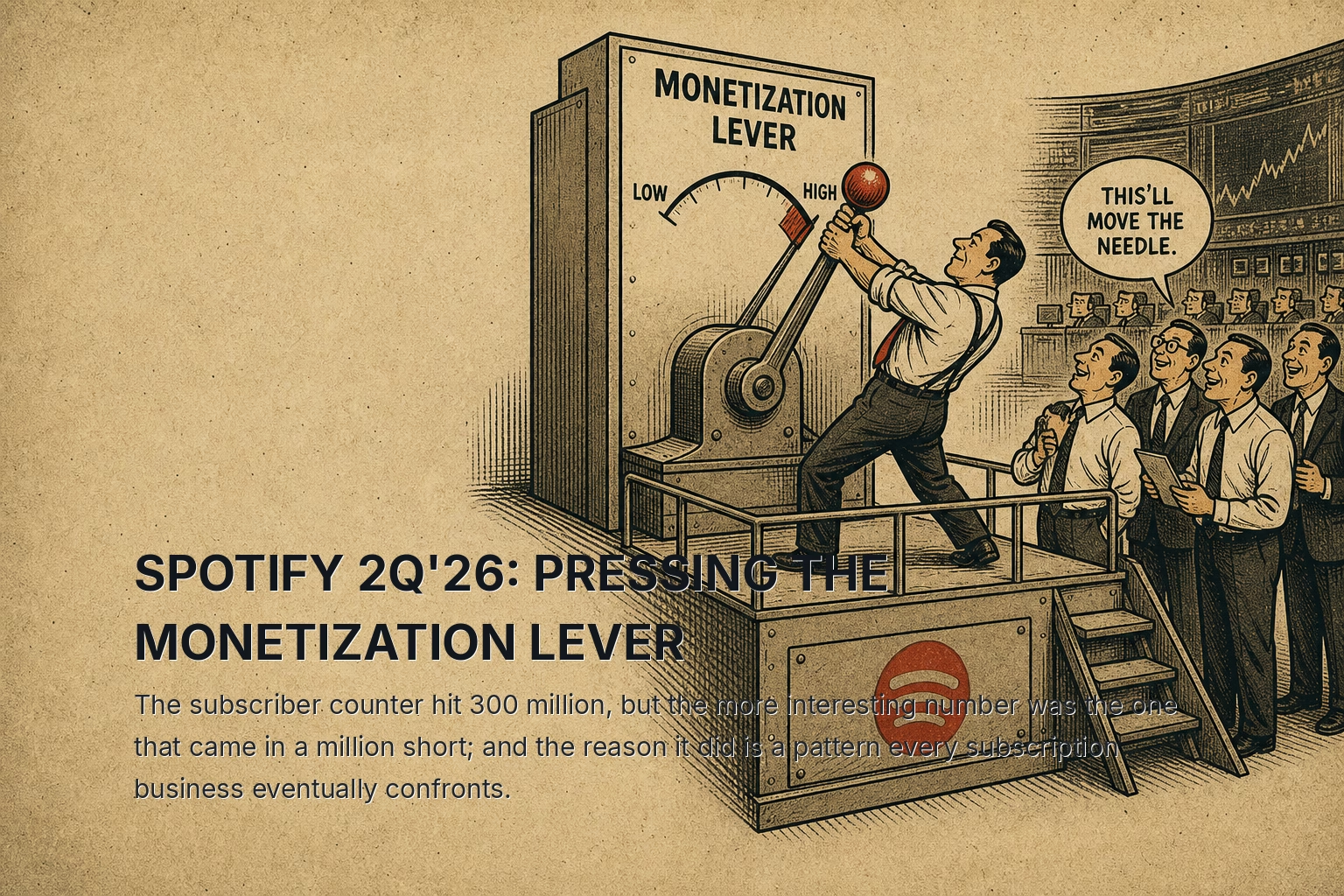
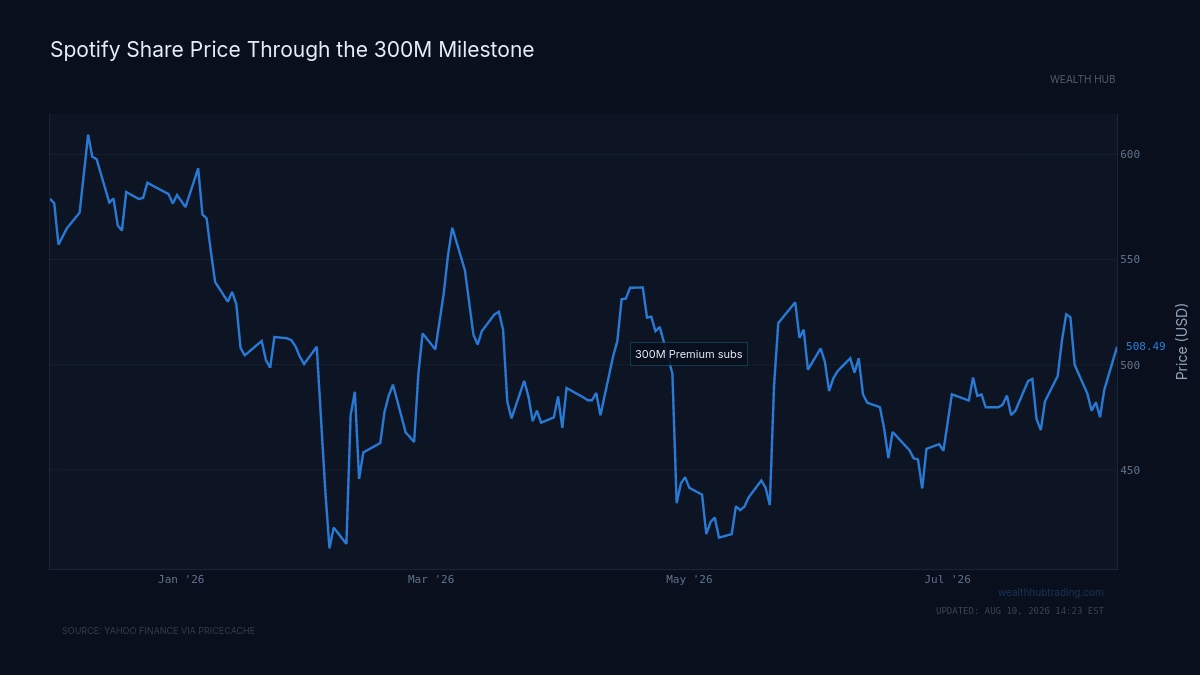
When Spotify reported its second quarter of fiscal 2026, the headline wrote itself. Three hundred million people now pay for Premium. The company that spent more than a decade dragging itself from zero to its first hundred million subscribers had just added the third hundred million in roughly fourteen quarters, faster than the fifteen and a half quarters the second hundred million required. On any dashboard built to celebrate growth, the arrow pointed up and to the right.
But the number that mattered was buried one line down. Monthly active users came in a million below management's own guide. And Spotify's leadership, rather than treating that miss as an accident to explain away, framed it as a choice they had made on purpose.
That framing is the whole story. A company deliberately admitting fewer people to the top of its funnel, in emerging markets, by adding friction to its free product, is not reporting a stumble. It is announcing a phase change. And phase changes of this exact kind have a history.
The scene: a funnel that grew wider than it grew deep
To understand why a million missing users is more significant than a hundred million paying ones, you have to look at what happened to Spotify between 2022 and 2023. Incremental monthly-active-user growth accelerated noticeably in that window. The free top of the funnel got wider, and it got wider faster than the paying base underneath it grew. Premium subscribers advanced on a steadier line.
The arithmetic of that divergence is unforgiving. When the free audience expands faster than the paying one, the conversion rate falls. More people are listening for nothing, and a smaller share of them are becoming customers. For a while this looks like triumph, because the absolute paid number keeps climbing and the free number provides an ever-larger reservoir of future conversions. The story management tells itself is that the funnel is filling.
The story the funnel actually tells is that the plumbing is loosening. A wide top with a slow drip through the middle is not a machine for making money; it is a machine for making an audience. Spotify built an enormous audience. What it did in the second quarter of 2026 was signal that it now intends to make money instead, and it is willing to shrink the audience number to do it.
From the call, management was explicit that the friction was intentional: they described adjusting product optimization and ad load in select emerging markets, deliberately increasing friction in the free service to drive higher conversion and revenue later. They conceded it would show up in the third-quarter user count. They argued it was worth it.
The pattern: when a platform stops selling reach and starts selling conversion
This move belongs to a structural pattern that recurs across subscription and platform businesses whenever the cost of the free tier finally outruns its option value. The pattern is not about music. It is about the moment a company decides that a marginal free user is no longer an asset in waiting but a cost to be either converted or shed.
Consider Netflix in the years around 2022. For most of its history, the company optimized for subscriber additions and treated everything, including password sharing, as tolerable friction against the greater goal of growth. Then subscriber growth stalled, the stock fell hard in the spring of 2022, and management reversed a decade of doctrine. It cracked down on shared passwords and introduced an ad-supported tier. Both moves added friction for the free rider and both were framed, correctly, as monetization rather than growth. The subscriber-addition line wobbled. Average revenue per member and, eventually, the share price recovered. The lesson participants drew afterward was that the years of unpriced sharing had been a deferred monetization decision all along, and the company was finally collecting.
Consider Twitter, and then LinkedIn, and then any number of freemium consumer products that spent their early lives measuring success in registered accounts and then, at a specific and identifiable moment, switched to measuring it in paying accounts. The registered-account number frequently went sideways or down at that switch. Observers who read the sideways line as weakness usually misread it. What was actually happening was a company draining the part of its user base that had never been going to pay and could no longer be carried for free.
The rhyme with Spotify is close. In each case the sequence is the same: a long period of top-of-funnel expansion, a falling conversion rate that the growth number conceals, a strategic decision to add friction, and a deliberately weaker user count in the following period. The friction is the tell. A company that adds friction to its own free product is not defending against a problem; it is harvesting an opportunity it decided was ready.
The turn, and the one way this time is not the same
Here is where the analogy needs a caveat, and it is the caveat that matters most for reading the quarter.
Netflix's password crackdown operated on established, high-income markets where the willingness to pay was already demonstrated and merely being evaded. The friction converted people who could afford the product and had simply avoided buying it. That is the easiest kind of conversion there is, and the revenue showed up quickly.
Spotify is running the same play in emerging markets, and management itself flagged the difference. The free-to-paid conversion cycle in emerging markets, they said, grows differently than in established ones. This is a polite way of saying that the reservoir of free users in those geographies is not a reservoir of people who can obviously afford Premium and are dodging the fee. It is a reservoir of people for whom the price itself is the barrier, not the friction. Adding friction to a free tier in a market where the paid tier is genuinely expensive relative to incomes does not reliably convert users. It can simply lose them.
That is the one way this time is not the same. Netflix added friction where the money was already sitting behind a behavioral wall. Spotify is adding friction where the wall may be a price wall, and price walls do not fall to product optimization and ad load. The company is betting that the emerging-market opportunity is vast and that friction plus time equals conversion. The historical pattern supports the direction of the bet. The geography introduces a variable the prior episodes did not have to solve.
The consequence to watch, and the structural lesson
Management pre-announced that the third-quarter user count will reflect this friction. That means the market is being handed, in advance, a weaker headline number and asked to interpret it correctly. The interpretation that reads the falling user count as deterioration will be the wrong one. The interpretation that reads it as the deliberate cost of a monetization phase will be closer to right. But the interpretation that assumes the emerging-market conversion will behave like a developed-market conversion is the one most likely to overpay for the outcome, because the price-wall problem is real and unresolved.
The structural lesson sits above the specific numbers. When a platform that has spent years widening its funnel suddenly starts narrowing it on purpose, the audience metric stops being a growth signal and becomes a monetization signal, and the two point in opposite directions during the transition. A company in this phase looks like it is slowing down precisely when it has decided to start earning. The falling user line is the smoke; the rising conversion intent is the fire.
We can note that the pattern rewards patience differently depending on the terrain. In markets where willingness to pay is established, the harvest follows the friction quickly and the analogy to Netflix holds. In markets where the barrier is price rather than habit, the friction may thin the top of the funnel without deepening the paid base, and the vast opportunity management describes stays a step further away than the confidence on the call implies.
Three hundred million is the number that made the headline. The million that went missing is the number that tells you which phase Spotify has entered. The company has stopped selling reach and started selling conversion. Whether the emerging-market funnel converts the way the developed-market funnels did is the question the milestone conceals, and it is the only question the next several quarters will actually answer.