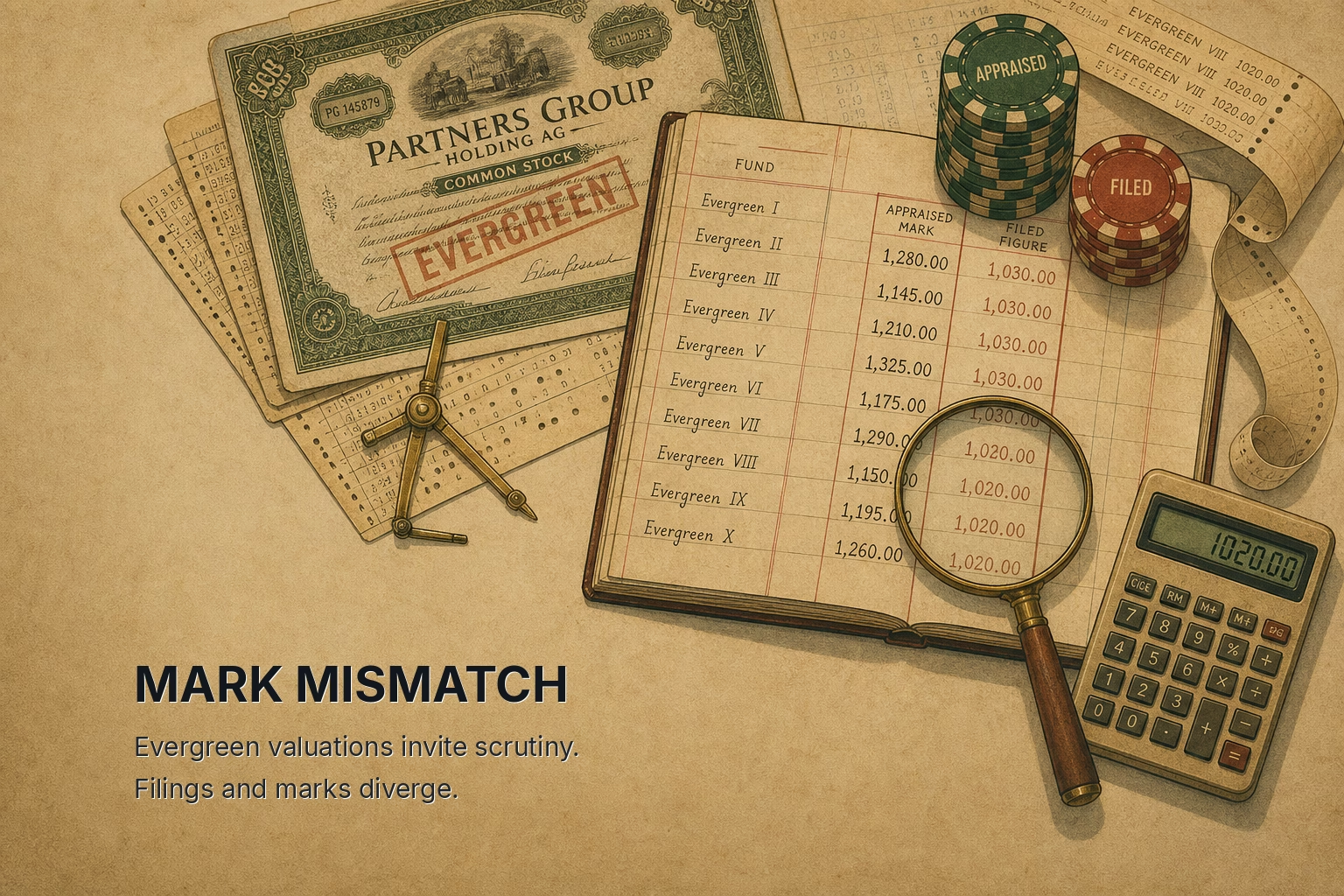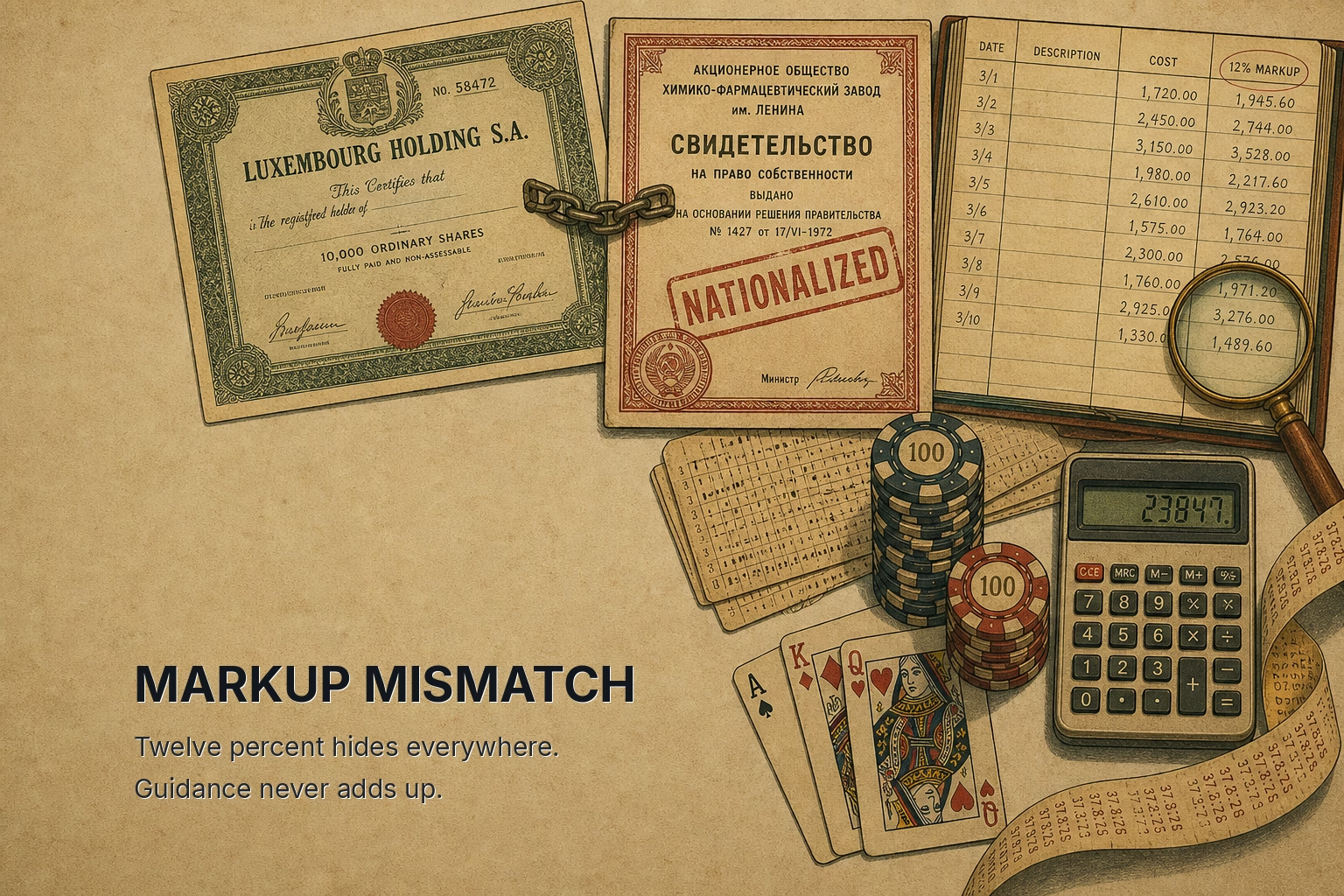
The number that should not exist is a 12% markup on Ciddan S.à r.l. recorded in the same window that Russia moved to seize the asset at the bottom of Ciddan's ownership chain. That is the disclosure the market is not pricing, and it sits in plain filings rather than in any guidance deck.
Partners Group Private Equity (Master Fund), LLC, the firm's flagship US-investor vehicle, carries a Russian pharmaceutical exposure that is forensically traceable through a documented Luxembourg structure. The chain runs Master Fund to Ciddan S.à r.l. to Nidda Topco to Nidda Midco to Nidda Lynx to JSC Nizhpharm, one of the larger domestic pharmaceutical manufacturers in Russia. None of this requires inference. Each link is a filing.
What the Filings Actually Say
The Master Fund acquired Ciddan S.à r.l. in September 2017 in two tranches: preferred equity at a cost of $27.82 million and common equity at $14.67 million. Ciddan's 2024 annual accounts, filed with the Luxembourg Registre de Commerce et des Sociétés, show that as of December 31, 2024, Ciddan held 49.78% of Nidda Topco S.à r.l., 50% of Nidda Manco GP GmbH, and 17.9% of Nidda Beteiligungs GmbH & Co KG.
Follow the chain down. Nidda Topco's 2024 accounts disclose 99.51% ownership of Nidda Midco S.à r.l. Nidda Midco owns, in full, four entities, among them Nidda German Topco GmbH, Nidda Lynx S.à r.l., Stada Arzneimittel B.V., and Nidda Finco S.à r.l. Nidda Lynx's 2024 accounts, filed before the April 2025 decree, stated 100% ownership of JSC Nizhny Novgorod Chemical-Pharmaceutical Plant, or JSC Nizhpharm.
The operating spine of the group is German, not Russian. Stada Arzneimittel AG is the principal asset. Nizhpharm was the group's Russian operation, a subsidiary several layers below the vehicle that US investors actually hold. That distance is precisely why the exposure has stayed off the radar. It is also why the accounting mechanics matter more than the headline.
Why a Minority Stake Still Takes the Full Hit
Ciddan's 49.78% position in Nidda Topco is a minority interest, not a control stake. On its face, that sounds like a reason to discount the Nizhpharm loss. The opposite is true, and the reason is consolidation.
Nidda Topco's consolidated accounts absorb every subsidiary beneath it: Nidda Midco at 99.51%, Nidda Lynx at 100% of Midco's chain, and Nizhpharm at 100% of Lynx. Ciddan's Master Fund position is carried at fair value reflecting its proportionate share of Nidda Topco's consolidated net assets. When the Russian state transferred Nizhpharm out of that structure, it impaired Nidda Topco's consolidated net assets directly. Through Ciddan's 49.78% slice, that impairment flows proportionately into the Master Fund's carried value. Minority ownership does not dilute the mechanism; it only sets the fraction.
So the state seizure of Nizhpharm is not a remote geopolitical footnote to a US private-equity fund. It is a direct impairment event to the consolidated net assets that anchor the Master Fund's fair-value mark.
The Markup the Valuation Designee Cannot Reconcile
Here is the tension. During the exact reporting window in which the Russian decree removed Nizhpharm, Partners Group recorded a 12% markup on Ciddan. To hold that mark, the Valuation Designee has to lean on one of three assumptions.
None of these has been publicly disclosed. None is obviously supportable from the public record. A nationalization decree is not customarily treated as reversible in fair-value work. Nizhpharm's scale as a large domestic Russian manufacturer argues against immateriality. And if Stada strength is the offset, that is a claim the firm could make explicitly and has not. A markup is a positive assertion about value; here it runs against a documented loss of an asset, in the same period, with no stated reconciliation.
The Strongest Case Against the Read
The counterargument deserves a fair hearing, because it is not weak.
Stada Arzneimittel AG is a substantial German generics and consumer-health business, and it is entirely possible that its performance genuinely appreciated over the window by more than enough to swamp the loss of a single Russian subsidiary. Nizhpharm, for all its domestic scale, may have been a small share of Nidda Topco's total consolidated enterprise value. If both are true, a net 12% markup is defensible and the appearance of contradiction dissolves. Private assets are also marked on models that legitimately incorporate forward assumptions the public filings will not show line by line, and a lag between an April 2025 decree and its full reflection in a fair-value mark is not by itself evidence of mismarking.
That is the honest version of the bull case. What it needs, and what is missing, is disclosure. The firm has not published the Stada offset, the Nizhpharm materiality weighting, or a reversibility view. The read here does not assert the mark is wrong. It asserts that the mark is currently unexplained against a specific, dated, adverse event that the same chain of filings documents.
What Would Settle It
The thesis resolves on one observable: a disclosed reconciliation of the Ciddan mark to the Nizhpharm transfer. If Partners Group states, in a form investors can test, that the Stada business appreciated enough to offset the Russian loss, or that Nizhpharm was immaterial to Nidda Topco's consolidated value, the 12% markup stands and this becomes a story about disclosure timing rather than valuation. Absent that, the burden sits with the mark, not with the skeptic.
For context on why the accounting distance between a US-investor vehicle and a nationalized foreign subsidiary is easy to miss, the chart below tracks a liquid materials-sector proxy over the trailing year; it is a reference for how a single-asset event can be structurally submerged in a diversified carrying value, not a claim about Partners Group's own securities, which do not trade in the US.
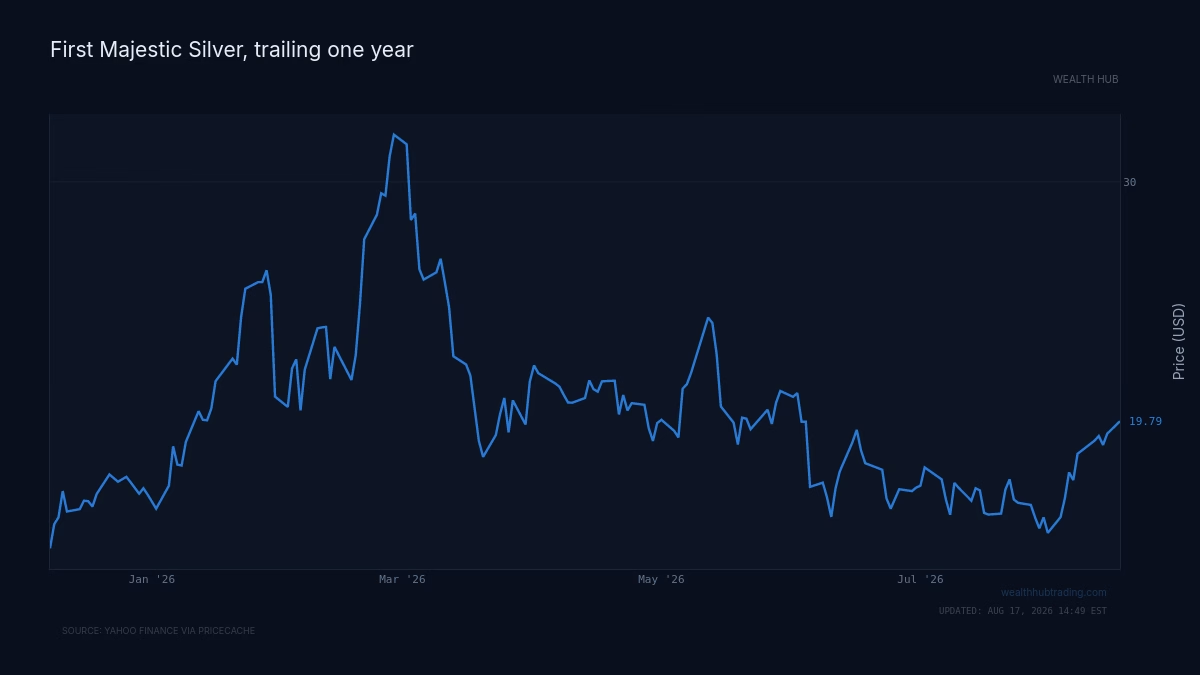
AG over the thesis window.
The watch condition is narrow and testable: the next Ciddan or Nidda Topco filing that either books the Nizhpharm impairment or names the offset. Until one of those appears in the record, a 12% markup recorded over a nationalization is the cleanest anomaly in the chain, and it is the one an informed holder of the Master Fund should be asking the firm to explain.