A new high-yield bond is almost never priced at its fair value; it is priced a little cheap on purpose, and the size of that discount is one of the most honest readings of credit risk appetite you can get.
A cruise line with no revenue, priced in a week
In the first days of April 2020, Carnival Corporation had no paying passengers, ships parked offshore, and a cash burn that was obvious to every credit analyst on Earth. It sold $4 billion of first-priority senior secured notes due 2023 at an 11.5% coupon, backed by its fleet. For a large, well-known issuer with hard collateral, that coupon was extraordinary. It was closer to what a distressed borrower pays than to what an established company with its own ships pays.
Most coverage at the time focused on the obvious point: Carnival paid a punitive rate because it was in trouble. That is true but incomplete. The 11.5% was not a calculation of Carnival's default probability. It was the yield at which a market that had been almost completely shut for weeks agreed to absorb $4 billion of paper at once. The Federal Reserve had announced corporate credit facilities on March 23, but direct support for high-yield instruments only arrived on April 9, after the deal had priced. Buyers were being asked to commit size before the backstop existed, and they charged for it.
That distinction is the whole mechanism of the high-yield primary market. A new issue is priced to clear: to guarantee that the full amount sells on the day the issuer needs it. Fair value is a secondary concern. The gap between the two is a fee, and in April 2020 the fee was enormous because the risk of a failed deal was enormous. The practical lesson from Carnival is to read the coupon on a stressed deal as a price on execution risk in the whole market, not only as a verdict on the issuer.
How a deal gets talked down
Every syndicated high-yield deal follows a recognizable pricing ritual. The bookrunners, the investment banks managing the sale, open with initial price talk (IPT), a yield range such as "high 7s." Over a day or a few days of investor meetings they collect orders into the book, the running tally of how much each account wants and at what level. As orders build, the banks issue guidance, a narrower level such as "7.50% area," and then the final terms, perhaps 7.375%.
The direction almost always runs one way. Talk starts wide and tightens. A deal that prices at the tight end of guidance, or through it, is described as a success. A deal that prices at the wide end, or "wide of talk," is a warning. A deal that gets upsized, meaning the issuer sells more bonds than originally planned, signals that demand exceeded supply at the final yield.
This ritual is not theatre for its own sake. Starting wide is a deliberate design choice. Opening at a level where demand is certain to exist lets the banks discover the clearing price from above, cutting yield as long as orders hold. Opening at fair value would risk a book that stalls, and a stalled book is public information that damages the issuer's existing bonds and the banks' reputation. The asymmetry is stark: tightening from a generous start looks like strength, while widening from a tight start looks like failure, even if the final yield ends up identical.
What this means for you is that the final yield on its own tells you little. The path from talk to final, and whether the deal was upsized, carries more information than the coupon.
The concession, measured
The discount built into a new issue has a name. The new-issue concession is the extra yield a new bond offers over where the issuer's existing bonds already trade, adjusted for maturity.
New-issue concession = new-issue yield - fair-value yield from the issuer's existing curve
Here is how it works with numbers. Suppose an issuer has outstanding bonds maturing in 2031 that trade at a 7.00% yield, and the curve suggests a bond maturing a year later should yield about 7.125%. The new 2032 bond prices at 7.375%.
Concession = 7.375% - 7.125% = 0.25%, or 25 basis points.
Now translate that into the after-market move. A bond's price sensitivity to yield is captured by duration, roughly the percentage price change for a one-point change in yield.
Price change ≈ -duration × change in yield
If the new bond has a duration of about 5.5 and trades in the secondary market down to its fair value of 7.125%, the yield falls 0.25 points:
Price change ≈ -5.5 × (-0.25%) = +1.375%
A bond issued at 100 trades to roughly 101.4. An account allocated $20 million of face value books a gain of about $275,000 on day one without doing anything except showing up. That is the after-market pop, and in a normal market it is the expected outcome, not a lucky one.
The concession explains why new-issue allocations are fought over. For a fund that participates in every deal, the pop is a repeatable source of return. For you as a reader of the market, the size of the concession is a measurable quantity: when concessions shrink to zero, buyers are giving up their fee to get bonds.
Why the market pays a fee for certainty
The concession exists because three parties with different incentives meet in the same transaction, and each one is better off with a deal that clears than with one priced perfectly.
The issuer usually needs the money for a specific purpose on a specific date: refinancing a maturity, funding an acquisition, closing a leveraged buyout. Missing that date can cost far more than an extra 25 basis points. Twenty-five basis points on a $1 billion seven-year bond costs about $2.5 million a year. A failed refinancing can mean a default or a collapsed merger. Paying a modest concession is cheap insurance, and a rational treasurer buys it.
The underwriters earn a fee, typically a small percentage of the deal size, and carry reputational risk. A broken deal, one that trades below issue price soon after pricing, makes the next issuer less likely to hire them and makes accounts more cautious about their next book. Banks therefore prefer a deal that prices slightly cheap and trades up.
The buyers, high-yield mutual funds, insurers, ETFs, and multi-strategy credit desks, are being asked to take a large block of a single credit at one moment, often with limited time to do their analysis. In the secondary market they could buy the same exposure slowly. The concession compensates them for absorbing size fast and for committing capital before the price is confirmed.
What turns this into a stable system is that it is a repeated game. The syndicate desk allocates bonds, and accounts that supported difficult deals tend to get better allocations on hot ones. The concession becomes a loyalty payment that keeps a reliable buyer base available for the days when the market is fragile.
The mechanism breaks when one party's need overwhelms the others' patience. Carnival needed cash more than buyers needed bonds, so the fee rose sharply. In a euphoric market the reverse happens: buyers need bonds more than issuers need cash, and concessions compress or turn negative. What this means for you is that the concession is a live readout of who needs whom more.
Where the coverage number lies
Deal headlines love oversubscription. A book "five times covered" sounds like overwhelming demand. Often it is partly a fiction created by the allocation process itself.
Accounts know hot deals get scaled back. If a fund wants $20 million and expects to receive a quarter of its order, it puts in for $80 million. Other funds do the same. The resulting book is inflated by the expectation of rationing, and the coverage ratio measures that expectation as much as real demand. When the deal tightens and some accounts drop out at the lower yield, the "real" book can shrink quickly, which is why bookrunners sometimes disclose a large book early and say less later.
The after-market pop has its own measurement problem. Day-one trading in a new bond can be thin, and early prints reflect accounts that missed their allocation chasing a few million bonds. A two-point pop on light volume can fade within a week.
The reliable variables are the ones that are harder to game: where the final yield landed relative to talk, whether the deal was upsized or downsized, the concession against the existing curve, and whether the bond holds its gain after the first few sessions. What this means for you is to discount headline coverage ratios and weight price action and terms changes instead.
When the machine jams
The primary market's discipline depends on banks being able to walk away from a deal that will not clear. When they cannot, the mechanism inverts.
In 2022, banks had committed to finance several large leveraged buyouts, including Elon Musk's purchase of Twitter and the take-private of Citrix, at terms agreed before rates and spreads moved sharply against them. These were committed financings: the banks had promised to fund regardless of market conditions. When buyers would no longer take the debt at the agreed terms, the banks were left holding it, a situation the market calls a hung deal. Debt they could not sell at par had to be held or sold later at steep discounts, with the banks absorbing the loss.
Hung deals are a failure mode for two reasons. First, they remove the release valve: a committed deal cannot be pulled, so the pricing signal gets replaced by a balance-sheet problem inside the banks. Second, a backlog of unsold debt weighs on the whole calendar, because accounts know more supply is waiting and will not pay up for new paper until it clears.
The 2020 episode carries a different distortion. Once a central bank signals it will buy the asset class, concessions compress for reasons unrelated to private risk appetite. Reading tight pricing in mid-2020 as pure optimism would have missed that the Fed had changed the payoff for every buyer. What this means for you is to ask whether the clearing price reflects private demand or a backstop before treating it as a sentiment signal.
Reading the calendar as a risk gauge
The practical value of understanding this machinery is that the primary market reports risk appetite in real time, through decisions people make with money on the line.
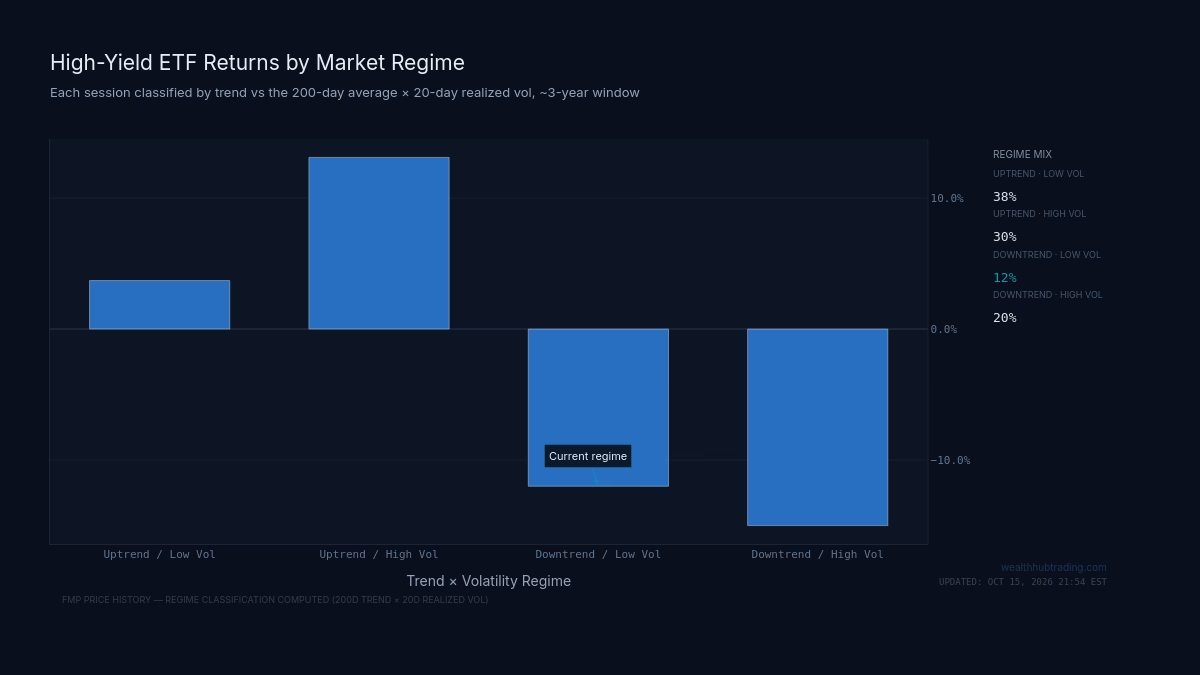
In a confident market, deals price through talk, concessions shrink toward zero, lower-rated issuers (CCC-rated borrowers, the riskiest tier) get deals done, covenants loosen, and opportunistic "drive-by" deals launch and price within a single session. In a nervous market, talk tightens less or not at all, concessions widen, CCC issuers disappear from the calendar, and deals get pulled, postponed with language about "market conditions." Pulled deals often cluster before secondary spreads fully reflect the stress, because a postponement is a binary admission that the clearing price was unacceptable to the issuer.
The mechanism in one sentence: new high-yield bonds are priced to sell completely, and the fee the issuer pays for that certainty rises and falls with how badly the market needs bonds versus how badly issuers need cash. Track the concession and the count of pulled deals, not the coverage ratios, and you are reading the same tape the syndicate desks read.