The crash-callers have the mood right and the mechanism wrong, and the gap between those two things is where the money is. Everyone is scarred.
The crash-callers have the mood right and the mechanism wrong, and the gap between those two things is where the money is.
Everyone is scarred. That much the consensus has earned honestly. A generation of investors learned in 2006 through 2009 that housing does not correct gently; it convulses. The reflex to see the next collapse in every rate hike is not stupidity. It is memory. And memory is a terrible position sizer.
The part consensus misses is that a headline about housing gets ten to a hundred times the engagement when it prophesies ruin, and the operators inside the ecosystem, the people signing the contracts and running the credit, have been saying something entirely different into the void. Nobody clicks on a builder's earnings call. So nobody hears it. The auction of attention has decoupled from the auction of houses.
Why does the crash story travel so much faster than the data?
Because fear is a better product than nuance, and the platforms sell products.
A post that says the housing market will fall harder than 2008 requires no argument. It borrows one, fully formed, from the last catastrophe. The reader supplies the emotion; the poster supplies only the trigger. That is a frictionless transaction and it compounds at ten to a hundred times the reach of anything that says "here is what the builders reported." Galbraith observed in A Short History of Financial Euphoria how quickly the financial memory resets and how completely the crowd reassembles the last trauma onto the next unrelated event. The 2006 template is doing that work now, laid over a market that shares almost none of its plumbing.
The 2006 bust was a credit-quality event. Subprime origination, teaser resets, no-doc loans, borrowers who could not have qualified at any honest rate. The house was the collateral, but the fraud was in the paper. What is being priced today is a rate shock, not a credit shock. Those two things break in opposite ways, and the crowd is fighting the last one.
What are the operators actually disclosing?
Balance-sheet strength that would have been unthinkable in the last cycle, in their own filed language, on the record.
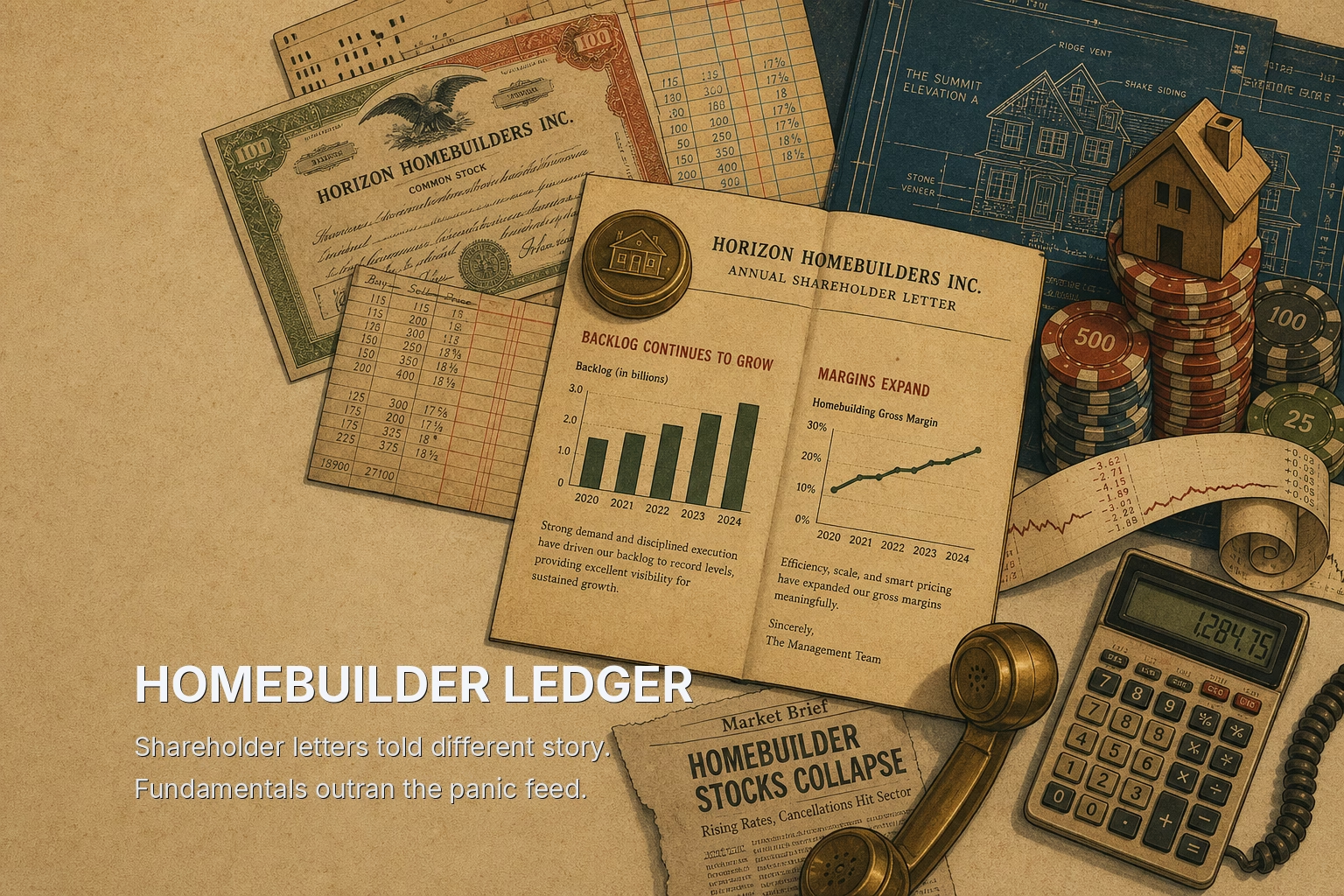
Taylor Morrison told its shareholders on April 27th that cancellation rates were near all-time lows around 6% last quarter. Average credit scores in the backlog were near all-time highs at 752. Average down payments ran 24%, higher than a year earlier on a larger loan amount. Read that down-payment figure twice. A borrower putting a quarter down is not the 2006 borrower. The 2006 borrower was the collateral trap; this borrower is the buffer.
Then the observation that undoes the crash thesis in a single sentence. Taylor Morrison estimated its first-quarter conventional borrowers could have qualified at a rate nearly 650 basis points higher than the one they actually got. Eighty-two percent of the backlog carried that kind of cushion. The whole bear argument rests on the idea that higher rates disqualify the buyer. The builder's own credit files say the buyer already qualified with room to spare. The rate did not break the borrower. It only made the headline.
Century Communities, same day, described the ordinary mechanics of a supply-starved market: homes selling before completion, price increases every month of the quarter, no pushback on price. Their own words: "We've really seen no pushback on pricing." They added the discipline consensus never quotes, that if the market turned they would adjust how they price and sell, but they had not reached that point yet. That is not denial. That is an operator watching his order book in real time and telling you what it says.
Is this just management talking its book?
Of course they are talking their book. The question is whether the book is checkable, and this one is.
A soft demand comment is cheap. A cancellation rate is not; it is a filed number that reverses on the next call if the operator lied. Credit scores and down-payment percentages in backlog are auditable disclosures, not vibes. When a builder says demand is resilient, discount it. When a builder discloses a 752 average FICO and a 24% average down payment against a specific quarter, that is a receipt, and receipts do not care about your priors.
There is a genuine limit worth naming. These are April 2022 calls, the early innings of the rate shock, and the survey work Taylor Morrison cited, where only single-digit percentages of 1,500 buyers said they would abandon the search on affordability, measures intent, not behavior. Intent decays. I never want to claim a snapshot of demand is a forecast of demand. What I will claim is narrower and firmer: the loss mechanism that produced 2008, the leveraged, unqualified borrower defaulting into a supply glut, is not present in these files. A rate-driven slowdown in transaction volume is a different animal from a credit-driven cascade in prices. The bears have merged the two.
What does the historical pattern actually rhyme with?
Not 2006. The nearer analog is the 2018 rate scare, and the builders themselves drew the line.
Taylor Morrison noted that when rates rose in 2018, shoppers were twice as likely to say they would abandon the search than they were in early 2022. Same asset class, same rising-rate trigger, materially more determined buyer this time. The fastest Fed tightening in four decades, the 2022 inflation shock that peaked CPI near 9% and drove a roughly 425-basis-point hike cycle, is a real and violent macro event. It knocked equities down about 20% that year and handed long-duration bonds their worst losses in decades. But the transmission into housing runs through affordability and transaction volume, not through a wave of underwater subprime paper hitting the courts.
Macro regimes shift slowly until they do not, and the honest position is defensive about timing. The most likely path here is not a crash and not a melt-up; it is compression of transaction volume and a grinding standoff between locked-in existing owners and a structural shortage of inventory. That is the base case, and it is the least clickable outcome imaginable, which is precisely why the feed will not carry it. A crash is one outcome among several, and on the disclosed credit quality it is the minority one the crowd has adopted as its default.
Where does the money sit if the read is right?
In the builders themselves, and in the recognition that the trade is the boredom.
The instruments most exposed to this thesis resolving are the homebuilder equities and their baskets: the sector ETFs ITB and XHB, and operators like D.R. Horton whose order books are the disclosures this argument rests on. 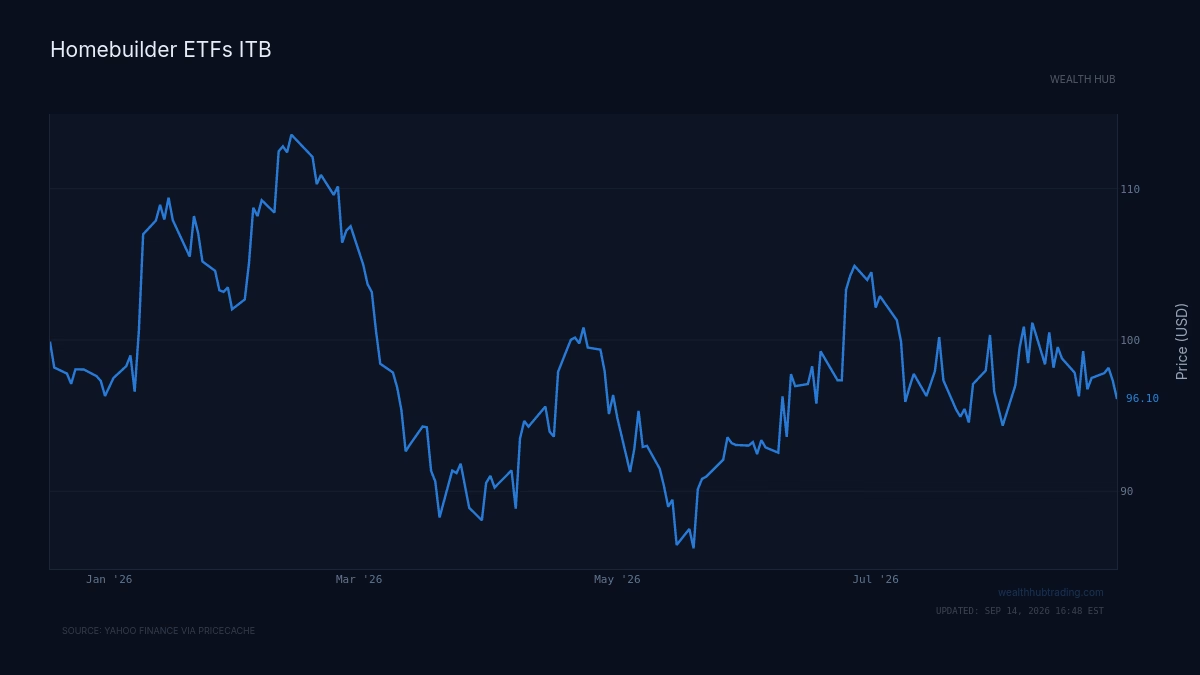
Watch the mortgage rate, the NAHB builder-sentiment index, and existing-home sales for the moment the operators' language actually turns. Century told you exactly what to watch for: the point at which price pushback appears. Until then, the crash is a story with enormous reach and a shrinking evidentiary base.
The buyers already qualified. The bears are trading a bust that lives in the archive, not in the files.