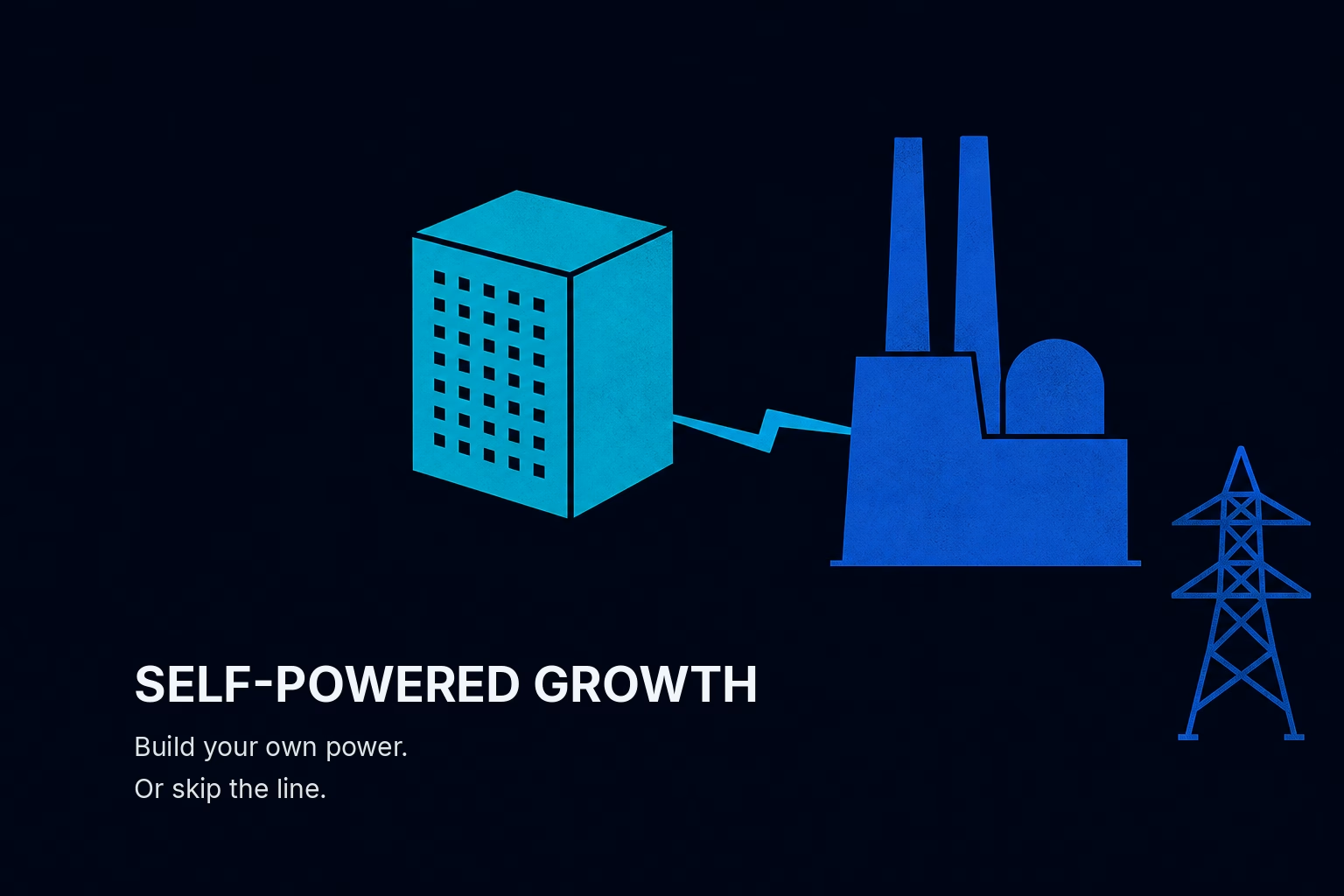
Every boom produces its Zapata. That was the oil and fish-oil holding company that announced in the late 1990s it would remake itself as an internet business. This boom has produced a cooling-equipment maker priced like a hyperscaler supplier, and a drivetrain company whose friends now ask, without irony, whether it is a data center company. Their names are Modine Manufacturing (MOD) and BorgWarner (BWA).
Modine's collapse on November 4 is being read as an earnings miss. It was not. The miss was the receipt. The repricing had already happened, and it was a repricing of which business the company owned.
Herb Greenberg red-flagged Modine on May 6, framing it as an industrial cooling company that turned itself into a data center pure play at arguably exactly the wrong time. By the morning of November 4 the stock had already lost half its value since that report. Then Modine missed expectations, guided lower, and tumbled roughly another 25% at its lows as the data center trade it had hitched itself to kept unwinding.
The sequence matters more than the size. Half the value left before management changed a single word of guidance. The market priced the unwind first. The company confirmed it last.
What did the market think it was buying?
The market thought it was buying exposure to the most durable capital-spending theme in a generation, at an industrial's price, with an industrial's management discipline attached. That is a seductive package. A company with decades of heat-transfer engineering, a real installed base and real manufacturing capacity points at the fastest-growing end market in the economy, and the stock re-rates from a cyclical multiple toward a growth multiple.
Consensus had the destination right. Data centers need cooling, and the thermal load per rack has risen sharply as accelerated computing has spread. Somebody has to build the chillers, the coolant distribution units and the air handlers. The demand was never fictional.
The part consensus misses is that the re-rating was not paid on the demand. It was paid on the mix. Every quarter that data center revenue grew as a share of the total, the market applied a higher multiple to the entire enterprise, including the legacy pieces that had not changed at all. The stock price became a bet that the mix would keep shifting in one direction, at one speed, indefinitely.
Mix is a ratio. Ratios have two ways to disappoint. The data center line can slow, or the market can simply decide the line deserves a lower multiple than it was granted. Modine got the second before it got the first.
A narrative multiple is a loan, and the market calls it before the earnings do.
Where does the data center dollar actually come from?
It comes from very few hands. That is the mechanism the headline numbers obscure.
A diversified industrial sells into thousands of customers across dozens of end markets. Its cycle is the economy's cycle, smoothed by breadth. A data center supplier sells, directly or through contractors and colocation developers, into a spending pool controlled by a handful of hyperscalers and the developers building on their behalf. When the pivot succeeds, the company has not added a growth business to a diversified base. It has swapped breadth for concentration and called the swap a strategy.
Concentrated demand behaves differently. It arrives in projects, not orders. It is timed to construction schedules the supplier does not control and power availability the supplier cannot see. A project that slips one quarter does not show up as softer demand. It shows up as a hole. And when the supplier has built capacity ahead of those projects (which is what a company does when it believes the mix will keep shifting), the hole lands on a larger fixed-cost base. Absorption falls, margins compress, and the guidance cut arrives with the vocabulary every analyst should learn to hear: timing, pushouts, digestion, lumpiness.
I don't know precisely how concentrated Modine's data center book is this quarter. We have not reviewed the segment-level detail behind the November 4 print, and I will not guess at a number. What I do know is where to look. The annual filing's risk factors and customer-concentration disclosure, the segment backlog, and the capital-spending line in the cash flow statement tell you three things the press release does not: how many buyers matter, how much of the "growth" is committed versus hoped-for, and how much fixed cost was laid down in anticipation. Guidance language tells you what management wants you to believe about the next two quarters. The filings tell you how exposed the company is if management is wrong.
The pivot did not diversify Modine into growth. It concentrated Modine into somebody else's capex cycle.
Why does the unwind cut twice?
Because the narrative inflates two things at once, and the reversal deflates both.
The first is the multiple. When the market believed Modine was becoming a data center company, it paid up for every dollar of earnings, legacy and new alike. When that belief cracked, the multiple compressed across the whole enterprise. That is the first leg, the half of the value lost between May and early November, and it happened largely on sentiment, positioning and the broader wobble in anything priced off data center enthusiasm.
The second is the earnings. A supplier that has leaned into concentrated, project-timed demand and built capacity to meet it will see earnings fall faster than revenue when projects slip. Lower volume across a higher fixed base is the arithmetic of operating leverage running in reverse. That is the second leg: the miss, the lower guide, the roughly 25% drop at the lows on November 4.
Multiply a lower multiple by lower earnings and the outcome is not additive. It compounds. A company that would have fallen modestly as a plain cyclical industrial in a soft patch falls hard as a former growth story, because it is losing the premium and the profits in the same breath.
There is a third, quieter cut. Companies that pursue a pure-play identity often trim or deemphasize the legacy businesses that once provided ballast. That ballast is precisely what a diversified industrial falls back on when one end market turns. Remove it in the name of focus and the company has bought a sharper upside at the price of a thinner floor. The source describes Modine as having turned itself into a pure play. The floor got thinner by design.
The pivot sold the ballast to buy the sail, and then the wind dropped.
Is BorgWarner the same trade?
Not the same trade. The same temptation.
Greenberg covered Borg-Warner in the early 1980s, when it was a drivetrain and powertrain company run by James Bere, eight chief executives ago and before the leveraged buyout that preceded its rebirth as a new public company. That history is the point of his double-take. A company whose identity for four decades has been the guts of the automobile is now being described, by people who presumably follow it, as a data center company.
The motive is easy to read. Auto suppliers have spent several years trapped between a combustion business they are told is dying and an electric-vehicle business that has arrived slower and less profitably than the plans assumed. A credible narrative escape is worth a great deal to the multiple of a company in that position. Data centers offer one. Power equipment, thermal management, electrification hardware: an auto supplier's engineering catalog can be pointed at a server hall with less effort than the market sometimes credits.
The source excerpt cuts off before detailing BorgWarner's data center products, revenue or backlog, so I will not characterize them. The honest framing is structural. For BorgWarner, any data center line is almost certainly a small piece of a large automotive business, which cuts in two directions. The downside from a data center unwind is smaller than Modine's, because the narrative has less of the enterprise riding on it. The danger is that a small line can still carry a large slice of the stock's re-rating, if the market has been paying a growth multiple on a sliver. That is the setup worth testing in the filings: what share of revenue, what share of backlog, how much is booked orders versus memoranda and pilots, and whether the capital spending to serve it is running ahead of the orders.
The friend's question is the tell, and it is a sentiment tell, not a fundamental one. When a company's data center identity is being discovered by casual acquaintances rather than by its income statement, the narrative is doing more work than the numbers. Whether BorgWarner's numbers eventually justify the story, I don't know. The distance between the story and the disclosure is the measurable thing, and that distance is where Modine's second leg came from.
What would have to be true for the pivot to work?
Three things, and they are worth stating plainly, because the pivot does sometimes work.
First, the supplier's data center demand would have to be broad enough that no single buyer's spending pause becomes the company's guidance cut. That requires either many customers or contracts with real minimums, and the customer-concentration disclosure answers it directly.
Second, capacity would have to follow orders rather than precede them. A company that builds to booked backlog carries far less operating-leverage risk than one that builds to a slide deck. The cash flow statement shows which kind of company you own: capital spending rising faster than the backlog that justifies it is the signature of building to belief.
Third, the legacy business would have to remain intact enough to serve as a floor. A pivot layered on a healthy base can survive a digestion phase. A pivot financed by selling the base cannot.
Charles Kindleberger described manias as beginning with a genuine displacement, a real new opportunity that draws capital, and then spreading outward as firms at the periphery reach for a piece of it. The displacement here is real. Accelerated computing has changed what data centers consume. The folly lives at the periphery, among the companies whose claim on the theme is a product that can be sold into a data center rather than a business that depends on one, and whose share prices were rewarded for the first as if it were the second.
Modine's path is the template for how the periphery unwinds. The narrative leaves first and takes the multiple with it. Management defends the guidance until the projects slip. The miss arrives after most of the damage, and is reported as the cause.
I don't know whether the broader data center spending cycle is cresting or merely pausing. Reasonable people on both sides of that question have been confidently wrong in both directions over the past two years, and the base case is probably neither a collapse nor a resumption at the old pace but a slower, choppier repricing of who deserves the premium. Nor do I need to know. A supplier whose economics depend on the cycle continuing at full speed is exposed in every outcome except the most generous one. Two of the three paths run against it.
The stocks most exposed to that repricing are the ones where the data center share of the narrative exceeds the data center share of the filings. Modine has already been marked to that gap. BorgWarner is the newer case, with less riding on it and less disclosed about it.

The lesson from the dot-com era was never that the internet was a fad. It was that the companies that changed their names and their pitch decks to match the boom were priced on the boom, and then priced on themselves.
Red flags matter most when nobody wants to read the filing that contains them.