In late October 2023, the yield on the 10-year Treasury note pushed toward 5%, its highest level since before the 2008 crisis. Commentators blamed the Federal Reserve, sticky inflation, and a resilient economy. Then, on November 1, the Treasury Department released its quarterly plan for how it would borrow money, and long yields fell sharply. The Fed had not met. Inflation data had not changed. What moved was a single administrative document that most investors had never read: the Quarterly Refunding Announcement, or QRA.
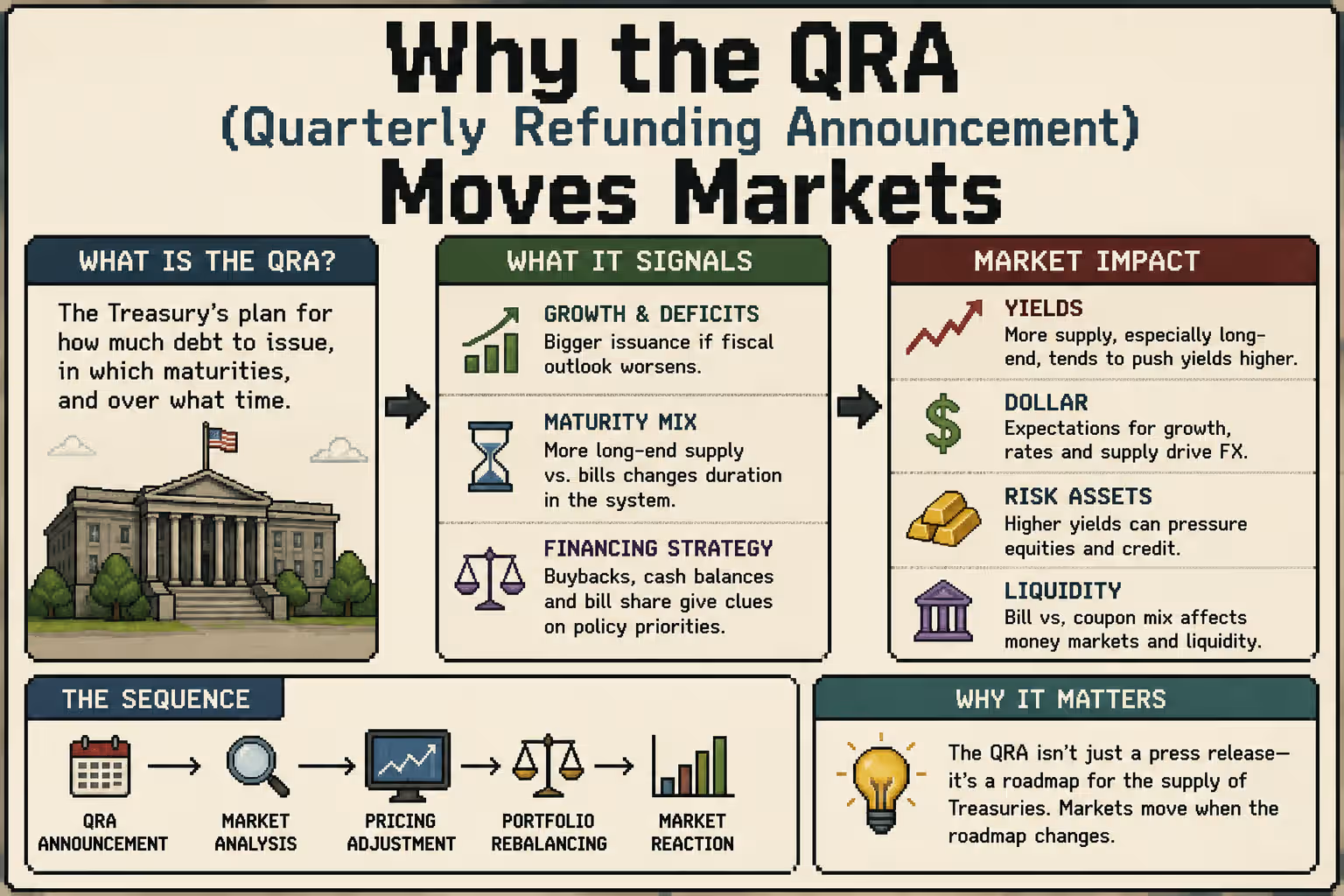
The QRA is the Treasury's statement of how much debt it intends to issue over the coming quarter and, critically, in which maturities. That second part is the one that matters most and the one intuition tends to skip. In November 2023, the Treasury said it would tilt its borrowing toward shorter-term bills rather than longer-term notes and bonds. The market that had been bracing for a flood of long-dated supply suddenly faced less of it. Yields dropped, and the autumn bond rout paused. This is the episode that made professionals start treating debt-management decisions as a genuine market driver rather than plumbing.
What the QRA actually decides
The federal government spends more than it collects in taxes, so it borrows the difference by selling Treasury securities. The total amount it needs to borrow in a given quarter is largely fixed by the budget deficit, which Congress and the economy have already determined. That total is not the interesting variable. The interesting variable is the maturity mix: how the Treasury splits its borrowing between short-term bills that mature in a year or less, and longer-term notes and bonds that mature in two to thirty years.
This distinction matters because different maturities draw on different pools of demand. Short-term bills are bought heavily by money market funds, which hold trillions in cash-like instruments and can absorb large volumes without much price concession. Long-term bonds must be bought by pension funds, insurers, foreign central banks, and leveraged investors, all of whom demand compensation for locking up capital for decades. When the Treasury issues more long-dated debt, it must attract that pickier, price-sensitive demand, and the way it attracts them is by offering a higher yield.
The practical takeaway is that the QRA is where the government decides how much duration the market has to absorb. Duration is a bond's sensitivity to interest-rate changes, and it is the property that makes long bonds risky to hold. Every quarter, the Treasury effectively sets the size of the duration bill the market must pay.
Why the mix moves yields more than the total
Here is the point where most intuition goes wrong. Investors instinctively focus on the headline deficit, the trillions of dollars the government owes. But the deficit is slow-moving and widely forecast, so markets have usually priced it in months ahead. The maturity mix, by contrast, is a live decision the Treasury makes every quarter, and it is not fully predictable.
Think of it through supply and demand for a specific good. The good in question is not "government debt" in the abstract, it is long-duration risk. There is only so much appetite among pension funds and insurers for locking in fixed payments over decades. When the Treasury increases the supply of that specific good, the price falls, which for a bond means the yield rises. When the Treasury reduces the supply by shifting toward bills, it relieves pressure on that pool of demand, and long yields fall even though total borrowing is unchanged.
This is why the QRA can move markets more than a Fed meeting on any given day. The Fed sets the very short end of the yield curve directly through its policy rate. But the long end, the 10-year and 30-year yields that price mortgages and corporate borrowing, is set by the balance of supply and demand for duration. The Fed influences that balance; the Treasury controls one side of it outright.
For a reader, the implication is direct. When you see long yields move without an obvious Fed or inflation catalyst, check whether a refunding announcement or a leaked preview of the issuance mix is the cause.
The mechanism, traced through the economy
Trace the chain from the announcement to the real economy, and the reason the QRA earns its market impact becomes concrete.
The Treasury signals a heavier tilt toward long-dated issuance. Dealers and investors recognize that more duration is coming to market than they had assumed. To be willing to hold it, they demand a higher yield, so long-term Treasury prices fall and yields rise. That rise does not stay in the Treasury market. The 10-year yield is the benchmark against which 30-year mortgages, investment-grade corporate bonds, and long-term project financing are priced. When it rises, mortgage rates rise, corporate borrowing costs rise, and the discount rate applied to future corporate earnings rises, which pressures equity valuations, especially for growth stocks whose value sits far in the future.
The 2023 episode ran this chain in reverse. The tilt toward bills reduced the expected supply of duration, long yields fell, and the relief spread outward. The stock market rallied hard into the end of the year, and mortgage rates eased off their peak. A financing decision inside one government department propagated into every asset priced off the long end of the curve.
The practical lesson is that the transmission is not theoretical. It moves through identifiable actors, dealers who must warehouse the supply, and long-horizon investors who set the clearing yield, each responding to a change in how much duration they are being asked to hold.
When the QRA does not move markets
The mechanism is real, but it is not a reliable lever you can trade on every quarter, and understanding when it fails is as important as understanding when it works.
Most refunding announcements pass without incident because they contain no surprise. The Treasury telegraphs its plans through advisory committees and gradual guidance, so by the time the document lands, the maturity mix is already expected and already priced. The 2023 reaction was large precisely because the market had positioned for heavy long-end supply and got the opposite. Surprise, not the announcement itself, is what moves yields.
The mechanism also weakens when another force dominates the demand side. If inflation is accelerating sharply or the Fed is aggressively tightening, those forces can swamp the supply signal entirely. Issuance-mix effects operate at the margin; they set the clearing yield when other drivers are roughly balanced, and they get overwhelmed when a larger macro shock is underway. Reading a QRA reaction into a market already convulsing over an inflation shock would be a misapplication of the mechanism.
Finally, the bills-versus-bonds tilt has limits. Funding the government too heavily with short-term bills raises rollover risk, because that debt must be refinanced constantly at whatever rate prevails. The Treasury cannot lean on the short end indefinitely without inviting criticism that it is managing yields for political convenience rather than funding the government prudently. The relief a bill-heavy QRA provides can reverse if the market concludes the mix is unsustainable.
What this means for reading the market
The QRA converts a purely administrative choice, how to split government borrowing across maturities, into a supply signal for long-duration risk, and that signal can move the long end of the yield curve as forcefully as monetary policy when it surprises. The deficit total is old news by the time it arrives; the maturity mix is the live variable.
For anyone trying to understand why long yields moved on a day with no Fed meeting and no inflation print, the refunding calendar belongs on the desk next to the FOMC schedule. Four times a year, the Treasury tells the market how much duration it must digest, and the market answers with a price. In 2023 that answer was loud enough to end a bond rout without a single word from the central bank.