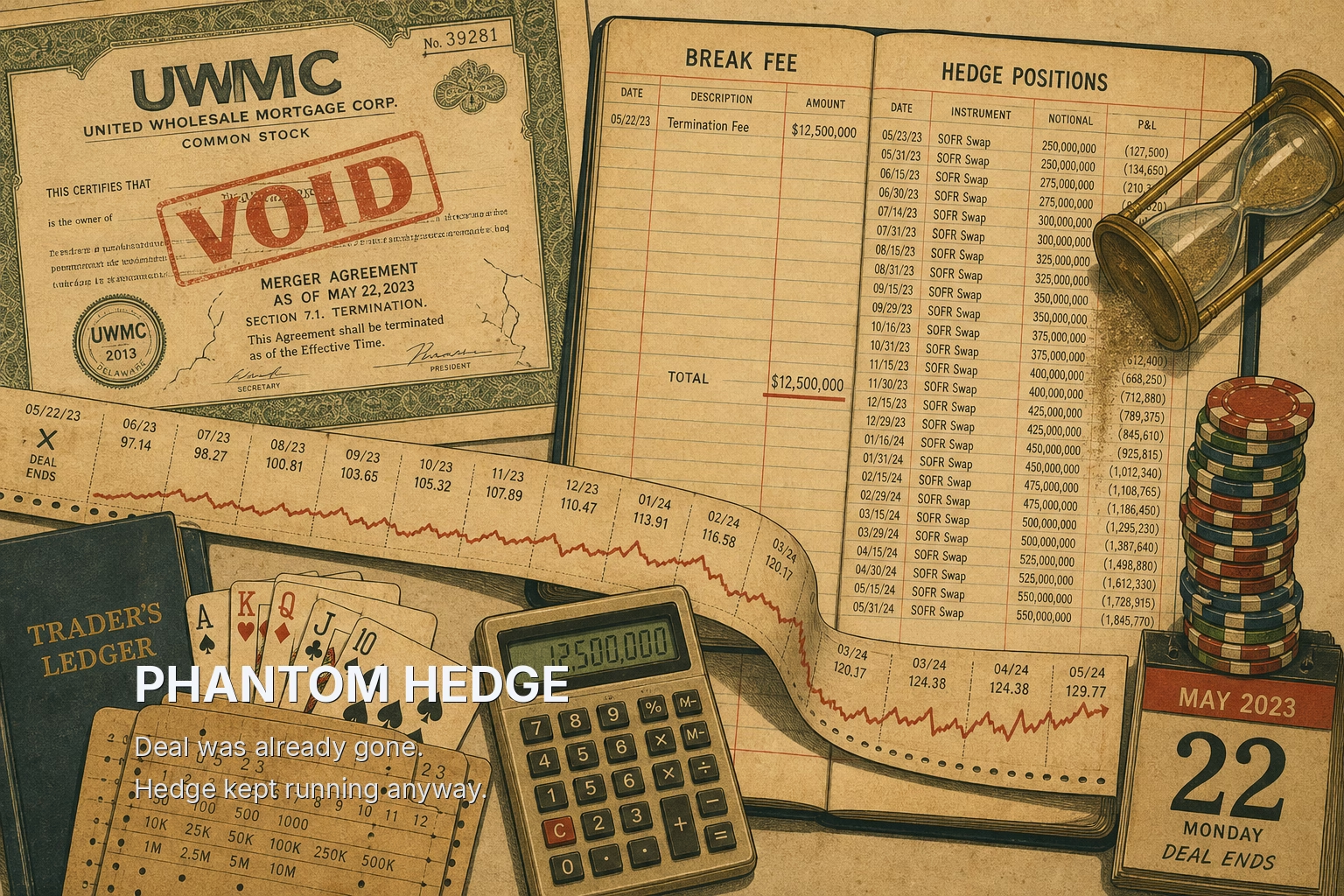
Broadcom's credit-default swaps are not blowing out because anyone thinks Broadcom is about to miss a coupon. They are blowing out because the swaps mar...
When a company with an investment-grade balance sheet guarantees a slice of a $60 billion senior tranche inside a special-purpose vehicle, the protection buyers are not pricing the guaranteed portion. They are pricing the correlation, the tail, and the precedent. That is a positioning story, not a fundamentals story, and it is the part the tape is missing.
What The Swaps Are Actually Repricing
Read the flow, not the headline. A single-name CDS widening on a profitable chip designer only makes sense if someone is hedging an exposure that the cash bond market cannot cleanly express. That someone is, most likely, the dealers and credit funds sitting on the other side of the AI infrastructure financing complex. They cannot easily short an off-balance-sheet SPV. They can short the guarantor.
Bloomberg's reporting frames a structure in talks: more than $60 billion of senior-secured debt, a roughly $30 billion junior tranche, and a Broadcom guarantee on a portion of the senior piece, with the total potentially reaching as much as $100 billion. If that closes, it would be the largest SPV deal ever funded. The word "guarantee" is where the CDS math turns. A guarantee converts a contained, ring-fenced financing into a contingent liability with a name attached, and CDS is the cleanest instrument in the market for isolating a named contingent liability.
So the buying pressure in Broadcom protection is best read as demand for a correlation hedge, not a solvency bet. The distinction matters because it tells you who moves next. Solvency fear fades when a quarter prints clean. Correlation and crowding fear does not fade on earnings, because the thing being hedged is structural.
The Machine Runs On Moving Debt Off The Page
The mechanism that connects the swap move to the wider tape is the one this deal makes explicit. The AI build-out is increasingly financed through vehicles designed so the sponsor's headline leverage never rises. Nvidia's roughly $500 billion off-balance-sheet arrangement was the template; Broadcom's Anthropic-linked SPV is the same architecture at a comparable scale. Senior-secured debt sits in the vehicle, a junior tranche absorbs first loss, and the strategic sponsor lends its credit quality through a partial guarantee rather than an outright consolidation.
The point of the structure is optics: the equity story stays "capital-light growth" while the actual funding is bank-syndicated, tranched credit risk. Positioning-wise, this creates a specific vulnerability. Every incremental deal that uses a guarantor concentrates hidden exposure in a handful of investment-grade names. The market cannot short the diffuse thing (AI capex), so it crowds into shorting the concentrated thing (the guarantor's CDS). That crowding is self-reinforcing: wider single-name spreads raise the cost of the next guarantee, which forces sponsors to widen the junior tranche or lean harder on the senior guarantee, which invites more hedging.
Where This Collides With The Curve
The reason this is more than a credit-desk curiosity is supply. There is, by the source's own framing, another $6 to $8 trillion of AI capex to be spent by 2030, most of it debt-funded. That is a wall of new corporate paper competing for the same balance-sheet capacity that absorbs Treasury issuance. The recent episode where a Treasury buyback directive was announced and effectively unwound inside a day, with yields settling a few basis points higher than before, is the confirming tape. Verbal intervention against a structural supply problem has a short half-life.
The flow read here is that the AI credit deluge is beginning to crowd out demand for government paper, and the swaption market has been signaling the stress ahead of the cash market. When the vol-of-vol on rate options runs hot, it means dealers are being forced to hedge convexity they did not want, which is the fixed-income equivalent of what is happening in Broadcom's single-name CDS. Both are markets pricing forced future hedging rather than a present default.
The Case Against Reading Too Much Into It
The honest counterargument is that CDS on a single investment-grade name is a thin, dealer-driven market that can gap on modest notional. A handful of funds establishing correlation hedges can move the quoted spread far more than the underlying credit deserves, and the move can reverse just as fast if the deal is restructured to reduce or remove the Broadcom guarantee. If the final structure ring-fences the risk cleanly, with the junior tranche large enough that the senior guarantee is never realistically triggered, then the widening was a positioning overshoot and the spread compresses back.
There is also a genuine demand story underneath the fear. Anthropic and its peers are taking a larger role in funding their own compute precisely because they want guaranteed capacity, which means the loss-absorbing junior capital may be more committed and more strategic than a purely financial-sponsor structure would be. That is a real mitigant, and it is the fact that could break the bearish read.
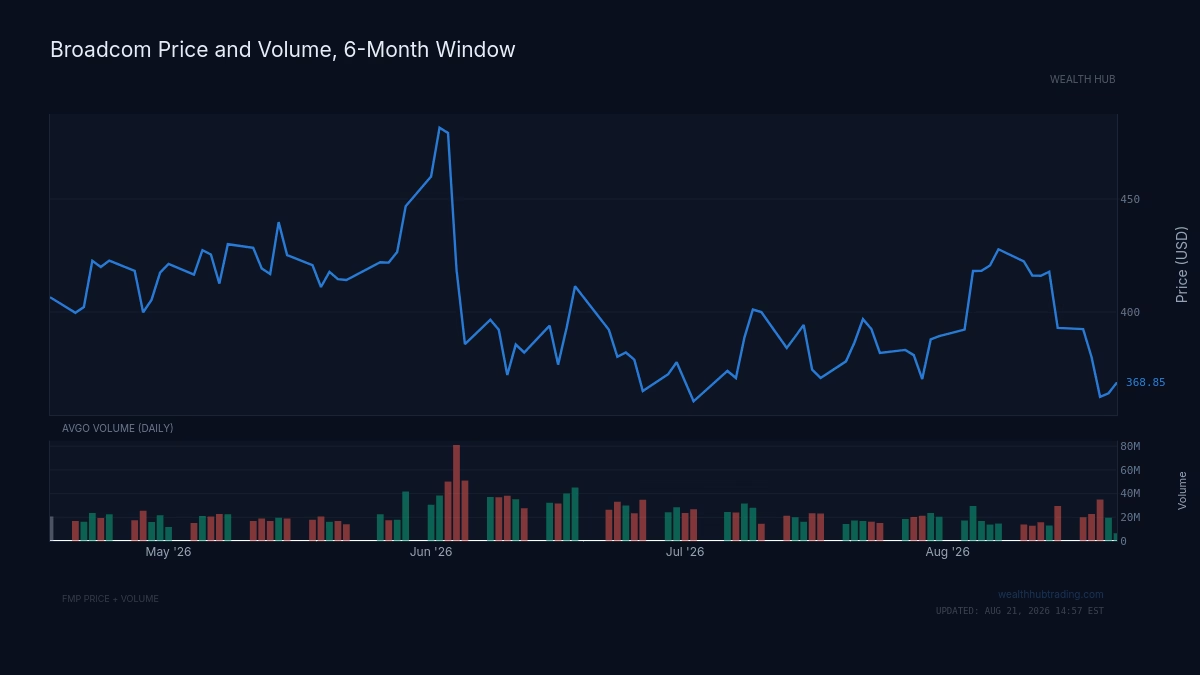
But note what does not break it: a clean Broadcom earnings quarter. The exposure being hedged is contingent and structural, so operating results do not retire it. That asymmetry is exactly why the CDS is the more informative instrument here than the stock.
What Would Confirm Or Kill The Read
Watch three things in sequence. First, the final deal terms, specifically the size of the junior tranche relative to the guaranteed senior portion and whether the Broadcom guarantee survives to close. A shrinking or disappearing guarantee kills the correlation trade. Second, whether the CDS widening stays isolated to Broadcom or spreads to the other names that have played guarantor or sponsor in comparable vehicles; contagion across guarantors is the signal that the market is repricing the structure itself, not one issuer. Third, the rates tape, because if AI corporate supply keeps forcing dealer convexity hedging, the pressure shows up in swaption vol before it shows up in the ten-year, and any second attempt at verbal intervention with a similarly short half-life confirms that the supply problem is winning.
The thesis breaks if the guarantee is stripped and the junior tranche is fat enough to make the senior piece bankruptcy-remote in fact rather than in marketing. Until that shows up in the term sheet, the cleaner reading of the widening is that the swaps market is hedging a financing architecture the equity market has agreed not to look at, and it is doing so through the one name the architecture forces into the open.