In November 2020, S&P Dow Jones Indices announced that Tesla would enter the S&P 500 index. Between the announcement on November 16 and the inclusion da...
When Tesla joined the S&P 500
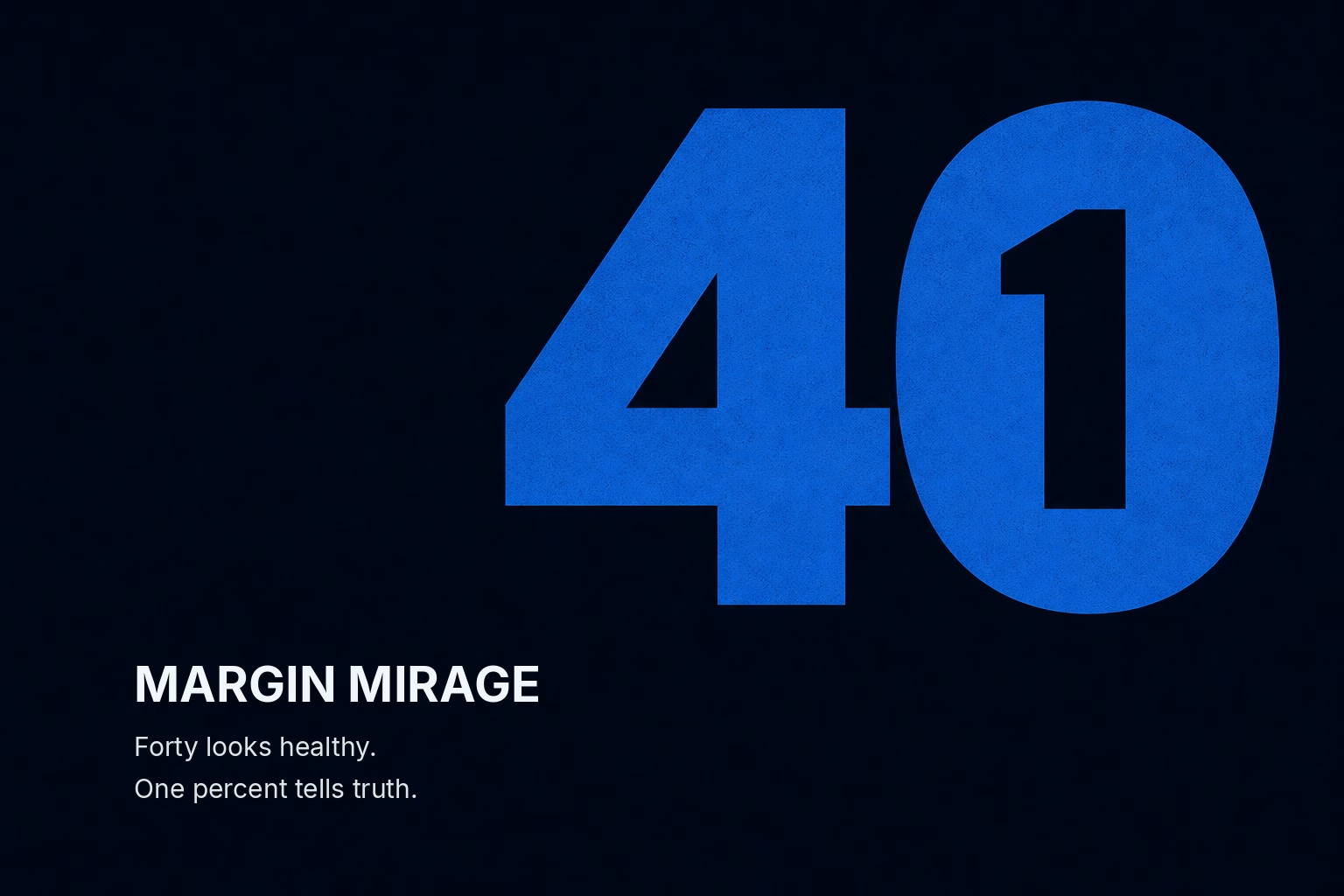
In November 2020, S&P Dow Jones Indices announced that Tesla would enter the S&P 500 index. Between the announcement on November 16 and the inclusion date on December 18, the stock rose roughly 70%. By the time index funds actually bought their shares, most of the move was already behind them.
This sequence puzzles people who assume the buying causes the pop. The index funds that had to purchase Tesla were the largest single source of forced demand in the market that year. Passive funds tracking the S&P 500 collectively needed to buy tens of billions of dollars of Tesla stock, and they needed to buy it whether Tesla was cheap or expensive. Yet the stock did not jump on inclusion day. It jumped in the weeks before.
Understanding why requires taking apart what an index fund actually is, and why the buying it does is the most predictable demand in all of financial markets.
What a passive fund is obligated to do
An index fund is a pool of money that promises to hold every stock in a published index, in the exact proportion the index specifies. That promise is the entire product. An S&P 500 fund does not decide that Tesla looks overvalued and skip it. If Tesla is in the index, the fund owns Tesla, at whatever weight the index assigns, at whatever price the market sets.
This is the crucial property. A normal buyer is price-sensitive: the higher the price, the less they want. An index fund is price-insensitive: it must own the stock to fulfill its mandate, and it will pay the closing price on the day it needs to match the index. Demand that does not fall as price rises is demand that can be pushed around.
When a stock is added to an index, every fund tracking that index becomes a forced buyer on the same day, sized to the same benchmark. The scale is enormous. Trillions of dollars track the S&P 500 alone. A stock entering the index at a 1% weight requires those funds to collectively buy 1% of their assets in that one name, in a compressed window, regardless of what the stock costs.
For you, the first thing this means is simple: index inclusion is not an opinion about a company's quality. It is a mechanical event that generates a known quantity of buying on a known date.
Why the pop happens before the buying
Here is where intuition gets it exactly backwards. Most people assume the price rises when the index funds buy. The mechanism runs the other way.
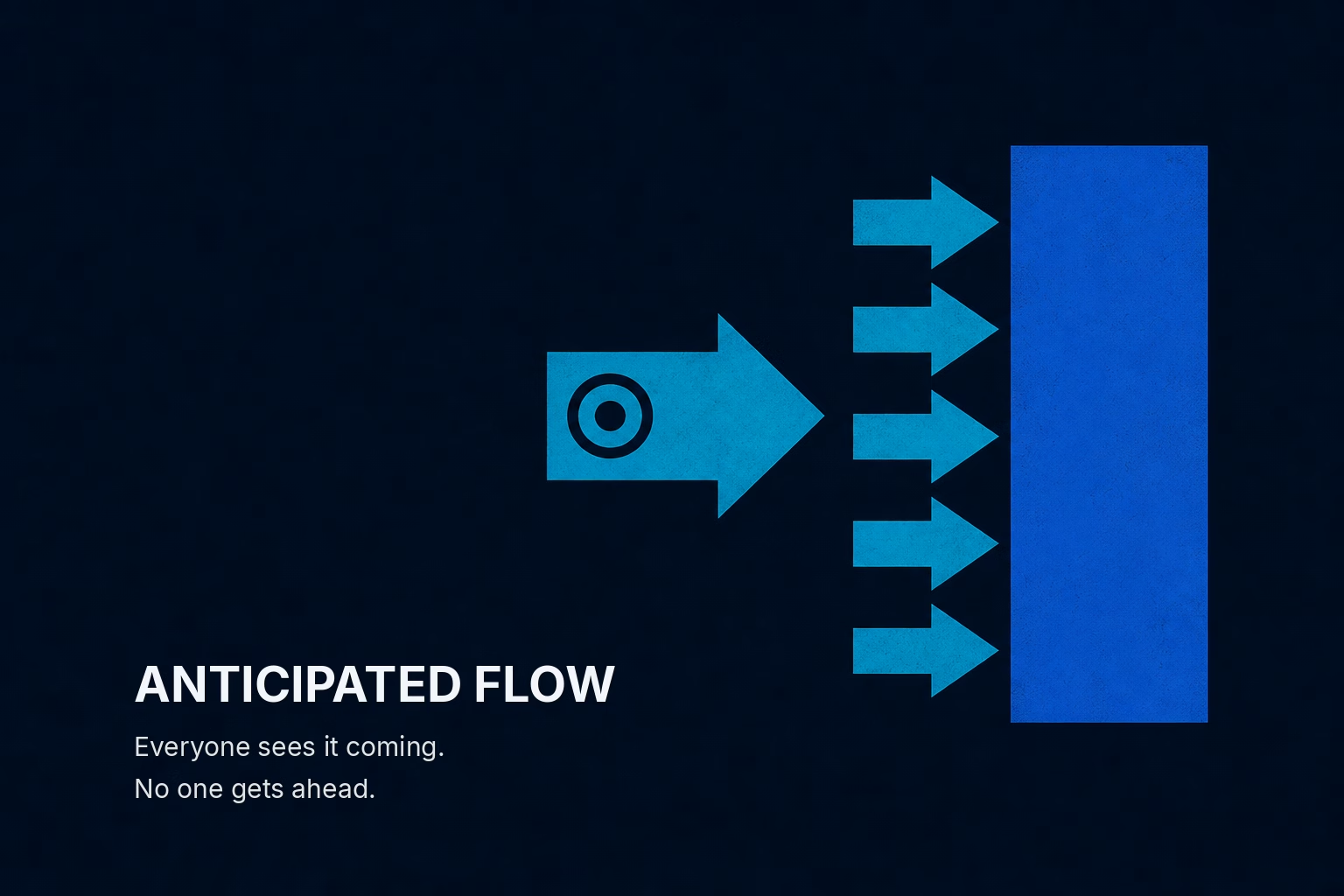
The buying is announced in advance. S&P Dow Jones publishes inclusion decisions days or weeks before they take effect. The moment the announcement lands, every trader in the market knows three things: which stock will be bought, roughly how much will be bought, and the exact date the buying must happen. Rarely does the market receive a demand shock this legible.
Traders who see this coming buy the stock immediately, ahead of the index funds. This is front-running the rebalance, and it is entirely legal because the flow is public information, not inside information. These traders are not betting the company got better. They are betting that price-insensitive buyers will arrive on a fixed date and lift the stock, and they intend to sell into that forced demand.
The causal chain runs like this. The announcement creates certain future buying. Front-runners buy in anticipation, pushing the price up before inclusion day. On inclusion day, the index funds finally buy, but they are buying from the front-runners who are now selling. The forced demand meets waiting supply, and the price often stalls or even falls once the event passes.
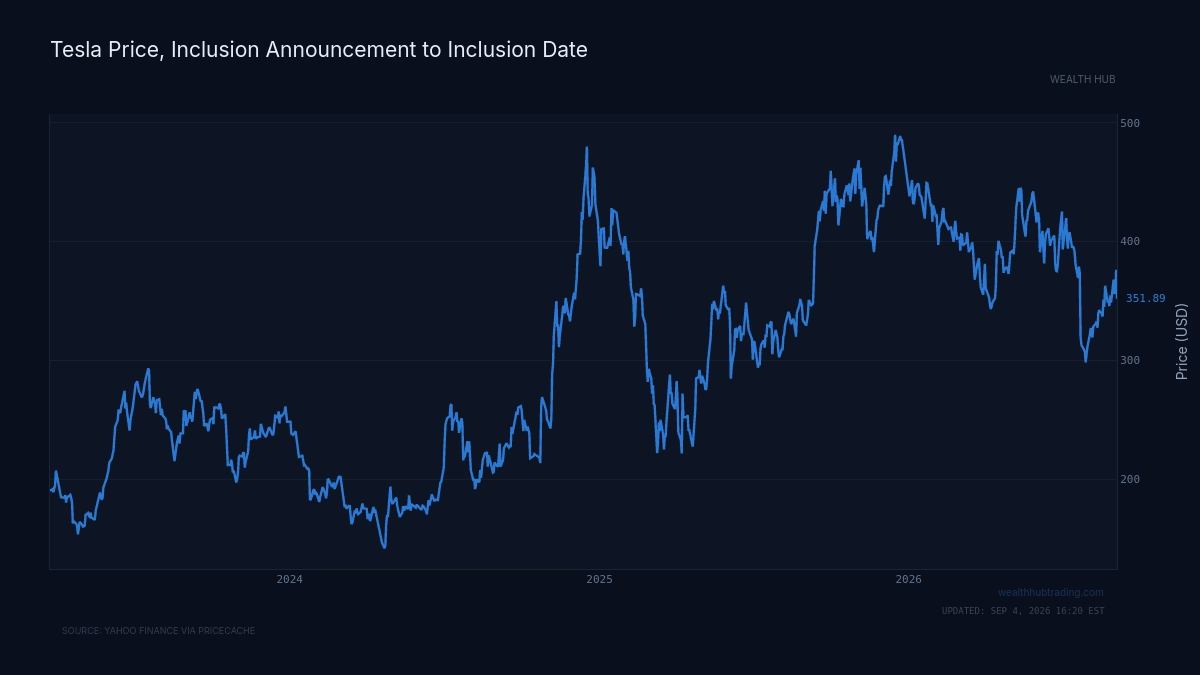
Tesla is the vivid version of this pattern, but the same shape appears again and again. The stock climbs during the anticipation window and frequently underperforms in the weeks after inclusion, as the front-runners exit and no new forced buyer remains. Research on S&P 500 additions has documented this run-up-then-give-back pattern across decades, though the size of the effect has shrunk as more traders learned to anticipate it.
What this means for you: the tradable information in an index inclusion is spent the instant it becomes public. By the time you read that a stock will join an index, the buying you would hope to ride has already been priced by people who read it first.
Rebalancing is the same mechanism, quieter
Inclusion is the dramatic case. The routine case is rebalancing, and it runs on identical logic.
Indices do not hold fixed share counts. They track a rule, usually market-capitalization weighting, where each stock's weight reflects its size relative to the whole. As prices move, those weights drift. Periodically, the index provider resets the weights back to the rule, and every fund tracking the index must trade to match the reset. Stocks whose weight the index raises get bought; stocks whose weight falls get sold.
These rebalance dates are scheduled and public. The S&P 500 reconstitutes on set quarterly dates. The Russell indices run an annual reconstitution each June that moves extraordinary volume in a single session, because the Russell family reshuffles thousands of stocks between its large-cap and small-cap indices at once. The June Russell reconstitution is regularly among the highest-volume trading days of the entire year in US equities.
The mechanism is the same forced, price-insensitive, pre-announced flow. The difference is that rebalancing buying and selling is spread across many names, so the effect on any one stock is smaller and harder to isolate. A stock moving from a smaller index into a larger one still sees a demand shock, just a more diffuse one.
For you, this means the calendar matters. Scheduled reconstitution dates concentrate mechanical flow into narrow windows, and liquidity and volatility around those dates behave differently than on an ordinary trading day.
Where the mechanism breaks down
The front-running logic is real, but treating it as a reliable trade is where people lose money.
The first problem is that the effect is competed away. When a mispricing is this obvious, capital floods toward it. Every hedge fund and index-arbitrage desk runs the same anticipation trade, so the run-up gets pulled earlier and earlier, and the profit thins. The Tesla-scale move of 70% is the exception precisely because Tesla's size and the surprise of its late inclusion created unusual demand. A routine addition of a mid-sized company produces a far more muted response, sometimes barely detectable above normal noise.
The second problem is that not all inclusions are surprises. If the market has expected a stock's inclusion for months, the anticipation is already in the price long before the official announcement. There is no clean event to trade because the information leaked out gradually.
The third problem is that the reversal after inclusion is not guaranteed. Sometimes a stock keeps rising after joining an index because the inclusion coincided with genuine improvement in the business, or because being in a major index broadens the shareholder base durably. Separating the mechanical flow from the fundamental story is difficult after the fact, and betting on the reversal can fail badly when a real trend is underway.
The honest reading is that index inclusion is a clear illustration of price-insensitive demand, not a repeatable edge. The mechanism is genuine; the profits from exploiting it are mostly captured by whoever moves first and largest.
The one idea to keep
Index inclusion and rebalancing move a stock because they generate forced, pre-announced, price-insensitive buying, and the price adjusts when the buying becomes knowable, not when it actually occurs.
Hold onto the distinction between what you can see and what you can trade. The visible event is the index fund purchasing the stock. The mechanism that moves the price is everyone positioning ahead of that purchase. Once you understand that the buying is spoken for before it happens, you stop expecting the inclusion day itself to reward you, and you start reading every pre-announced flow in the market with the same question: who is already there ahead of me?