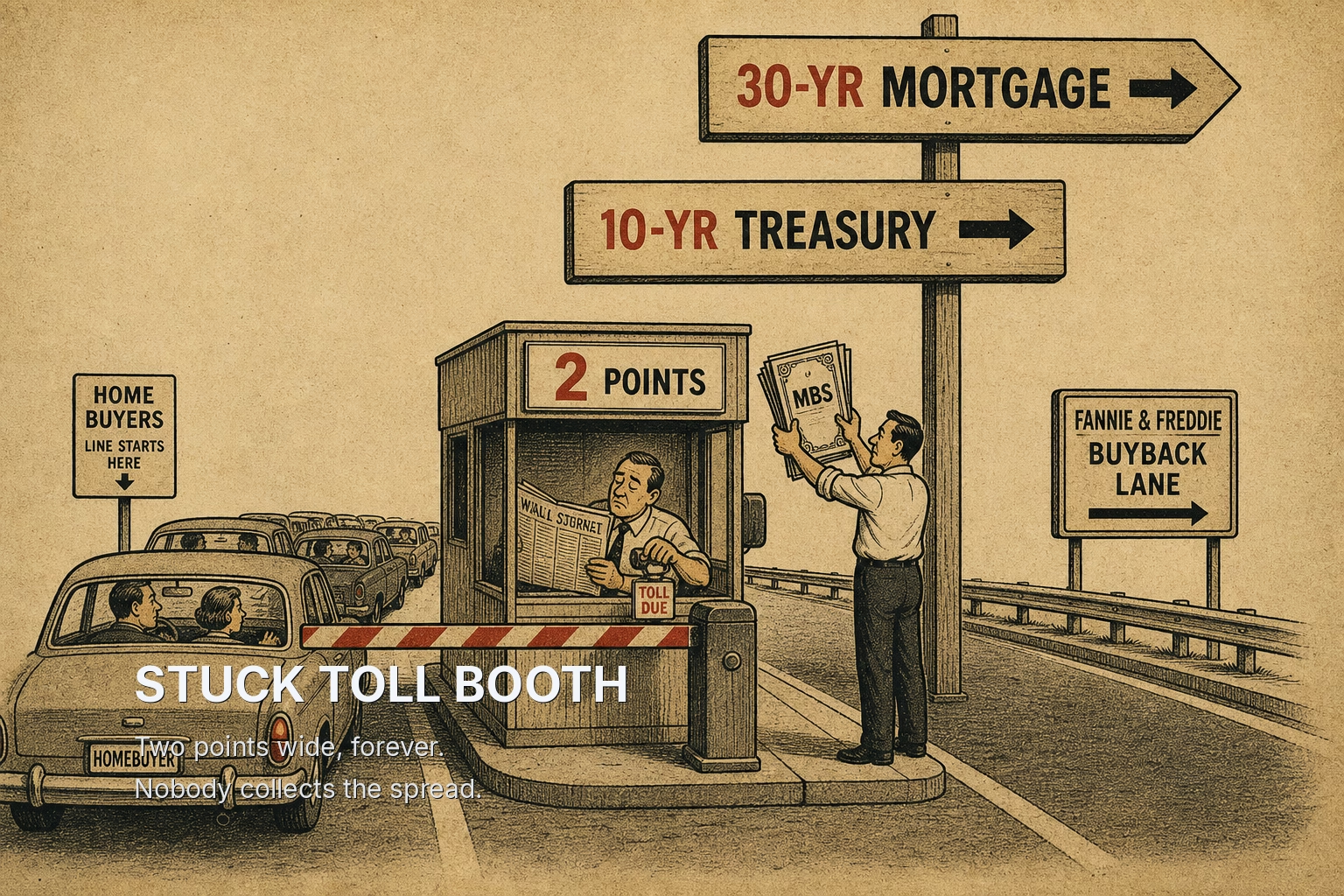
In late 2015, the 30-year swap spread went negative and stayed there. For decades the relationship had one rule that everyone treated as a law: the fixed rate on an interest rate swap should sit above the yield on a Treasury of the same maturity. The swap carries bank credit risk somewhere in its plumbing; the Treasury is the risk-free benchmark. A risky rate below a risk-free rate reads like a typo. Yet there it was, and it did not correct.
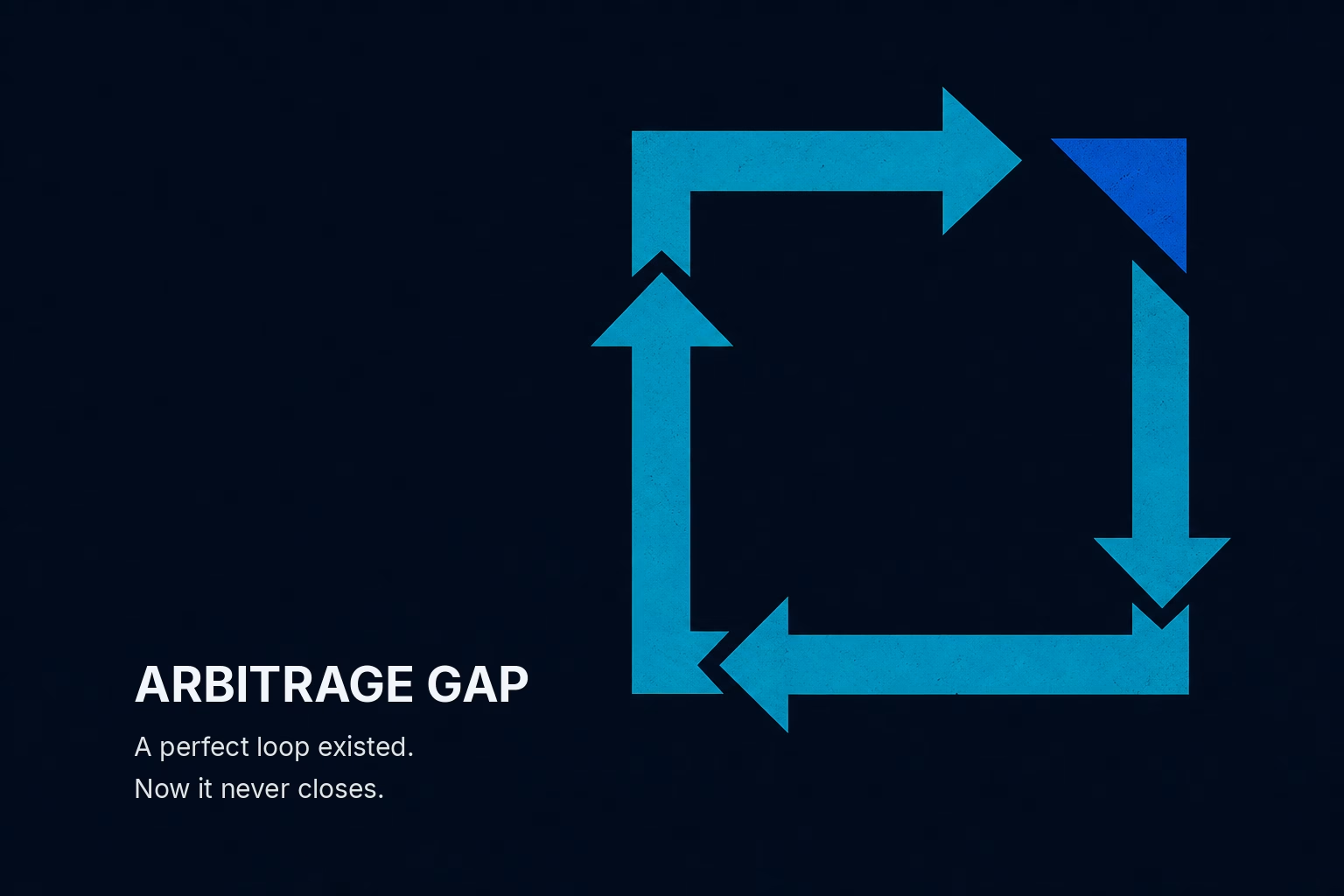
Traders who tried to arbitrage it lost money. The trade was obvious on paper: receive the higher Treasury yield, pay the lower swap rate, pocket the spread as free income. In practice the trade bled, because the thing that made the spread negative was the same thing that made the arbitrage expensive to hold. Understanding why is the whole point of the swap spread as an indicator, and it is why the flow, not the price, is where the read lives.
What an interest rate swap actually is
An interest rate swap is a contract in which two parties exchange interest payment streams on the same notional amount of money. One side pays a fixed rate for the life of the deal; the other pays a floating rate that resets periodically to a short-term benchmark. No principal changes hands. Only the difference in the two interest streams is settled, usually every quarter.
Because no principal moves, a swap is enormously capital-light. To take on the same interest-rate exposure with cash bonds, you must buy the bond, which means funding its full price on your balance sheet. To take on that exposure with a swap, you post margin, a small fraction of the notional. This asymmetry is not a detail. It is the entire mechanism.
The swap spread is the fixed swap rate minus the yield on a Treasury of matching maturity. When the swap rate is higher, the spread is positive; when it is lower, the spread is negative. Most people read the spread as a gauge of bank credit risk, and historically that reading worked. The mechanism that actually drives it today is different, and it lives on the balance sheet.
Why swaps need no balance sheet and bonds do
Here is the part that surprises people who learned the old rule. A swap gives you the interest-rate exposure of a bond without requiring you to own the bond. That difference used to be cheap. After the post-2008 regulatory reforms, it became a source of value in its own right.
Rules such as the supplementary leverage ratio, a capital requirement that forces banks to hold equity against their total assets regardless of how safe those assets are, changed the arithmetic. Under this rule, a Treasury bond consumes balance-sheet capacity even though it carries no default risk. The bank must hold equity against it simply for owning it. A swap, holding little on the balance sheet, consumes far less.
Trace the chain. A dealer who holds Treasuries must fund them and must hold capital against them. That capital has a cost, measured as the return the dealer's equity could earn elsewhere. To be willing to hold the bond, the dealer needs the bond to yield enough to cover that capital cost. If it does not, the dealer would rather express the same rate view through a swap and free up the balance sheet.
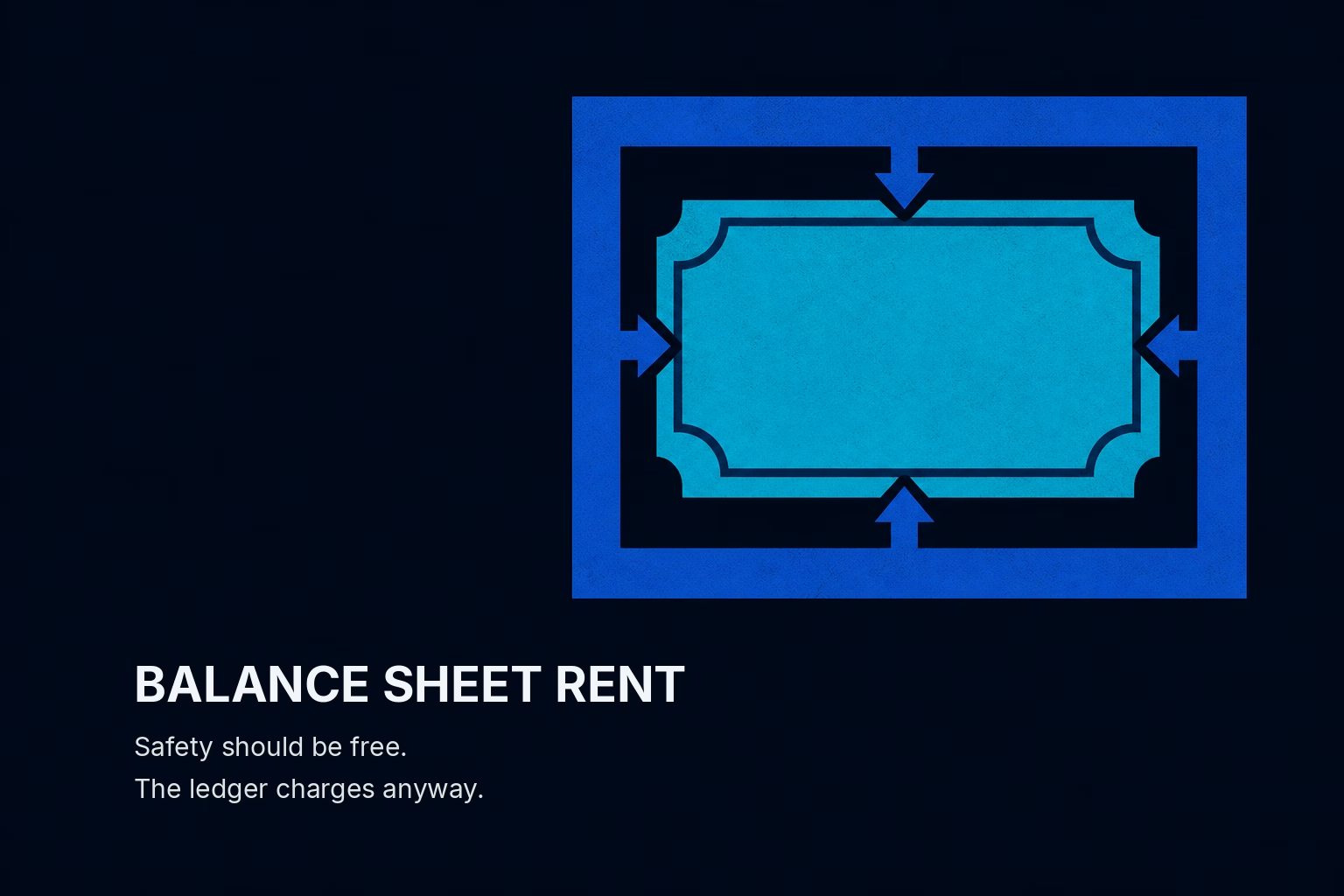
So the Treasury yield gets pushed up relative to the swap rate, not because the Treasury became riskier, but because holding it became more expensive. A negative swap spread is the market quoting that expense. It is the rent the balance sheet charges for parking the risk-free asset.
The practical implication is that when you see the spread move, you should ask what changed in the cost of holding bonds, not what changed in bank credit. The two questions had the same answer for years. They no longer do.
Why the arbitrage does not close the gap
If a negative spread is free money on paper, why does anyone leave it on the table? Because the trade that captures it consumes exactly the resource that is scarce.
To harvest a negative 30-year swap spread, you buy the Treasury and pay fixed on the swap. Buying the Treasury puts a large, capital-heavy asset on your balance sheet, the very asset the regulation penalizes. The income you earn from the spread has to compensate you for that regulatory cost, plus the funding cost, plus the risk that the spread moves further against you before it converges. For most dealers after 2015, it did not compensate enough. The arbitrage that would normally force the spread back toward positive was itself blocked by the constraint that created the negative spread.
This is why the swap spread is a positioning signal, not a mispricing. Consensus reads it as a price and looks for the arbitrage. The flow read asks who is being forced to do what. When balance sheets are constrained, dealers shed Treasuries, real-money accounts step in only at a discount, and the spread sits negative until the constraint eases, often at quarter-end when banks trim assets to flatter their capital ratios.
Watch the calendar. Swap spreads frequently gap around quarter-end and year-end reporting dates, because that is when balance-sheet scarcity peaks. The move is mechanical, driven by regulatory reporting windows rather than by any change in the outlook for rates.
The 2020 stress test of the whole idea
March 2020 turned the mechanism into a live demonstration. As the pandemic hit, everyone wanted cash, and the safest way to raise cash is to sell Treasuries. Enormous selling flooded the market. Under normal conditions, dealers would have absorbed the bonds and warehoused them. This time their balance sheets were already near regulatory limits, so they could not.
The result was a Treasury market that seized up even as demand for safety was at its peak, an outcome that made no sense under the old credit-risk framing and perfect sense under the balance-sheet framing. The Federal Reserve responded in part by temporarily exempting Treasuries from the supplementary leverage ratio, freeing dealer balance sheets to absorb the flood. Swap spreads and Treasury liquidity recovered as that constraint loosened. 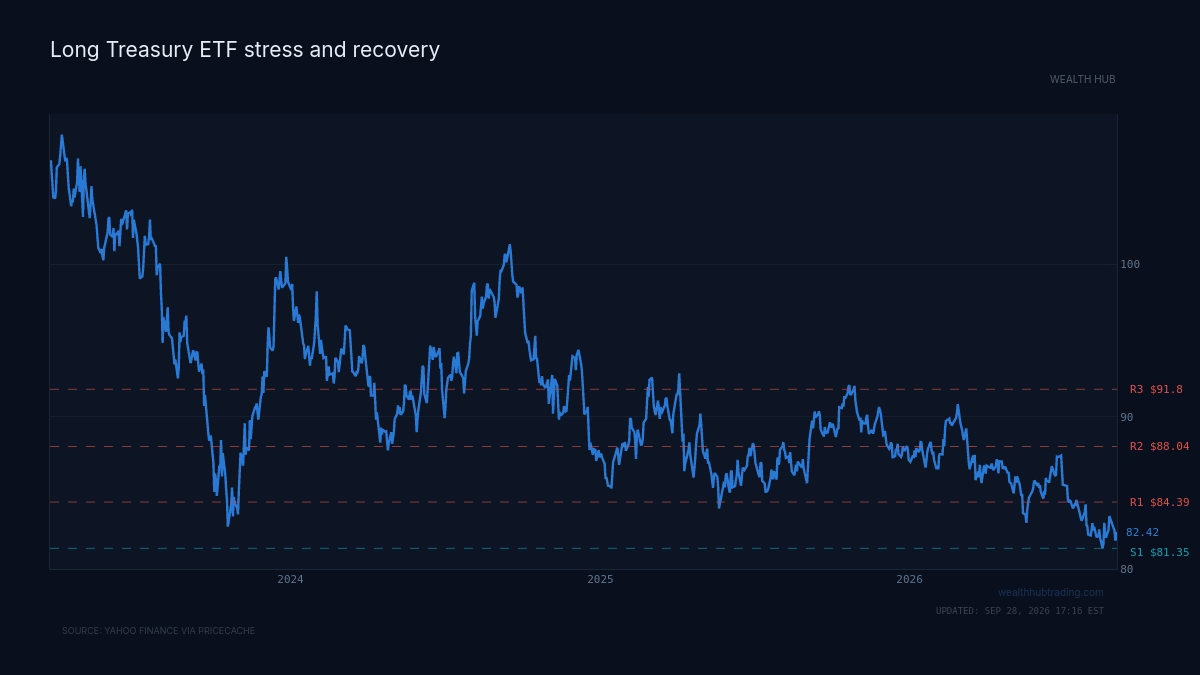
That episode is the clearest evidence that the swap spread tracks balance-sheet capacity. When the regulator relaxed the capital cost of holding bonds, the price relationship healed. The variable that moved the spread was the constraint, not the credit.
What the spread is telling you now
The swap spread is a real-time price on scarce balance sheet. Read it that way and it becomes one of the cleaner windows into dealer capacity in the entire market.
When spreads grind more negative without any change in credit conditions, dealers are running out of room to hold Treasuries. That has consequences beyond the swap market itself. A market where the primary intermediaries cannot easily warehouse the risk-free asset is a market with thinner liquidity, wider bid-ask spreads in bonds, and a higher chance of a disorderly move when supply spikes, whether from heavy Treasury issuance or from a rush to raise cash.
The concrete takeaway is to treat the swap spread as a balance-sheet gauge rather than a credit gauge. Watch it into quarter-end for the mechanical distortion. Watch it against the pace of Treasury issuance, because more supply on constrained balance sheets pushes spreads more negative. And when you see an apparent arbitrage in a rates market, ask first what balance-sheet cost is embedded in the trade before assuming the market has left money on the table. The swap spread is the market pricing the cost of holding the risk-free asset, and that price moves with the flow long before it shows up as a story anyone is telling.