The story everyone tells about the software selloff is wrong in a specific, correctable way. The narrative says the 30x-sales high-fliers were a discret...
That framing survives only if you don't look at the fundamentals underneath the derating. When you do, the picture inverts: expected revenue growth across the software complex is at a two-decade high, gross margins haven't budged, and the multiple still got cut roughly in half. Nothing broke operationally. What broke was the price investors will pay per unit of growth.
That distinction matters because it changes what you're actually watching. A bursting bubble is a valuation event that ends when the froth clears. A repricing of the growth-versus-profitability tradeoff is a regime change in the discount function, and it doesn't reverse just because a few names get cheap enough to look tempting.
What Didn't Change
Start with the counterintuitive fact, because it's the whole thesis. Median EV/revenue for the software group fell from roughly 8.8x to 4.7x, close to a halving. Over that same window, expected forward revenue growth didn't deteriorate. It accelerated, to around 21%, described as a twenty-year high. Gross margins held inside their long-standing 69% to 75% band. If the selloff were a fundamental repudiation of the business models, growth and gross margin are the first things you'd expect to crack. They didn't.
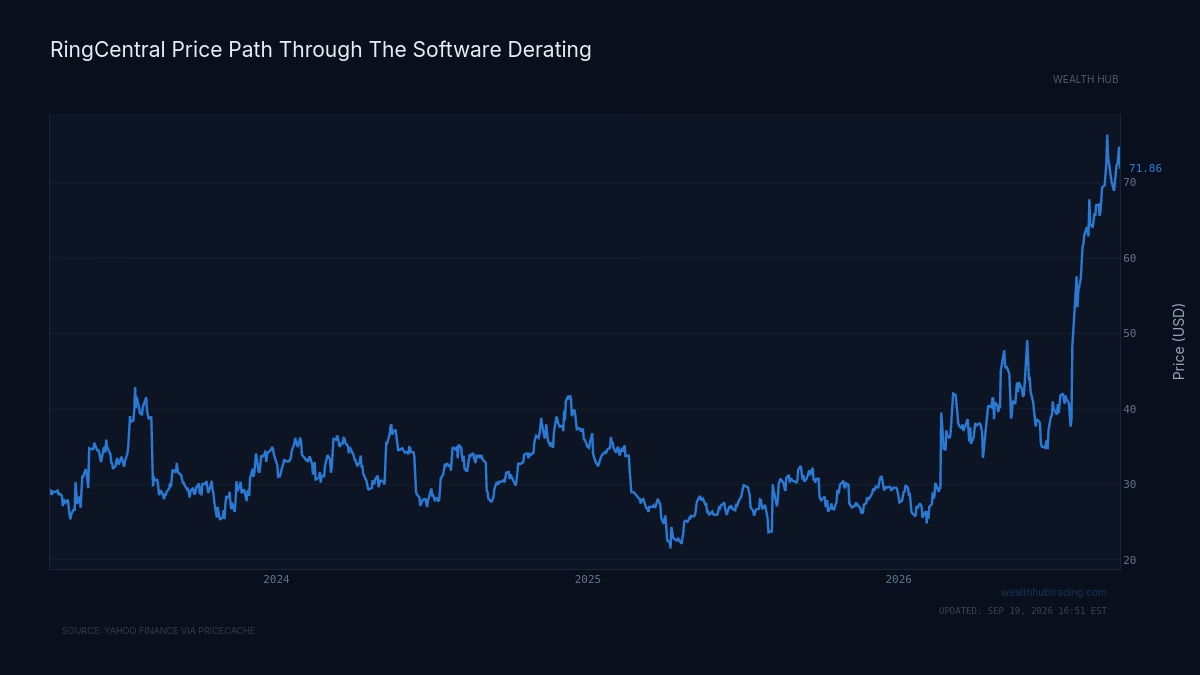
RingCentral is the clean illustration precisely because it is extreme. Entering 2021 it traded near 27x NTM revenue with expected growth around 25%. Today expected growth is roughly 26%, marginally higher, and the multiple has derated about 80% from peak. Idiosyncratic overhangs exist for RNG specifically, concentration by large growth funds unwinding and competitive fear around Microsoft and Zoom, so it overstates the group. But it directionally captures the trend: the operating line held, the price of that operating line collapsed.
So the first question, whether anything fundamental changed to justify the selloff, has an uncomfortable answer. On the metrics investors historically rewarded, no. The change is in the reward function itself.
The One Line That Moved
The single fundamental series that did deteriorate is EBITDA margin, which has drifted lower over time as the group leaned into growth-at-any-cost spending. That is the pivot the whole analysis turns on.
Put the pieces together with the Rule of 40, which sums EBITDA margin and revenue growth. That composite sits in a normal range. It is not flashing distress. But the composition of the 40 has shifted: more of it is coming from growth, less from margin. For years the market treated those two inputs as fungible, and in practice paid up for the growth half. A company could run thin or negative EBITDA margins and still command a premium multiple as long as the growth number was high enough.
The derating is what it looks like when that fungibility breaks. Growth is at a record, the Rule of 40 is roughly flat, and the multiple halved anyway. Arithmetically, that can only mean one thing: the market is now paying meaningfully less for a point of growth than it pays for a point of margin. Investors have started pricing profitability and growth as distinct goods rather than interchangeable ones, and they've marked down the cheaper-to-manufacture input.
That is the mechanism, and it's where the popular story misfires. The high-fliers didn't fall because they were a sealed-off bubble. They fell hardest because they carried the most growth-sourced, margin-light value, and growth-sourced value is exactly what got repriced. Same disease, worst-exposed patients. The bubble framing treats the high-fliers as a different species. The mechanism treats them as the most levered expression of a single group-wide change in the discount function.
The Rate Story Is Half An Answer
The conventional channel is real and worth stating fairly. Higher rates raise the discount rate applied to distant cash flows. High-growth, low-current-margin names hold most of their value in out-year free cash flow, so a higher discount rate hits their present value disproportionately versus names generating free cash flow now. That math is sound and it explains part of the dispersion.
But rates alone don't explain the full picture, and here is where intuition needs correcting. If this were purely a discount-rate mechanic operating on unchanged expectations, you'd expect the derating to track duration cleanly and leave the growth-versus-margin preference intact. Instead, the group repriced while growth expectations rose, which means the market simultaneously revised down what it will pay per unit of that growth. A discount-rate shock changes the price of time. What's happening here also changes the price of a specific input to value. Those are different signals, and conflating them is the error.
There are two readings of the margin preference, and they carry very different implications. One: sustained higher rates have permanently raised the bar on near-term profitability, so the preference is structural and durable. Two: the market is quietly calling the bluff, signaling that projected revenue growth or long-term margin targets are unrealistic, and that near-term cash is simply more trustworthy than a modeled terminal margin. The first is a repricing. The second is a credibility discount. You cannot tell them apart from the multiple alone, but you can tell them apart from what happens next.
Where The Counterargument Lives
The strongest case against this read is the mean-reversion argument: if the derating is indiscriminate, the lowest-multiple, higher-margin value software should already be outperforming, and the highest-multiple names should have clearly, permanently underperformed on a fundamentals-adjusted basis. If that rotation isn't cleanly visible, then maybe this is just broad, correlated risk-off that will unwind together, and the growth-versus-margin story is a pattern imposed after the fact.
That is the honest test, and the evidence available here doesn't fully resolve it. The group-level data shows the composition shift clearly, but a clean, sustained outperformance of low-growth-high-margin names over high-growth-low-margin names is the confirming datum, and it is exactly the series that would either validate or break the thesis. Absent that dispersion holding up over time, part of the read stays provisional.
The tell won't be found in the multiples. It will be found in management behavior. If profitability is genuinely the new binding preference, software boards should start doing what exploration-and-production companies did when capital markets stopped rewarding production growth: pull back on cash-burning expansion and pivot toward margin and capital return. A visible, group-wide move toward balanced growth-and-profitability guidance is the confirmation. If instead managements keep spending for growth and the multiples stay compressed anyway, the second reading gains weight, and the market is disputing the credibility of the out-year models, not merely raising the discount rate.
What Would Change The View
The thesis is that software's derating is a repricing of the growth-versus-margin tradeoff, not a contained bubble, and that the high-fliers led the fall because they were most exposed to the input that got marked down, not because they were a separate mania.
It breaks if forward growth expectations roll over from that twenty-year high while gross margins crack, because then the fundamental repudiation the bubble narrative assumed would finally be real, and the story would revert to a straightforward earnings-and-growth disappointment. It is confirmed if growth holds, the Rule of 40 stays flat, and managements across the group begin trading growth spend for margin, ratifying the preference the market has already priced. Until one of those conditions resolves, the cleaner reading is that investors changed what they'll pay for, not what the businesses are worth.