The most important thing that happened to the AI theme this quarter is not that infrastructure names rallied. It is that the same variable driving the r...
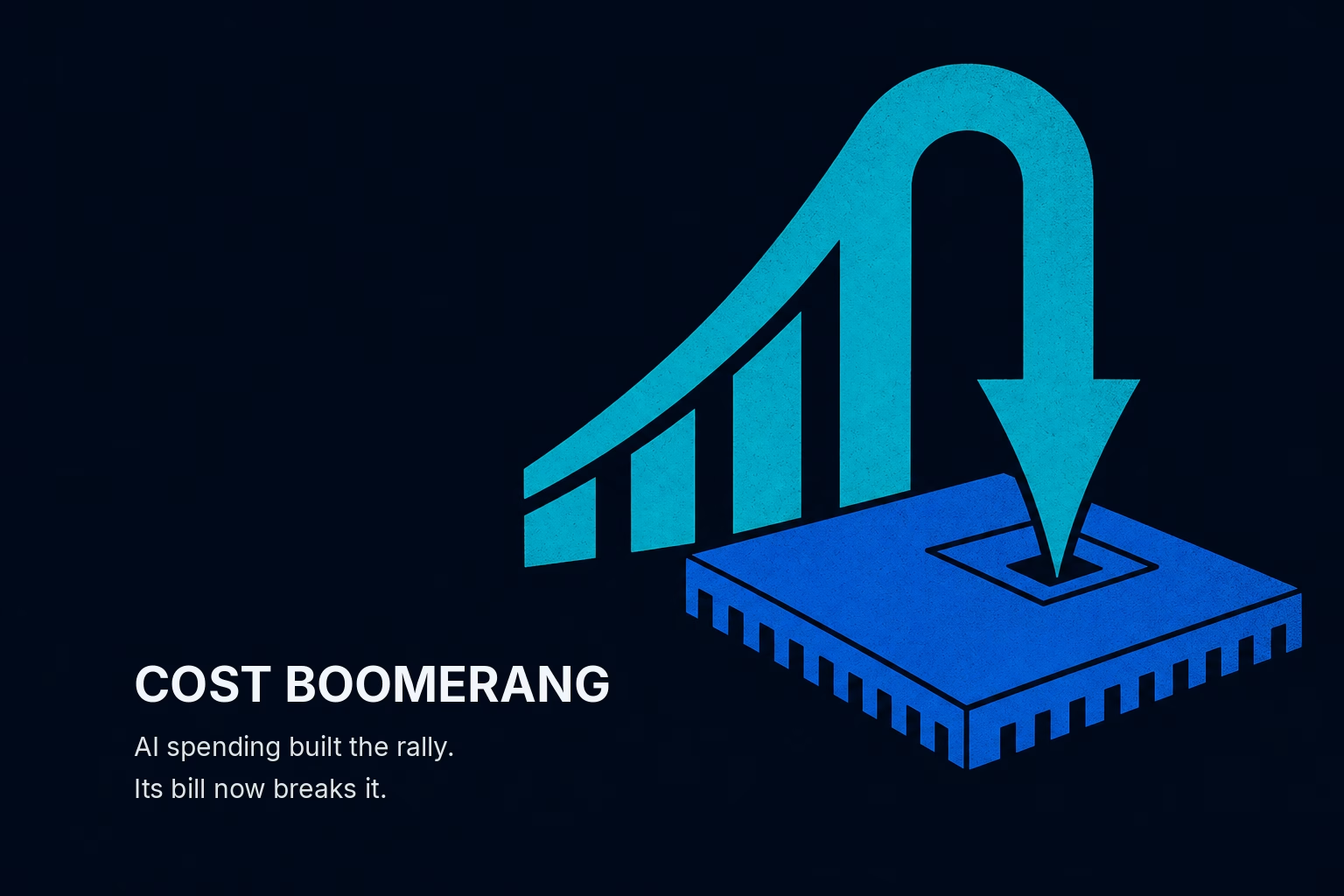
The most important thing that happened to the AI theme this quarter is not that infrastructure names rallied. It is that the same variable driving the rally, token consumption, quietly became the variable that threatens it. In a matter of weeks the market went from celebrating explosive token growth to worrying about who pays for it. That inversion, from tokenmaxxing to tokenpanic, is the mechanism worth understanding, because it reframes what an "AI winner" even is.
How Token Growth Became a Cost Problem
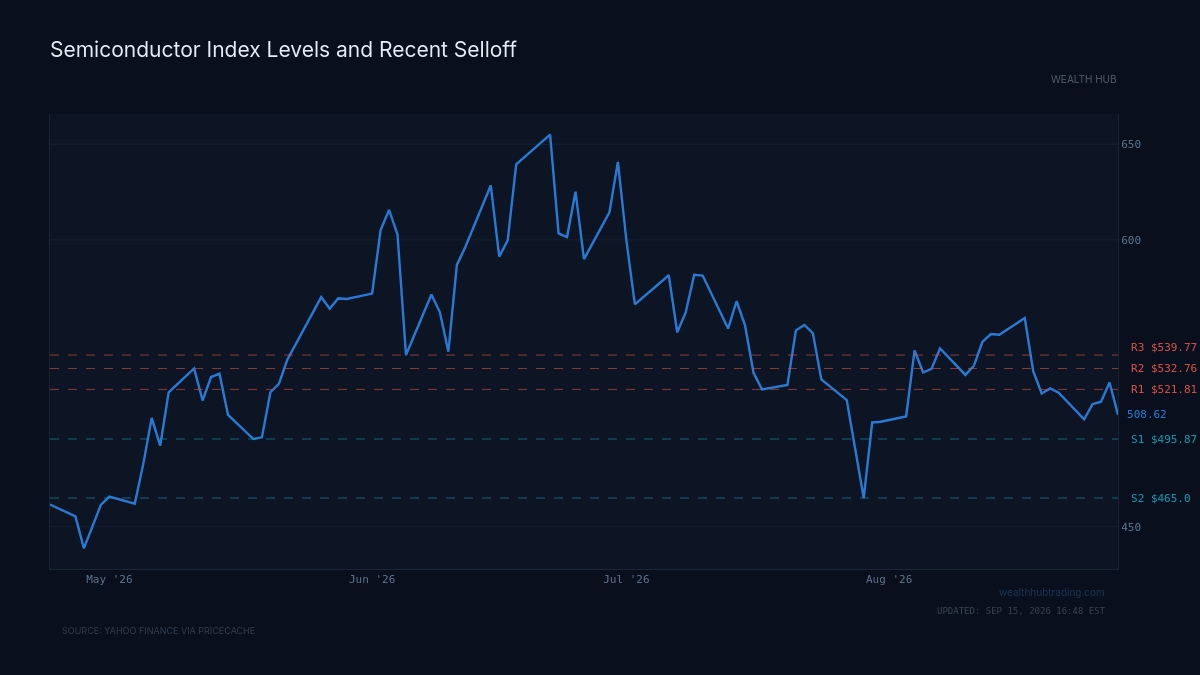
Earlier this year the bull case for AI infrastructure was almost mechanical. Agents and heavier models consume vastly more tokens per task than a single chatbot prompt. More tokens means more compute, more compute means more silicon, and the market value of the semiconductor industry roughly doubled in two months on exactly that logic. The narrative was clean because the causation ran one direction: usage up, hardware demand up, stocks up.
The part intuition gets wrong is treating token growth as pure demand. Every token consumed on the provider side is a token billed on the customer side. Explosive usage is, by identity, explosive cost. That accounting was easy to ignore while labs and hyperscalers subsidized inference to win adoption. It stops being ignorable the moment those same players turn up monetization, which is precisely what is now underway. The goldilocks story, cheap tokens forever alongside infinite usage growth, was internally contradictory. You could have volume or you could have subsidy, not both indefinitely.
So the second-order read is that the AI trade is bifurcating along a cost axis. Companies that sell the compute, custom silicon designers, and the operators who can route inference to the cheapest available hardware sit on the favorable side of the equation. Companies whose business models assume tokens stay cheap sit on the unfavorable side, and they were not obviously distinguishable from the winners while everything rose together.
Where the Cost Pressure Actually Lands
This is why the emerging themes around the AI basket are all, at root, cost-avoidance strategies rather than demand stories.
Edge AI and on-device inference matter because moving inference off the datacenter is the most direct way to escape a per-token bill entirely. Custom silicon matters because a hyperscaler designing its own accelerator is trying to break the pricing power of merchant compute. The interest in ways past what could be called the memory tax, the DRAM and high-bandwidth-memory bottleneck that inflates the cost of every inference cycle, is the same instinct expressed at the component level. None of these are new demand; they are attempts to lower the marginal cost of serving demand that already exists.
Read that way, the "agentic utilities" framing is the honest one. If AI settles into a utility structure, the returns accrue to whoever owns the lowest-cost node in the stack, not to whoever has the most impressive model. Utilities do not earn excess returns on demand growth. They earn on cost position and regulatory or structural moat. That is a very different investment than the one the market was pricing when semis doubled.
The Selloff Was Positioning, Not Yet Repricing
Here is the counterevidence, and it is the strongest available. Friday's selloff hammered nearly every crowded trade at once, which is the signature of positioning reversion, not a considered repricing of the cost thesis. When a rally has been this steep, extended positioning unwinds on its own, and the mechanism is leverage and reflexivity, not a fundamental reassessment of token economics. Attributing that move to tokenpanic would be reading a narrative into what was probably a crowded-book flush.
That distinction is the whole risk to the thesis. If the pullback was purely technical, the cost problem is still ahead of the market rather than already reflected in prices, and the infrastructure names can resume higher for some time before customer margin compression shows up in reported numbers. Four of the six thematic baskets have outperformed the US market year to date, with AI and robotics leading, and that leadership can persist through several more quarters of subsidized inference. Being early on a structural cost mechanism is indistinguishable from being wrong, right up until it isn't.
There is also a genuine hedge inside the same portfolio logic. Natural gas, energy, and the fiscal-primacy basket provided balance through the Iran-driven sell-off and offer exposure to the commodity cycle. That is worth noting because it means the AI cost thesis does not have to be traded in isolation; the themes that cushioned the last risk-off episode are not correlated to whether tokens stay cheap.
What Separates a Winner From a Bag-Holder Now
The useful output of a mechanism read is a decision variable, not a call. Here the variable is margin, specifically whose margin absorbs the rising cost of tokens.
- If the cost lands on end customers through higher API and seat pricing, adoption slows and the demand curve that justified the infrastructure buildout gets tested. Watch enterprise reaction to monetization, not usage charts.
- If the cost lands on the labs and hyperscalers because competition prevents them from passing it through, then merchant compute keeps its pricing power and the infrastructure trade stays intact while software-layer economics deteriorate.
- If the cost gets engineered away through on-device inference, custom silicon, and memory workarounds, the winners rotate toward whoever owns those cost advantages, and today's index-level AI leadership fragments into a much narrower set of names.
Those three paths point to different portfolios, and the market is currently priced as though it does not need to choose among them.
The thesis breaks if monetization ramps and enterprise usage keeps compounding anyway, because that would prove tokens can be both profitable to sell and cheap enough to keep consuming. That is the observable condition to watch: the next monetization step-up from the major labs, paired with whether reported token consumption keeps its slope. Until that data arrives, the cleaner reading is that the AI theme has quietly changed from a demand story into a cost-position story, and that most of the tape has not yet marked the difference.