The counterintuitive part of the SaaS bounce is not that stocks doubled off the April lows. It is that the risk-adjusted price fell while the nominal pr...
The counterintuitive part of the SaaS bounce is not that stocks doubled off the April lows. It is that the risk-adjusted price fell while the nominal price rose. A software name at its April bottom was not cheap in any usable sense, because the number attached to it was contaminated by a scenario nobody could rule out: that AI would hollow out the entire subscription model. The bounce did not make that scenario more expensive to bet against. Earnings season made it less likely to happen. That is the whole mechanism, and it is where most price-anchored intuition goes wrong.
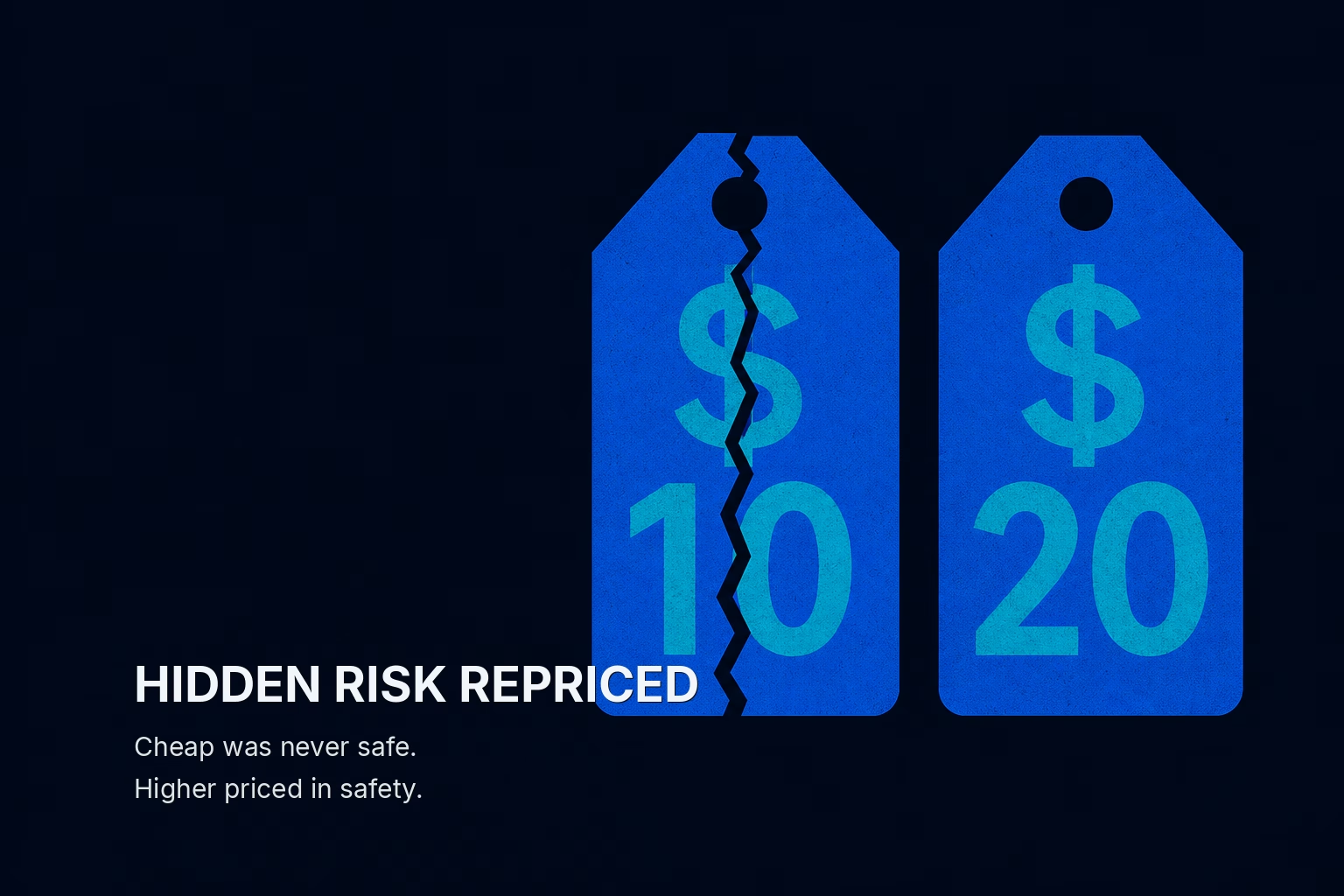
Why $10 Was Never Really $10
The instinct that a lower price is a better entry assumes the price is measuring the same thing at both moments. It usually is not. A stock trades at a deep discount for one of two reasons. Either the market is wrong about the fundamentals, which is the value investor's dream, or the market is correctly pricing a real probability of a catastrophic outcome, which is a different animal entirely.
When the second condition holds, the quoted price is an expected value across a bimodal distribution. Call it a 60% chance the business is fine and worth $30, and a 40% chance the existential threat lands and the equity is worth close to nothing. The math delivers a price around $18, and it keeps drifting lower as the tail probability creeps up. At the height of the SaaSpocalypse, the tail was not "growth decelerates." The tail was "enterprises rip out their vendors and build the software in-house with AI, and the recurring-revenue model that justified every SaaS multiple stops recurring."
That is not a fundamentals story you can underwrite with a spreadsheet. It is a binary. And a binary at the bottom of its range is the most dangerous thing a value buyer can own, because the discount looks like margin of safety and is actually the market's honest estimate of ruin.
What Removed the Tail, Not What Raised the Price
The rally is the symptom. The cause is information. Between the April low and now, Q2 earnings did something the price could not do on its own: it converted a probability into an observation.
The fear was that AI would substitute for SaaS. The reported numbers showed AI driving demand for SaaS. ServiceNow described the quarter as solidifying its position as the fastest-growing major enterprise software and cybersecurity company. Adobe posted record quarterly revenue of $6.62 billion and, critically, raised full-year targets on the strength of AI-driven demand rather than defending against AI-driven erosion. Datadog grew revenue 36% year over year and framed the growth as customers building and deploying with AI on its platform. None of these are heroic single data points. Together they are the thing that matters: an absence of evidence for the catastrophe, delivered at the exact moment the catastrophe was supposed to be showing up in the present tense.
There is a second, harder-nosed signal. Private equity and strategic M&A bids returned to the space. A buyout bid is not sentiment. It is a real party with a cost of capital and a diligence process putting a floor under equity value, in cash, at a level well above the panic low. When financial buyers re-enter a sector, they are effectively voting that the terminal-value fear was overpriced, and they are backing that vote with a balance sheet.
Collapse the two together and the distribution changes shape. The 40% ruin branch does not go to zero, but it thins materially, and the surviving mass shifts toward the healthy outcome. An expected value that was $18 across a bimodal distribution can honestly be worth $22 across a distribution that is no longer bimodal. The price went up. The risk you are buying went down more.
The Index Hides the Real Move
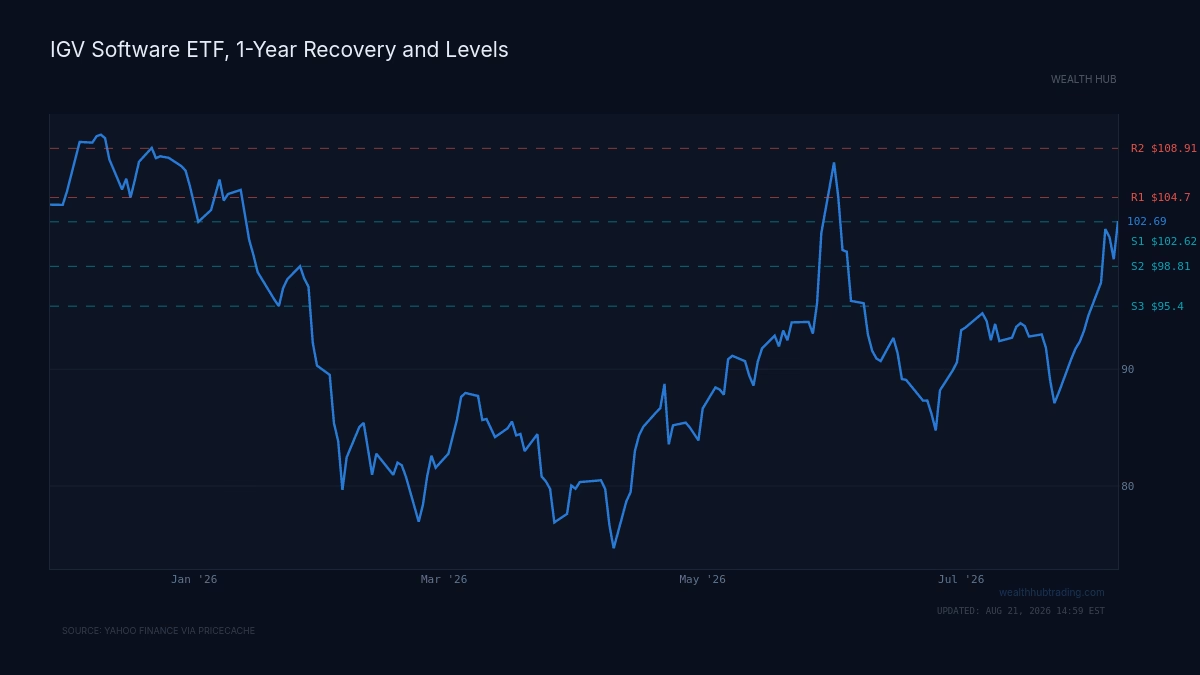
The headline arithmetic understates all of this. IGV, the software index ETF, bottomed in mid-April down almost 30% year to date and has since clawed back to slightly positive on the year. Read casually, that says software round-tripped and there is nothing to see.
The index is misleading because it is concentrated. IGV's top six components each carry weightings above 5% and together make up just under half the fund. Two of the largest, Palo Alto Networks and CrowdStrike, have roughly doubled year to date. Those winners are dragging the index line back to flat and masking the median. The average SaaS company is still down solidly on the year and trading cheaper than it has for most of the past decade, even after bouncing hard off the lows. So the index tells you the sector is healed. The dispersion under the index tells you the tail was removed for the group while the re-rating has only run its course for a handful of leaders. That gap is the opportunity, if there is one.
Where the Argument Could Be Wrong
The clean version of this thesis has a flaw worth stating plainly, because it is the fact that would break it.
Absence of evidence over one quarter is not proof of absence. The AI-substitution thesis was never that enterprises would gut their software stack in ninety days. It was a multi-year displacement story. A single strong earnings season showing AI as a tailwind is exactly what you would expect to see in the early innings of a displacement that has not started biting yet. The demand strength could be a pull-forward, companies buying tooling to build the very capabilities that later replace their vendors. If that is the real sequence, then the tail was not removed. It was deferred, and the market has mistaken a delay for a reprieve.
The M&A signal is sturdier but not immune. Private buyers can be wrong, and a re-rated public multiple can outrun the price a financial sponsor was willing to pay near the lows. A floor established at the panic bottom does not validate today's higher quote.
So the thesis is conditional. It holds if the AI-as-tailwind pattern persists across the next two or three earnings cycles, because durability is what turns a single observation into a genuine change in the distribution. It weakens the moment net revenue retention rolls over at the median SaaS name while the leaders keep compounding, which would confirm displacement is real and simply slower than February feared.
The Condition That Settles It
The distinction that resolves the whole debate is between price and risk-adjusted price, and it is observable, not rhetorical. Watch net revenue retention and seat expansion at the median software company over the next few quarters, not the two index darlings that already doubled. If retention holds and expansion continues while those names still trade below their decade-average multiples, the sector really is cheaper at the higher price, because you are paying more for an asset whose worst case has genuinely narrowed. If retention starts slipping at the median even as the leaders run, the tail was deferred rather than removed, and the bounce was the market paying up for a risk that had not actually gone away.
Higher and cheaper are not a contradiction. They are what it looks like when the number you pay rises and the thing that could destroy it shrinks faster.