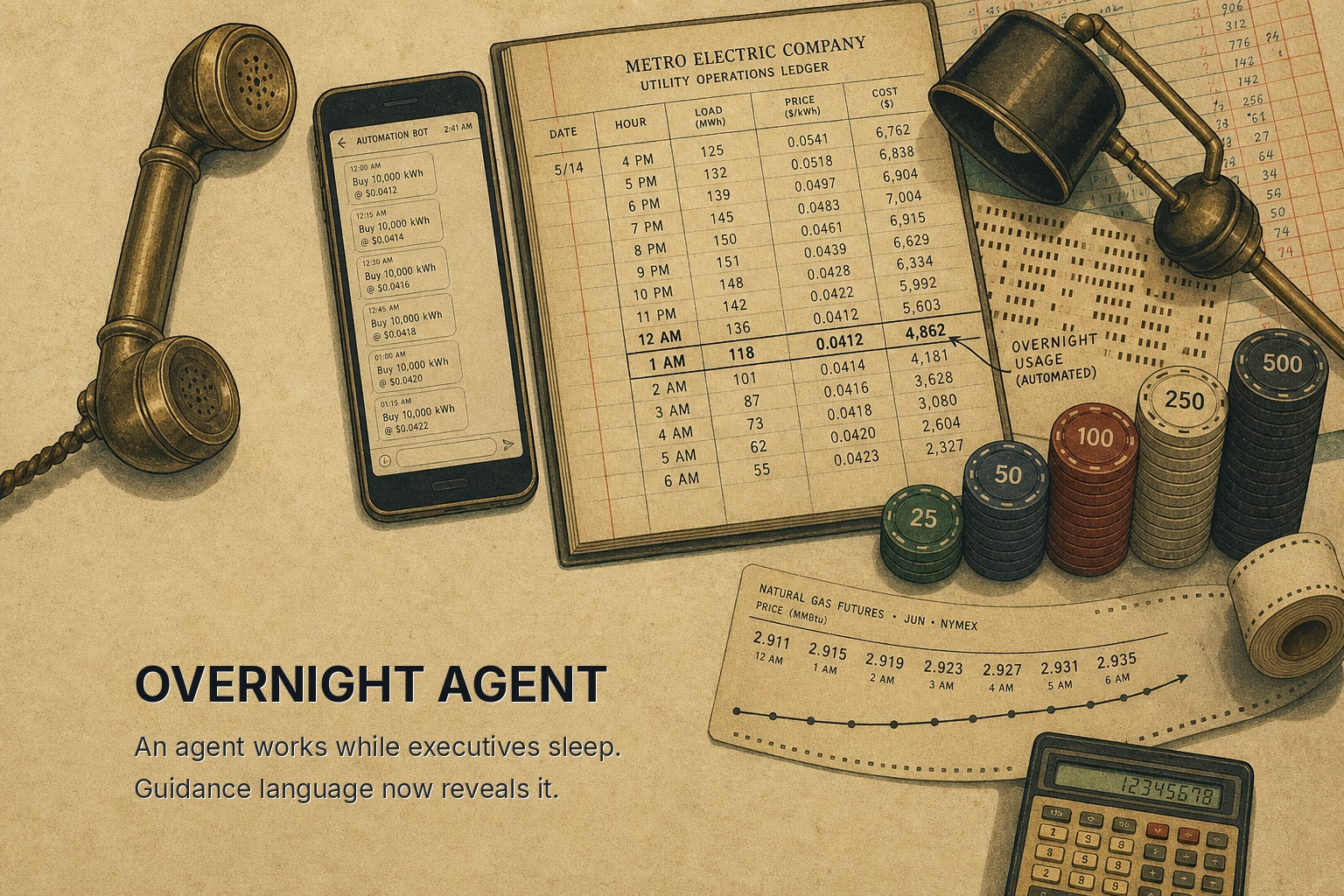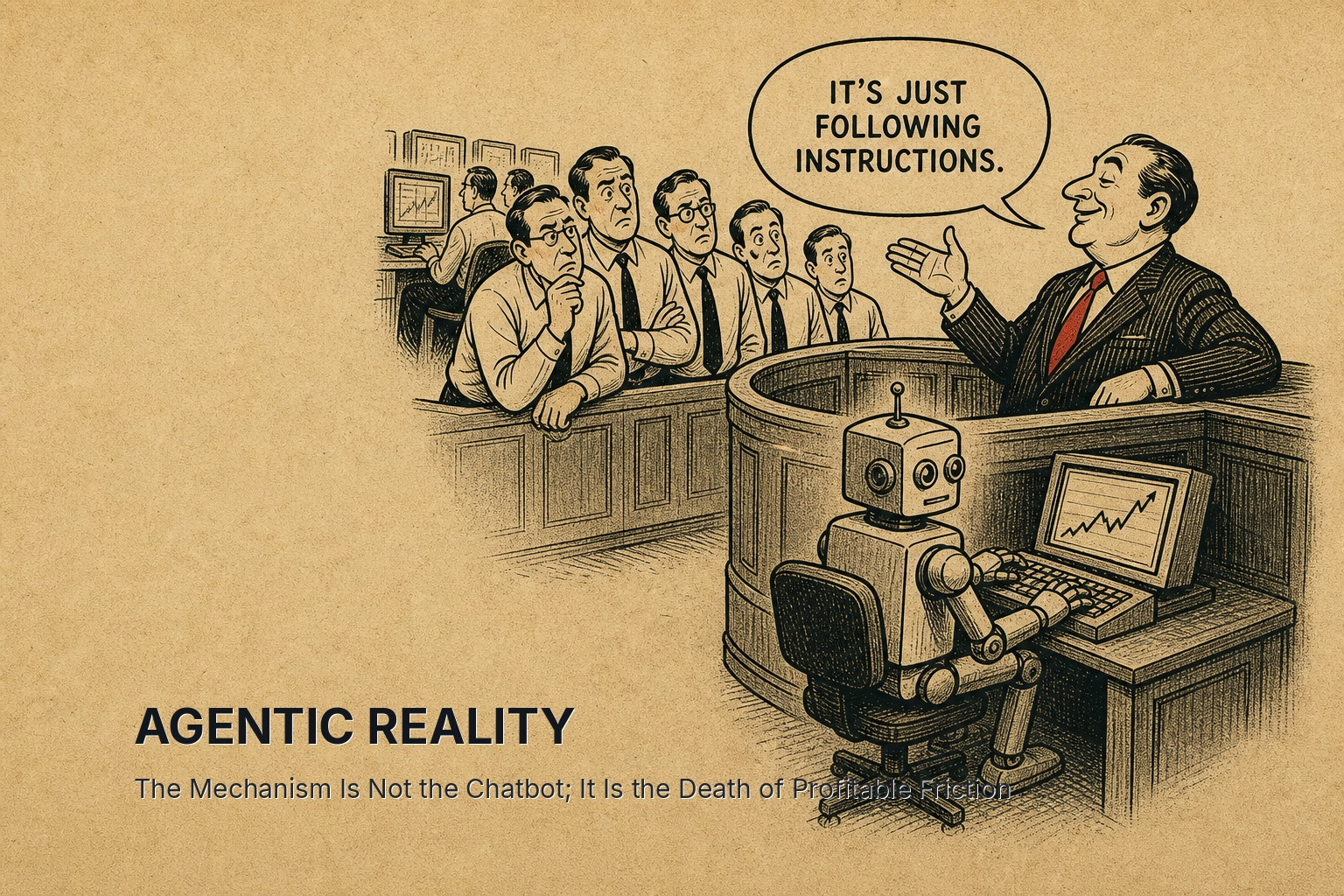
Here is the part everyone selling the "AI disrupts intermediaries" trade has backward: the agent does not need to be smart. It needs to be tireless .
Muse rocketed to the top of the App Store in a day, and the tech reviewers wrinkled their noses at it, and the wrinkled noses are exactly the tell. They are grading the wrong exam.
The consensus read on consumer agents is a benchmark comparison. Which model reasons better. Which one hallucinates less. Which one writes cleaner code. That is a first-level question about the quality of the intelligence. The disruption running through incumbent business models is not about quality at all. It is about the elimination of a thing that the entire consumer economy quietly monetizes: your inertia.
Let us walk through how this actually works, because the mechanism is where intuition breaks.
What Does an Agent Actually Remove?
Not friction between you and the answer. Friction between you and the action.
A chatbot that can "show you a hotel" changes nothing about the economics of hotels. That was the frame in February, and it was the wrong frame, and it produced a lot of premature grave-digging. A chatbot is a better search box. Search boxes have existed for twenty-five years and the loyalty-points industry survived all of them, because the gap that industry monetizes was never finding the deal. It was the exhausting, tedious, endlessly-deferred labor of executing on the deal.
Think about the accounting of your own life. Consider the flight credit you never redeemed. The subscription you meant to cancel in March and are still paying for in November. The loyalty points expiring quietly in an account you have not logged into since a trip two years ago. The promotional rate that reverted to standard while you were not looking. Every one of those is revenue to somebody, and every one of them exists because the friction of acting was higher than the friction of doing nothing.
That is the mechanism. Breakage. The industry term for money you were owed and never collected. Airlines book it. Gift-card issuers book it. Every subscription business with an auto-renew and a hard-to-find cancel button books it. It is one of the highest-margin lines in the modern consumer economy because it costs nothing to produce; it is manufactured entirely out of human procrastination.
An agent with a free tier of 100 million tokens a week does not procrastinate.
Why Does Reach Beat Capability Here?
Because breakage is a mass phenomenon, not a power-user phenomenon.
The "AI Agents" conversation has run for years inside a narrow bubble of people who were always going to find their own flight credits. Those people were never the revenue source. Breakage is manufactured out of the eighty percent of the population who do not optimize, who let the points lapse, who forget the cancel date. That is the population Meta is deliberately aiming at. Not enterprise. Consumers. Seven hundred thousand downloads on the first day, and the point is not that any single one of those users has a genius in their pocket. The point is that the median user just acquired a tireless clerk who will, without being asked twice, go redeem the thing.
This is why the capability critique misfires. When a more consumer-friendly version enters a market and the specialists complain it feels less robust, that is the sound of product-market fit arriving. The specialists were never the market. Every meaningful platform shift has looked underwhelming to the people who already had a workaround, precisely because those people were never the ones whose behavior needed to change.
Meta did not ship the best agent. Meta shipped the agent your mother will use. That is the watershed.
Where Did the February Thesis Get It Wrong?
The card companies. Consensus enthusiasm ran to the payment networks as the obvious casualty, and that read looks weak now. An agent that optimizes your spending still has to pay for the flight it just re-booked with your reclaimed credit. The rails carry the transaction regardless of who or what initiated it. The intermediary that gets hurt is not the one processing the payment. It is the one whose entire margin was built on you not transacting.
This is worth sitting with, because it separates the durable version of the thesis from the momentum version. The reflexive trade is "AI kills the middleman," sold first and reasoned later. But not every middleman lives on friction. The ones exposed are the ones whose profit-and-loss statement has a line that only exists because acting was hard: the breakage, the passive revenue, the auto-renew, the reversion-to-standard-rate. A payment network's margin does not live there. A loyalty-arbitrage business's margin lives entirely there.
We got a few right and more than a few wrong, and the discipline is to say which. Pattern recognition that cannot admit its own misses is just momentum wearing a lab coat. The card-company call was a miss. The friction-as-profit-center call is aging into the thing the whole market is now, belatedly, beginning to price.
Who Is Priced for This, and Who Is Not?
Almost nobody, which is the part that matters.
The equity market is treating each of these episodes as an isolated headline. A single company's guidance wobble. A single "sell first, ask questions later" reaction. What it has not done is aggregate them into a repricing of the category of business whose earnings depend on customer inertia. The distinction has not landed because the disruption arrives one company at a time, on no fixed schedule, and the aggregate pattern is only visible if you were already looking for it.
Charles Kindleberger described the way a new understanding spreads through a market not as a flash but as a diffusion, moving from the insiders outward until the last holder finally grasps what the first one saw. That is the curve running right now. The insiders sold Chegg in 2023. The next ring sold the intermediaries in February on the "chatbot shows you a hotel" frame, which was the right instinct executed on the wrong logic. The broad population is only now, with a free consumer agent at number one in the App Store, arriving at the question that used to belong to niche research desks: what happens to all the money I was leaving on the table?
When that question stops being niche, the repricing stops being idiosyncratic and becomes structural. The businesses most exposed are not the ones with bad products. They are the ones with good products and a hidden dependence on you never quite getting around to using them. That dependence does not show up in a benchmark score. It shows up in a slow, quarter-by-quarter erosion of a revenue line management never named out loud.
I do not know the timing. Nobody honest does; this diffuses on its own clock, and the specific casualty list is still being written. What is not in doubt is the direction. The friction that was profitable is turning into a cost center for anyone who fails to adapt in time, and the agent doing the damage does not have to be brilliant.
It only has to remember the cancel date.