The binding constraint in the AI infrastructure rush is not GPUs and it is not electricity. It is the supply of vehicles through which retail and moment...
The Constraint Nobody Prices
The binding constraint in the AI infrastructure rush is not GPUs and it is not electricity. It is the supply of vehicles through which retail and momentum capital can express the trade at speed. A newly incorporated data-center developer needs eighteen months and a prospectus to reach public markets. A failed bitcoin miner with an existing listing, a shareholder base numbed to volatility, and a corporate shell already cleared through the exchange can rebrand in a quarter. That speed differential is the whole game. It explains why the AI capex story has attracted a specific class of operator: not the engineer, but the promoter who owns the scarce thing, which is the listing itself.
Consensus watches the circular money flows, the capital cycling in and out of Nvidia, and treats the fringe names as noise around a real boom. That reads the tape backward. The fringe names are where the constraint is being cleared. Nvidia and the hyperscalers supply the demand narrative; the shells supply the tradable float. When a fund manager's own investors are badgering him to buy the theme, the market is telling you the demand for exposure exceeds the supply of clean vehicles. Scarcity like that gets filled by whoever can move fastest, and the fastest movers here are the serial reinventors.
The Paper Trail Is the Tell
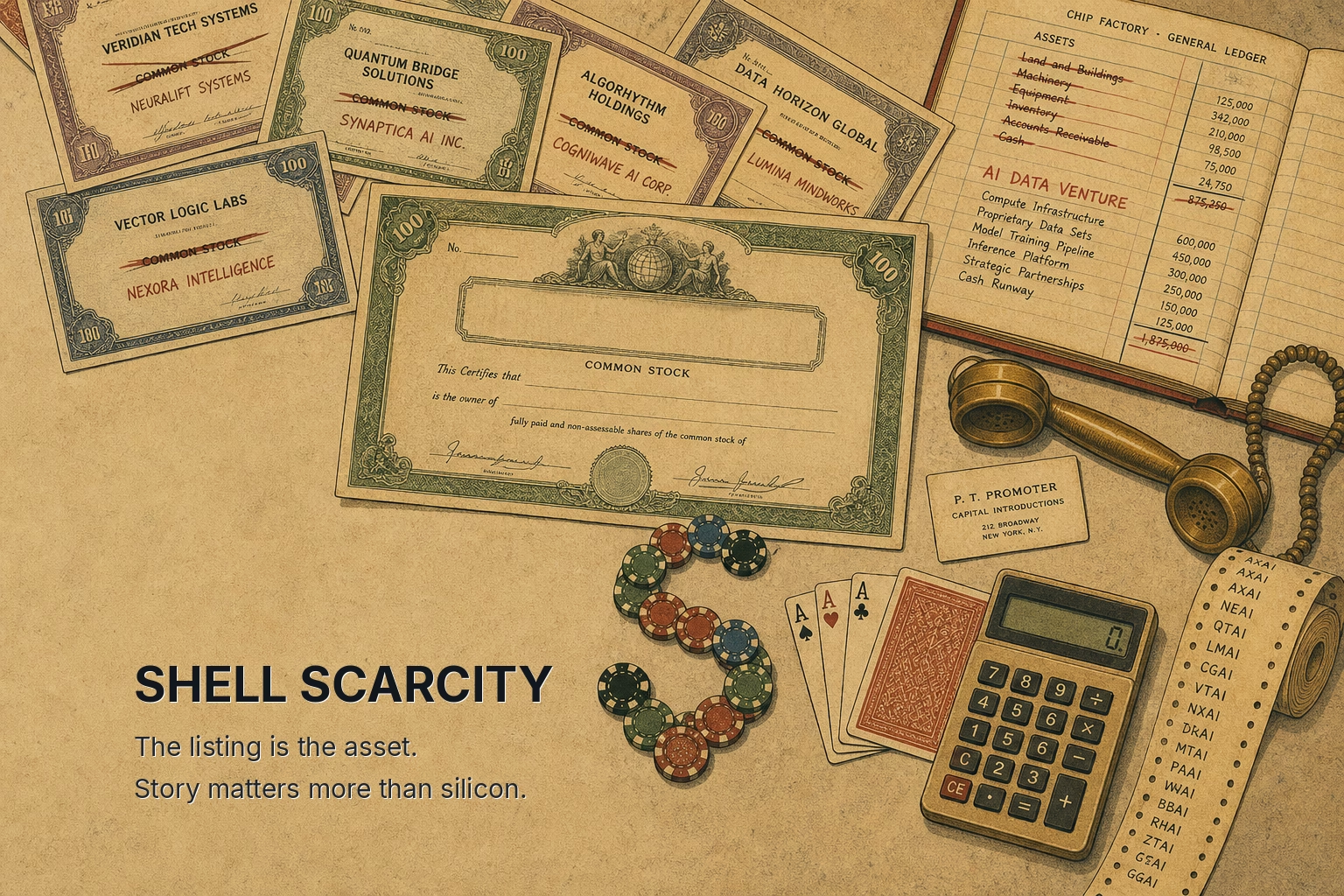
The observation that carries the thesis is the pattern of prior lives. A meaningful slice of the names now describing themselves as neoclouds, developers, or landlords of convertible power and land arrived at AI after failing at bitcoin mining, biotech, fuel cells, minerals exploration, oil and gas, and peer-to-peer microlending. One is run by a pair of cousins, one convicted of insider trading and the other having run a collapsed French lingerie business, neither with a technology background.
This is not a moral aside. It is the supply mechanism made visible. A promoter does not choose bitcoin mining, then fuel cells, then AI because he develops new competence in each field. He chooses them because each is, in sequence, the theme that lets a dormant listing raise capital and mark up its equity. The through-line is the shell and the story, not the technology. The 2021 crypto-miner cohort is the cleanest illustration: firms with power contracts, land, and racks built for hashing found that the same physical footprint could be relabeled as data-center capacity the moment the AI narrative paid better than the mining narrative. Some were, in a real sense, rescued by the pivot.
Where the Rescue Happened, and Who Backstops It
The financial mechanism connecting the story to the outcome runs through counterparty association. The single most repeated feature across roughly two-thirds of these names is a tie to Nvidia, as a direct equity holder, a customer, or a backstop, and where not Nvidia, then Google, Anthropic, or AMD. That association is doing enormous work. A convertible-power shell with a checkered founder becomes financeable the instant a credible AI counterparty appears anywhere in its disclosure, because the counterparty's name substitutes for the diligence the promoter's history would otherwise demand.
CoreWeave sits at the head of this list precisely because it compresses the whole pattern into one name: founded as an Ethereum-mining operation, sparking controversy before it ever reached public markets, and now central to the infrastructure trade. Whatever one concludes about its business today, its lineage is the template. Mining footprint, narrative pivot, marquee counterparty, public bid.
The market consequence follows directly. As long as the counterparty association holds and the AI capex narrative pays, these vehicles clear the exposure constraint and their equity trades at valuations detached from operating substance. The physical assets, power interconnects, land, and racks are real and genuinely scarce, which is what makes the story hard to dismiss outright. The question is never whether the megawatts exist. It is whether the operator sitting on them is building a business or marking up a listing until the next theme arrives.
The Case Against the Cynicism
The strongest counterargument deserves to be stated at full strength: reinvention is the ordinary signature of genuine entrepreneurs, and a checkered past is not a forecast. Amazon was written off as an unprofitable bookseller; plenty of durable companies were built by founders whose first ventures failed. A power-and-land owner who pivots from mining to data centers may simply be allocating a scarce physical asset to its highest use, which is exactly what a rational operator should do. Bankruptcies, activist short reports, and even prior convictions among founders are context, not proof of a fraud in the present entity. The base rate of scandal in any fast-moving capital cycle is high because the money is moving fast, not necessarily because the businesses are hollow.
That counterargument is why the paper trail cannot be the verdict on its own. It is a screen, not a sentence.
What Would Confirm or Break the Read
The read resolves on a measurable condition, not on rhetoric. If these vehicles are clearing a real exposure constraint, the tell is the durability of the counterparty relationships once financing tightens. Watch what happens when Nvidia, Google, Anthropic, or AMD is no longer supplying capital, revenue, or a backstop to a given name. A genuine operator retains its interconnect queue position, its power contracts, and its customers. A promoter's vehicle loses the association and, with it, the bid, because the association was the asset. Serial-reinvention names should show the widest gap between enterprise value and contracted, delivered capacity, and should be the first to reprice when the marginal buyer of the theme steps back.
The broader macro tape offers only weak grounding here; CPI at 332.8 as of July tells you nothing about which shell is real, and no rates channel does the causal work in this story. The signal is idiosyncratic and name-level, so the honest anchor is the theme's aggregate valuation rather than any single fringe ticker whose fundamentals are not reliably retrievable. 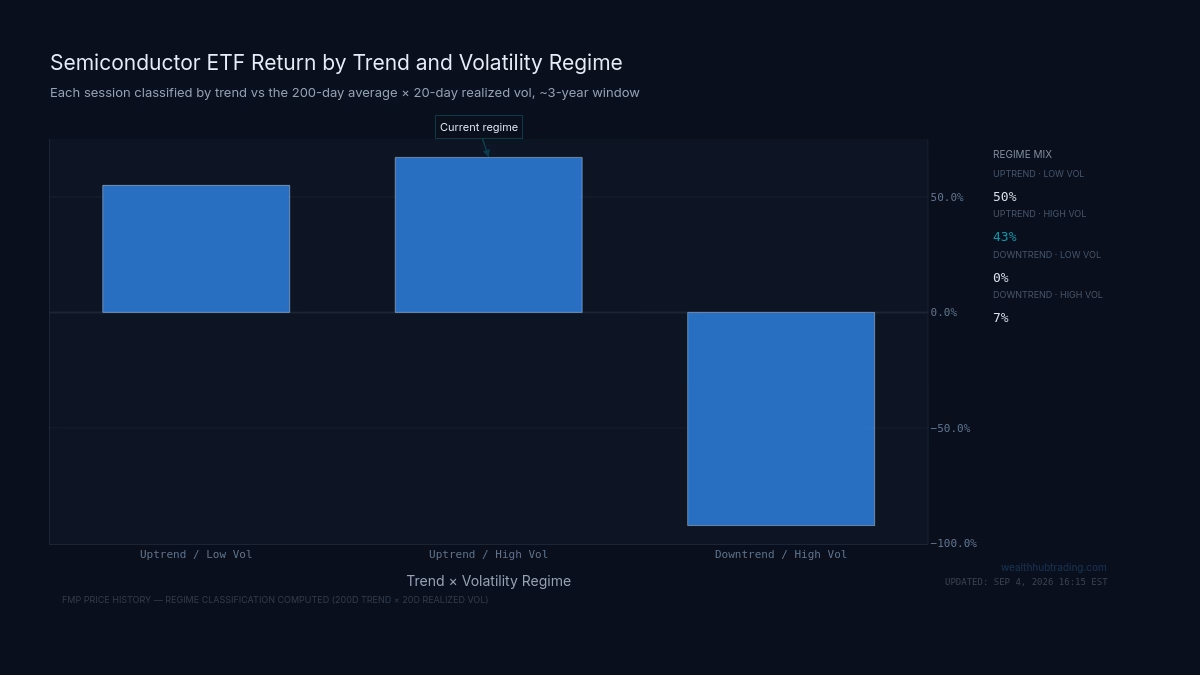
The thesis breaks if the reinvented names convert land and power into contracted, delivered capacity that survives a withdrawal of marquee financing. Until that conversion is visible in something more durable than a press release, the cleaner reading is that a portion of this cohort is selling the same listing it always was, with the label changed to match the theme that pays. The paper trail does not tell you which is which. It tells you where to look first.