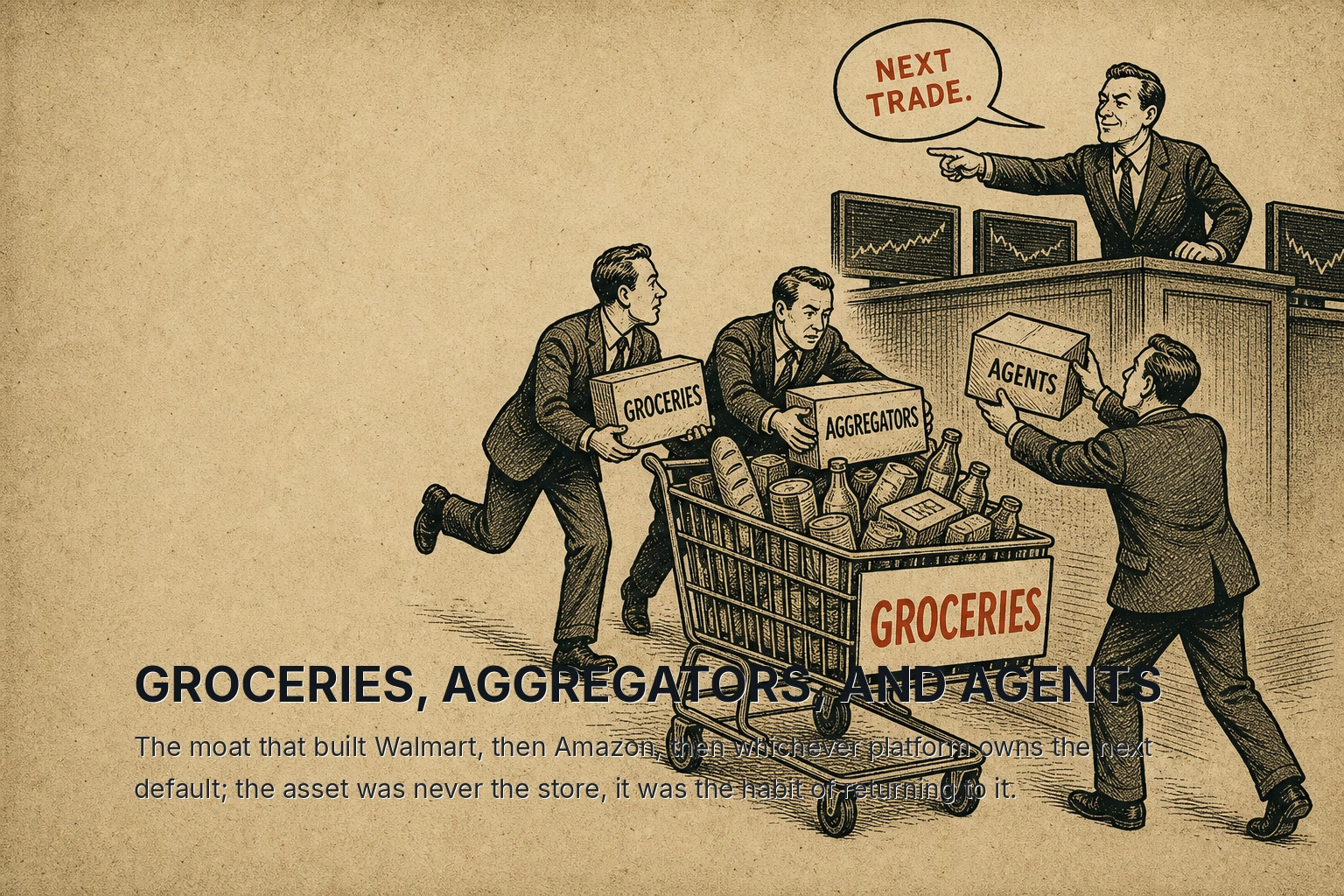
The market is not selling software because AI has hurt software. It is selling software because it cannot yet prove that AI won't. That distinction, the...
Capital is moving out of bits and into atoms, and the interesting question is not whether the move is justified. It is which historical pattern this rhymes with, because the pattern determines who actually wins.
Consider the setup as it stands in late 2026. Vertical SaaS, digital advertising, portions of fintech: all repricing lower not on earnings misses but on an uncertainty the market has decided it cannot underwrite. A thirty times revenue multiple assumes durable pricing power far into the future. Agentic AI does not need to have taken a single customer to make that assumption unprovable, and an unprovable assumption cannot support a premium multiple. So the market applies what amounts to a disruption discount and waits. Meanwhile, everything that is physical, power generation, grid infrastructure, copper, nuclear, gets bid, because there is no prompt that increases the world's titanium supply by five percent.
This is a rotation from the intangible to the tangible under conditions of technological uncertainty. It has happened before, and each prior instance carries the same warning: the first-order winners are almost never the durable ones.
The railroads, and the second-order lesson of 1849
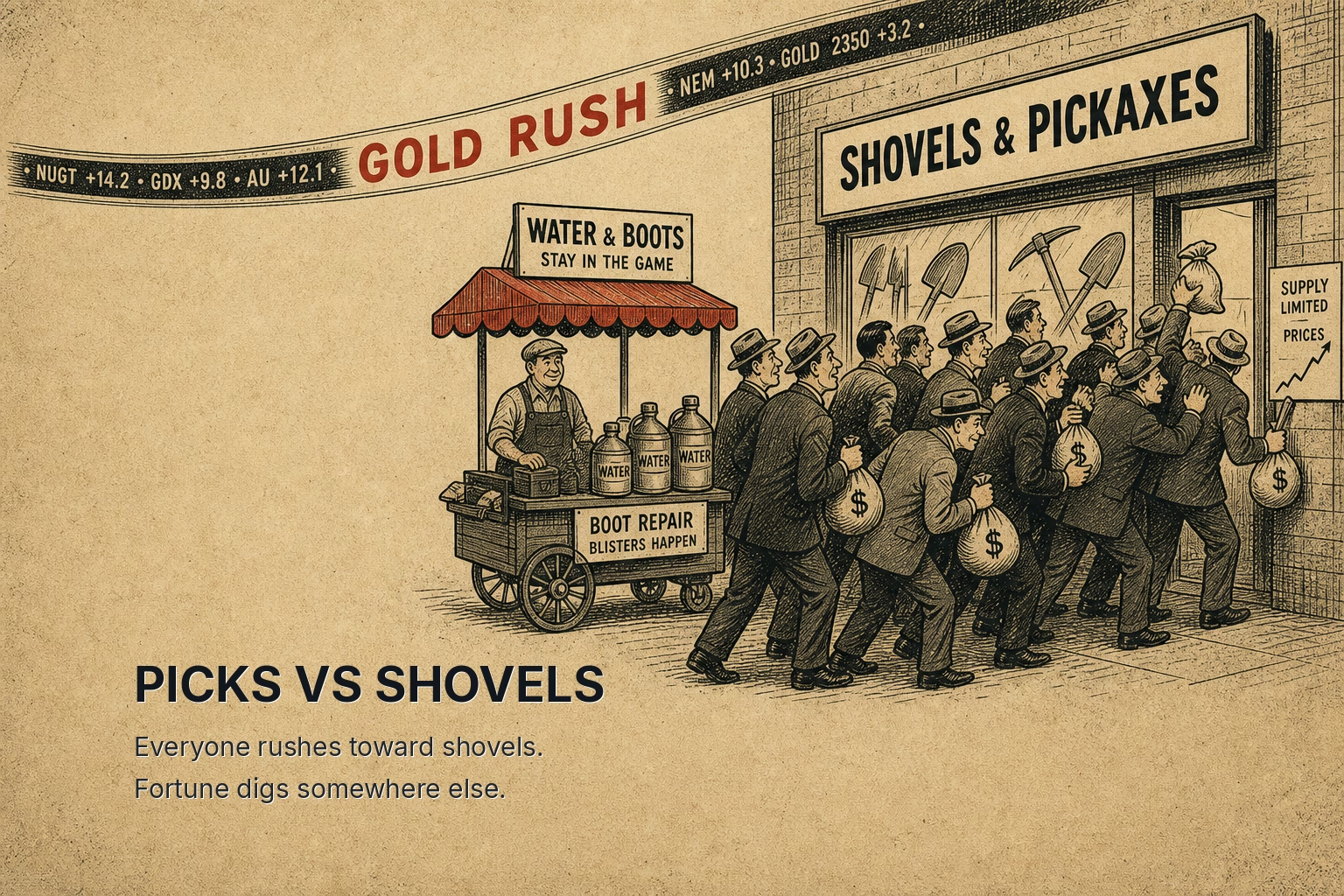
In the years following the discovery of gold at Sutter's Mill in January 1848, the obvious trade was gold itself, and the second obvious trade was the men who dug for it. Most of both groups were ruined. The fortunes that endured belonged to the suppliers of the physical inputs the rush could not function without: Levi Strauss, who arrived in San Francisco in 1853 selling dry goods; Samuel Brannan, who bought every pick, pan, and shovel in the region before announcing the discovery publicly.
The structural point is not that "shovels beat gold." That aphorism is repeated so often it has lost its edge. The sharper observation is that the durable winners commanded pricing power over an entire cycle because they sat at a genuine bottleneck, while the miners themselves faced ruinous competition the moment the constraint they exploited, being early, disappeared.
The same shape recurred during the railway mania in Britain between 1844 and 1847. Parliament authorized thousands of miles of new lines. Railway shares became the growth story of the age, the bits of their era in the sense that they represented the abstract future being priced into the present. When the mania broke in 1847, the share promoters and the marginal lines were wiped out. What endured was not the equity story. It was the physical asset, the iron and the right-of-way, absorbed at distressed prices by operators who could run it across a full cycle. The people who bought the concept lost. The people who ended up owning the atoms, at the right price, compounded for decades.
Fiber, and the crowded shovel of 1999
The closest analog in living memory is the telecom and fiber buildout of the late 1990s. The internet was the agentic AI of its moment: a technology advancing fast enough that its endpoint was genuinely unknowable, and a market willing to reprice everything on the strength of the threat and the promise together.
The reasoning of the day was sound in its first step and fatal in its second. Investors correctly identified that the abstract layer, the websites, the portals, the pure-play dot-coms, would be disrupted and reshuffled in ways no one could predict. So capital rotated toward the physical layer that the internet undeniably required: fiber optic cable, routers, the long-haul networks. WorldCom, Global Crossing, Nortel, JDS Uniphase. These were the atoms trade of 1999, the thing you could not prompt your way out of, the picks and shovels of the digital gold rush.
They were also, by 2000, priced for a perfection that physical-world constraints made impossible to deliver. The buildout overshot demand by an order of magnitude. Estimates at the time suggested only a small fraction of the fiber laid was ever lit. Nortel, which reached a market capitalization above three hundred billion Canadian dollars at its peak, filed for bankruptcy protection in 2009. Global Crossing filed in 2002. The atoms were real. The demand curve the valuations implied was not.
And here is the second-order lesson that consensus forgets every cycle: the ultimate beneficiaries of the fiber glut were not the companies that laid the fiber. They were the companies that bought dark fiber at cents on the dollar a decade later and built the hyperscale cloud on top of it. The winners of the atoms trade were the patient buyers of distressed atoms, not the original builders who confused a real constraint with a durable one.
The pattern, and the one way this time is not the same
Three episodes, one shape. A technology arrives whose endpoint cannot be forecast. Capital, unable to underwrite the abstract layer, rotates into the physical inputs the technology visibly consumes. The first-order physical plays, the obvious shovels, get bid to prices that assume the constraint is permanent. And in every prior case, the constraint proved temporary or the buildout overshot, so the durable returns accrued not to the crowded first-order trade but to the second-order players who controlled a genuine bottleneck across the full capital cycle.
We can see the current version clearly. Power generation equipment, optical interconnects, grid infrastructure, copper miners, nuclear: these were correct calls, and they are now crowded ones, priced for a perfection that physical constraints ironically guarantee cannot arrive. This is the Nortel seat of 2026. Real assets, real demand, and a valuation that quietly assumes the bottleneck is forever.
The genuinely interesting frontier is the collision zone, where a second source of demand lands on top of the data center buildout and constrains a shared supply chain further. Jet engines are the poster child. Data center gas turbines run on older jet-engine technology, and while the turbines and current-generation engines are built separately, both draw on the same specialty materials. Layer onto that a defense cycle aiming at a one-and-a-half-trillion-dollar US budget, NATO allies rearming, sustained Japanese defense spending, and an aerospace industry sitting on a historic backlog, and you have a supply chain squeezed from three directions at once. 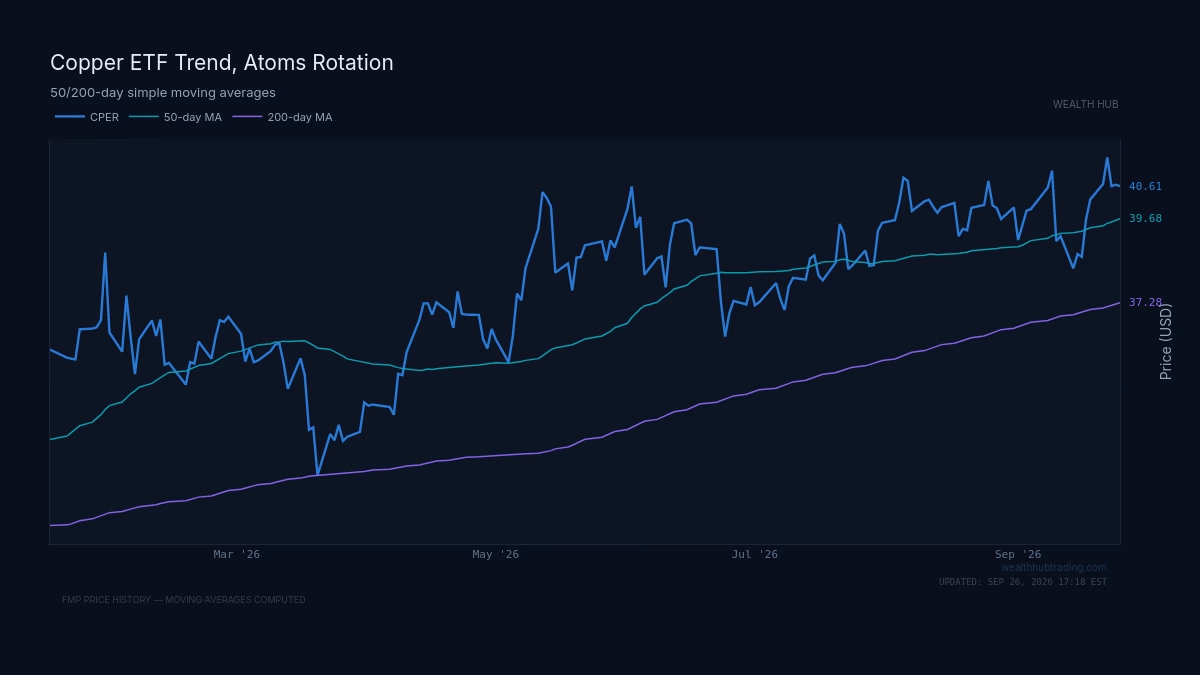
Here is where the discipline of the pattern matters. The test is not "is this physical." Fiber was physical. The test is whether a company can command pricing power over an entire capital cycle because multiple tailwinds converge on a constraint that competitors cannot quickly relieve, or whether it is a commodity trade with extra math. In 1849 that distinction separated Levi Strauss from the average miner. In 1999 it separated the dark-fiber buyers of 2010 from Global Crossing.
Now the way this time is not the same, and it is the one link worth hedging honestly. In every prior episode, the physical constraint eventually eased because the technology's demand curve flattened or supply overshot. The fiber glut ended the fiber trade. The bet embedded in today's atoms rotation is that hyperscaler bit-generation will keep compounding demand for power and materials in lockstep, so the constraint persists longer than the buildout can relieve it. That may be right. But it is precisely the assumption Nortel's shareholders also made, and it is the single variable on which the entire trade turns. If AI capital expenditure plateaus the way fiber demand did, the crowded first-order atoms plays are not the safe harbor from the software selloff. They are the next Nortel, holding real assets against a demand curve that was never going to materialize.
The lesson the cycles teach is narrow and unglamorous. In a rotation from bits to atoms, the market first bids the obvious physical shovels to prices that assume permanence, and the durable returns tend to accrue instead to whoever controls a genuine, multi-tailwind bottleneck across the full cycle, or to the patient buyer of the shovels once the first owners have confused a real constraint with a forever one.