In the autumn of 2023, the Treasury market did something that puzzled a lot of observers. The federal deficit was enormous, roughly $1.7 trillion for th...
In the autumn of 2023, the Treasury market did something that puzzled a lot of observers. The federal deficit was enormous, roughly $1.7 trillion for the fiscal year, and every intuition said that flooding the market with new government debt should push yields sharply higher and drain cash from the financial system. For a stretch of months, it did not. The 10-year yield actually fell through the winter, and financial conditions loosened even as the government borrowed at a historic pace.
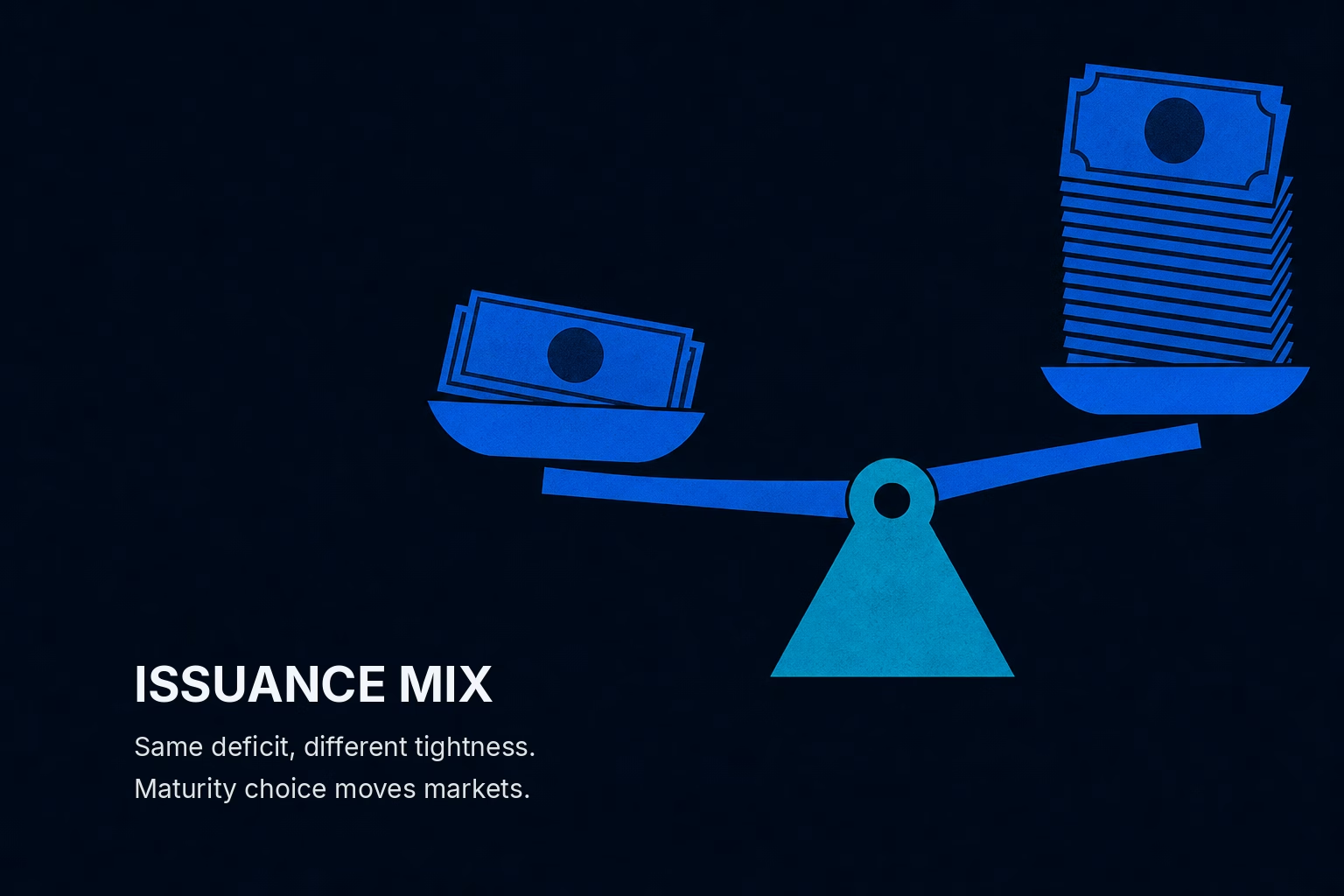
The reason had almost nothing to do with the size of the deficit. It had to do with the maturity of the debt Treasury chose to sell. Through most of 2023, the Treasury financed the deficit disproportionately with Treasury bills, which are short-term debt maturing in a year or less, rather than with coupons, which are longer-dated notes and bonds that pay periodic interest. That single choice, the split between bills and coupons, determined how much a given amount of borrowing actually tightened financial conditions.
Most commentary treats government borrowing as one undifferentiated force pressing on the market. The mechanism that actually matters is who has to buy the debt, and at what cost to the rest of the system.
Where the money to buy bills was already sitting
To see why the bills-versus-coupons choice matters, you have to know where the cash to absorb new debt comes from.
Through 2022 and 2023, money market funds parked well over $2 trillion at the Federal Reserve through a facility called the reverse repurchase agreement, or RRP. In plain terms, the RRP is a place where money funds could lend cash to the Fed overnight and earn a set rate, because they had more cash than they could safely deploy elsewhere. This was idle money, sitting in the safest, most liquid instrument available, earning the Fed's administered rate and doing nothing else.
Treasury bills are a nearly perfect substitute for that RRP cash. A bill matures in weeks or months, carries no meaningful duration risk, and yields slightly more than the RRP rate. So when Treasury issued bills, money funds did the obvious thing: they pulled cash out of the RRP and bought the bills instead. The RRP balance fell by more than $2 trillion over roughly eighteen months, and that decline funded a huge share of the government's bill issuance.
Here is the part that matters for financial conditions. When a money fund shifts cash from the RRP into a new bill, no reserves leave the banking system, and no other buyer has to be tempted away from something else. The cash was inert to begin with. Moving it from one government liability (the RRP) to another (a bill) drains almost nothing from the pool of liquidity that supports risk assets. This is why a deficit financed by bills, up to the point where the RRP is exhausted, tightens financial conditions far less than its headline size suggests.
The practical takeaway is that a large deficit does not automatically mean a liquidity squeeze. As long as there is idle cash in facilities like the RRP willing to roll into bills, the borrowing is largely self-funding from the market's own dead money.
Why coupons cost the system something bills do not
Coupons are absorbed by an entirely different buyer, and that difference is the whole story.
A 10-year note or a 30-year bond carries substantial duration risk, which is the sensitivity of a bond's price to changes in interest rates. A note with 8-year duration loses roughly 8% of its market value for every one-percentage-point rise in yields. No money fund wants that exposure. The buyers for coupons are pension funds, insurers, foreign central banks, banks managing their securities portfolios, and leveraged traders, all of whom are price-sensitive because they are taking real risk.
Those buyers do not hold a pile of inert cash waiting to be deployed the way money funds do. To buy a new 10-year note, a pension fund has to sell something else, or demand a higher yield to compensate for the added duration, or both. That is the mechanism by which coupon issuance tightens conditions: it forces price-sensitive investors to reprice risk across their whole portfolio. Higher long-term yields raise the discount rate on equities, widen mortgage rates, and lift corporate borrowing costs.
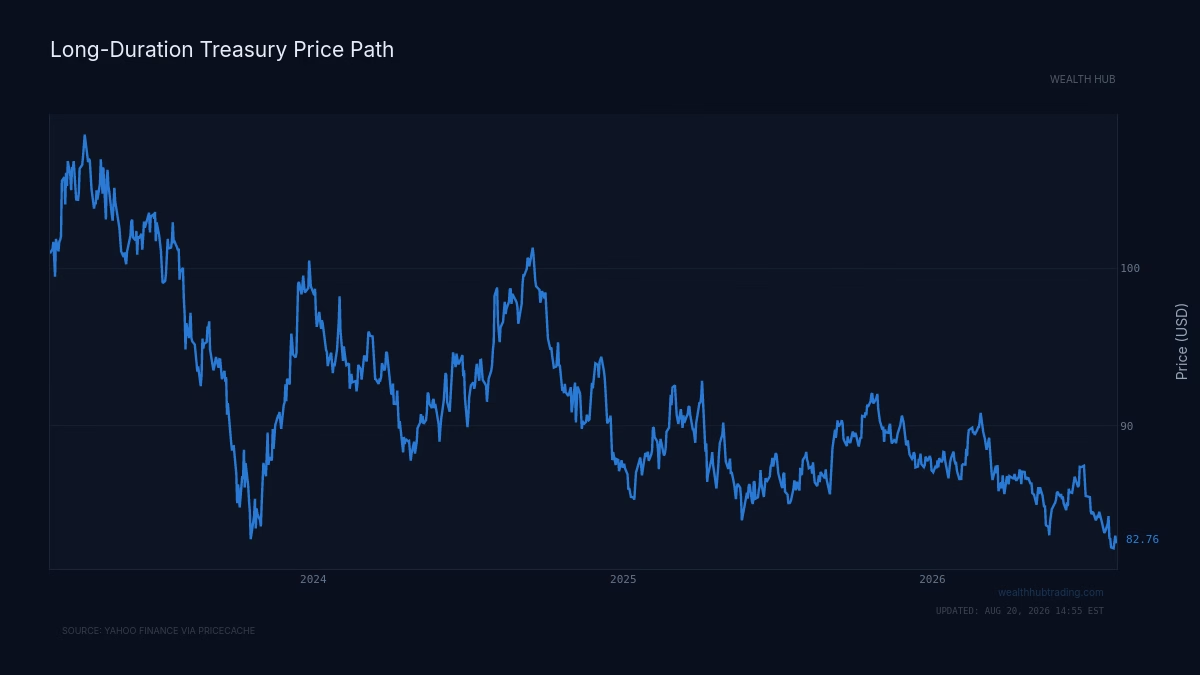
The contrast is stark. Bill issuance taps a reservoir of cash that was doing nothing. Coupon issuance competes for capital that is already working somewhere in the system. The same $100 billion deficit tightens financial conditions modestly if financed with bills and meaningfully if financed with long-dated coupons.
For a reader trying to gauge the market impact of government borrowing, this means the announcement to watch is not the deficit number. It is the Treasury's quarterly refunding statement, where it discloses how much of its financing will come from bills versus coupons.
When the bills escape valve runs dry
The bills mechanism has a hard limit, and understanding that limit is what separates a useful framework from a dangerous one.
The reason bill issuance was nearly free in liquidity terms was the existence of the RRP cushion. Money funds had trillions in idle cash to convert into bills. But that cushion is finite. As the RRP drained toward zero through 2024, the marginal bill buyer stopped being a money fund moving dead cash and started being someone who had to pull money from somewhere active in the system.
Once the RRP is empty, bills stop being free. New bill issuance then competes for the same reserves that support bank lending and market liquidity. The escape valve that let the 2023 deficit pass through with little tightening closes, and additional borrowing, in whatever form, starts to bite.
This is the failure mode of the mechanism. An analyst who learned the 2023 lesson that "bills are painless" and applied it mechanically to a later year with a depleted RRP would badly underestimate how much a bill-heavy financing plan tightens conditions. The relationship between bill issuance and liquidity is not a constant. It depends entirely on whether there is idle cash left to absorb the bills without disturbing anything else.
The history of the RRP itself illustrates how quickly these conditions change. The facility went from near-zero balances before 2021 to over $2 trillion by mid-2023 and back toward the low hundreds of billions by late 2024. A framework built on the assumption that the cushion is always there will fail precisely when it is needed most.
What this means for reading the deficit
The size of a deficit tells you how much the government needs to borrow. It does not tell you how much that borrowing will tighten the screws on markets. The maturity mix does.
When you next see a large deficit projection accompanied by warnings that yields must surge and liquidity must drain, ask two questions before accepting the conclusion. First, how much of the financing is planned in bills versus coupons? A bill-heavy plan is far gentler on financial conditions than a coupon-heavy one of the same size. Second, how much idle cash is left in the RRP and similar facilities to absorb those bills? Without that cushion, even bills tighten conditions.
The core mechanism is this: a deficit changes financial conditions through the price-sensitive buyers it forces into the market, and Treasury controls how many of those buyers it summons by choosing where on the yield curve to issue. Read the refunding announcement, not just the deficit headline, and you will understand the borrowing's real weight on the system.