The mistake Brussels made with its 21st sanctions package was not moral or even strategic in the grand sense. It was structural. The EU played the board as if it were solitaire, adding 14 Chinese firms to its Russia list without modeling the single move that any competent adversary would make in response. Beijing made that move in under 24 hours, and the mechanism it used is the thing worth understanding, because the same mechanism now governs how the next escalation in energy, rare earths, and dual-use manufacturing will play out.
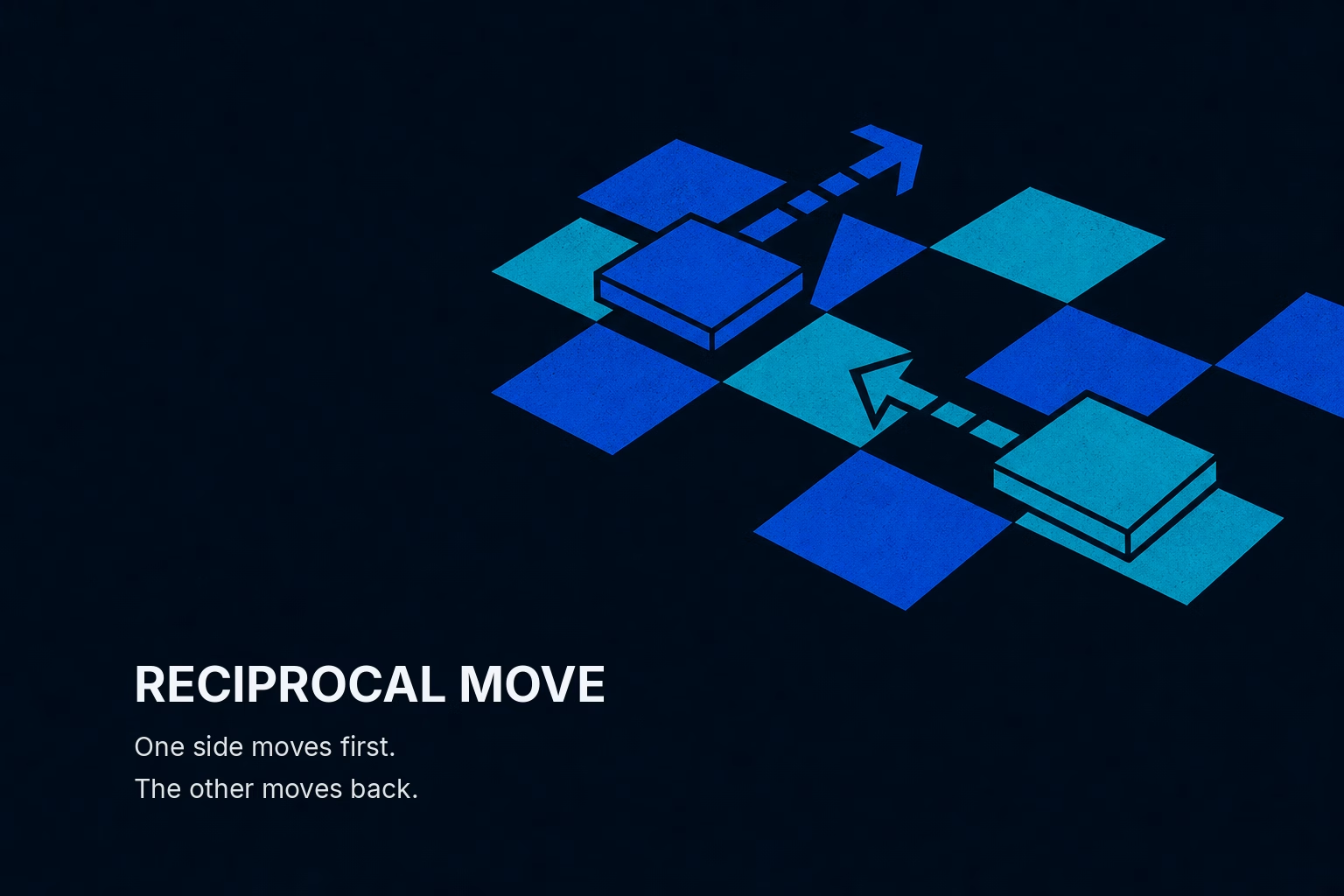
Chess is the wrong metaphor for the way it flatters the participants, and the right one for the way it exposes them. A serious player does not evaluate a move by its immediate effect on the board. They evaluate it by the position it produces after the opponent's best reply. The EU's error was to skip that second step entirely, to treat a sanctions listing as a terminal action rather than the opening half of an exchange. That is not a policy disagreement. It is a category error about what kind of game is being played.
The Move Nobody Modeled
The proximate facts are simple. The EU listed 14 Chinese businesses, citing dual-use goods allegedly feeding Russia's war effort. China's Ministry of Commerce responded by barring Chinese exporters from supplying dual-use goods to 14 European defense and technology firms, among them Rheinmetall, the Czech truckmaker Tatra, and the Dutch naval engineering firm IHC Merwede.
What makes this instructive is not the symmetry of the numbers. It is the selection logic. Beijing did not reach for a blunt instrument like a tariff or a broad import ban that would have hurt Chinese consumers as much as European producers. It selected firms sitting precisely in Europe's dual-use and defense supply chains, the same category Europe used to justify its own listings. The message encoded in the target set is that the definition of "supporting a military effort" cuts both ways, and China now has the legal apparatus to apply it fast.
That apparatus is the underrated part. The speed of the reply, under a day against a diplomatic norm of weeks, was possible because China's Export Control Law and Anti-Foreign Sanctions Law give Beijing a rules-based, pre-built channel for reciprocation. This is not improvisation. It is a standing capability that converts any Western listing into a menu of proportionate countermoves already drafted and legally grounded.
Why the Response Was Never Uncertain
Here is where intuition fails, and it fails in a specific place. The instinct in Brussels appears to have been that the larger, more diversified economy would absorb a listing and decline to escalate, because escalation is costly. That reasoning treats cost as the deciding variable. It is not. The deciding variable is credibility, and for a state that has built its foreign policy around not being seen to retreat, the cost of non-response is higher than the cost of response.
Once you model the adversary's incentive structure rather than your own, the countermove stops being a surprise and becomes an equation. Beijing's payoff from reciprocating exceeds its payoff from absorbing, because absorbing invites a 22nd package, a 23rd, and a general perception that Chinese firms are free targets. The reply was not a gamble. It was the dominant strategy, visible to anyone who bothered to sit on the other side of the board.
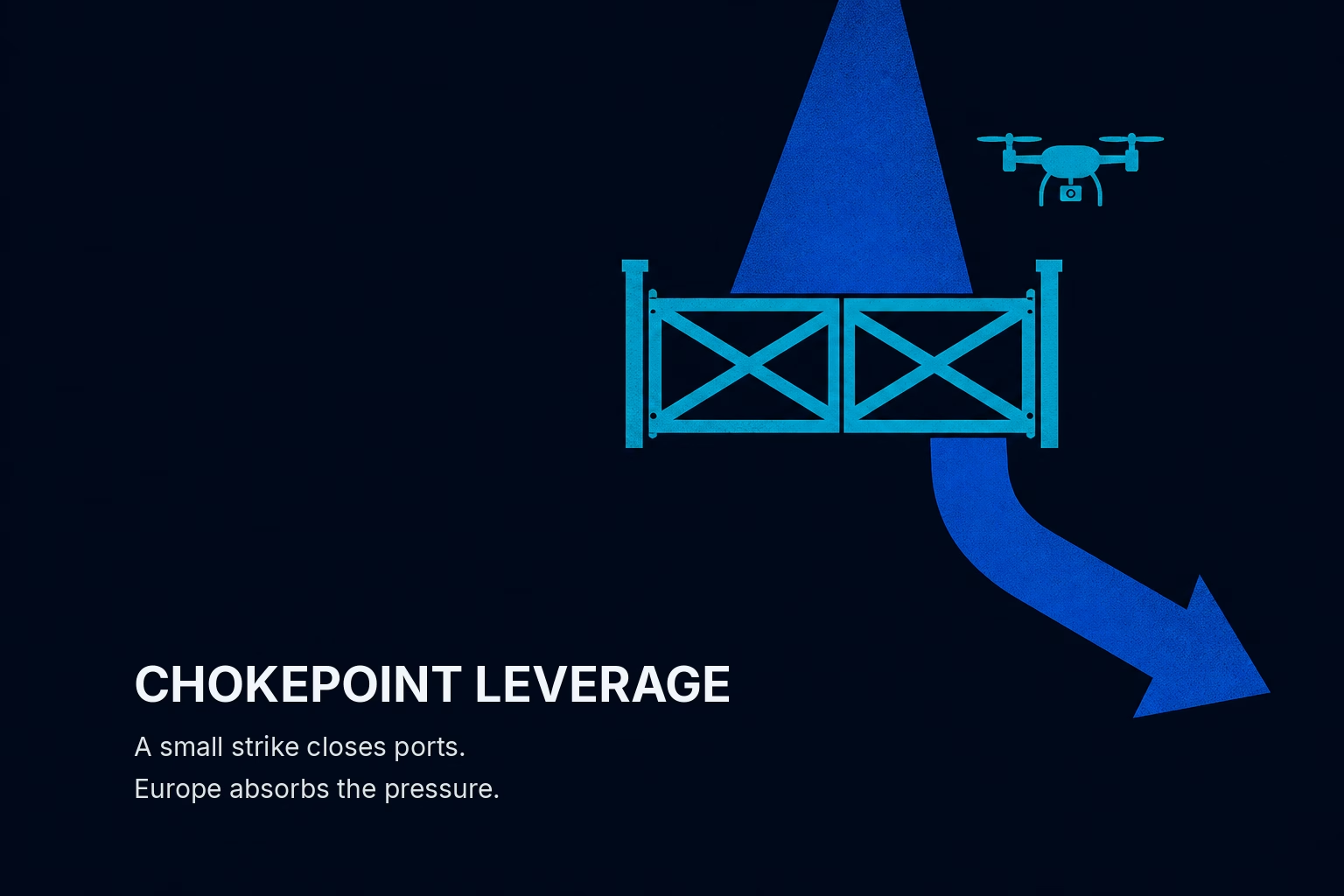
The chokepoint asymmetry sharpens this. Recent estimates suggest up to 90 percent of sanctioned goods still reaching Russia transit through China. Whatever one thinks of that figure, it describes a structural reality: the EU depends on Chinese cooperation to make its own sanctions bite, while simultaneously sanctioning the entity whose cooperation it needs. Listing Chinese firms does not close that transit route. It gives Beijing a reason to widen it, and a legal pretext to retaliate in the sectors where Europe is least substitutable.
Where the Mechanism Migrates Next
The dual-use exchange is a template, not an endpoint. The same one-dimensional thinking that produced it is now aimed at critical commodities, and that is where the financial consequence becomes concrete.
The reciprocity mechanism has three moving parts. First, an asymmetric chokepoint, where one side controls a supply link the other cannot quickly replace. Second, a legal channel that lets the controlling side act fast and claim the same justification the West used. Third, a target set chosen for maximum strategic pain rather than maximum economic breadth. Rare earths satisfy all three. China's dominance of rare-earth processing is the textbook asymmetric chokepoint, the Export Control Law is the ready channel, and Western defense and semiconductor supply chains are the obvious target set.
The market error to watch for is the same one Brussels made: pricing a Western restriction as a terminal event rather than the first half of an exchange. When an equity or a commodity reprices on a sanctions headline, the move that matters is usually the counter, and the counter arrives faster and more targeted than the initial pricing assumes. The volatility regime around defense-industrial names and rare-earth-exposed supply chains is therefore driven less by the announced measure than by the reply it provokes.
Broad equity indices tend to absorb these episodes with a shrug, which is exactly why the mispricing concentrates at the sector and name level. 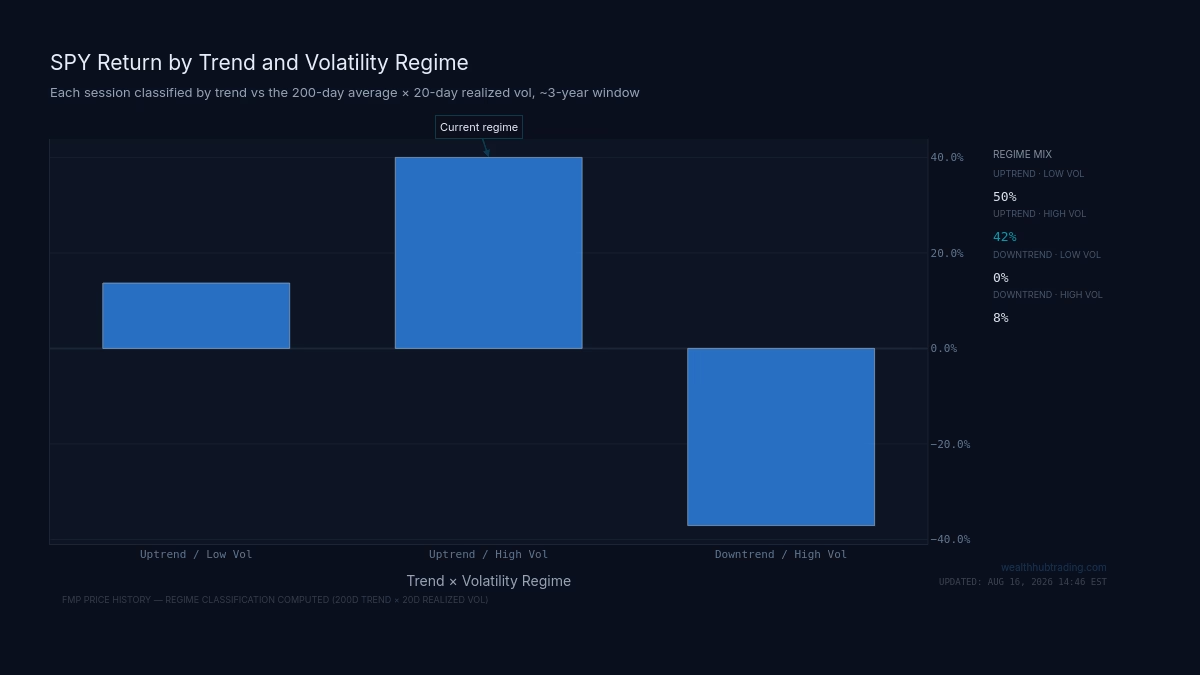
The Case Against Overreading This
The strongest counterargument is that this was a discrete tit-for-tat, symbolic on both sides, and that reading a general mechanism into it overfits a single episode. Fourteen firms against 14 firms is a contained exchange, not the opening of a commodity war, and markets that ignored it were correct to.
That objection has force, and it identifies the exact condition that would break the thesis. If the next Western listing draws a proportionate, symmetric, and equally contained Chinese reply, the tit-for-tat reading wins and the escalation ladder stays flat. The mechanism I have described predicts something different: that Beijing will at some point choose asymmetry over symmetry, replying to a narrow listing with a broad chokepoint action in rare earths or another commodity where substitution is slow. A symmetric reply is reassuring. An asymmetric reply is the confirmation.
There is a second, fairer caveat. Nothing in the public record establishes that China's response was centrally war-gamed in advance rather than assembled quickly from existing legal tools. The distinction matters less than it seems. A standing legal framework that produces a targeted reply in under a day is functionally indistinguishable from a plan, and for pricing purposes it is the speed and precision that count, not the intent behind them.
What Would Confirm the Read
The observable condition is proportionality. Watch the ratio between the breadth of a Western measure and the breadth of the Chinese reply. As long as replies stay symmetric and sector-matched, the market is right to treat each episode as noise. The moment a narrow Western listing draws a broad commodity-side counter, the mechanism has escalated from checkers to something with real financial teeth, and the repricing will land first on the names sitting on the asymmetric chokepoint rather than on the index.
The EU's 21st package will not be remembered for the 14 firms it named. It will be remembered, if the mechanism holds, as the moment the reciprocity channel was shown to be fast, legal, and already loaded. The players who model only their own half of the board will keep being surprised by moves that were never uncertain to anyone reading both sides.