Bessent did not add liquidity on Wednesday morning. He capped a yield. The distinction is the entire trade.
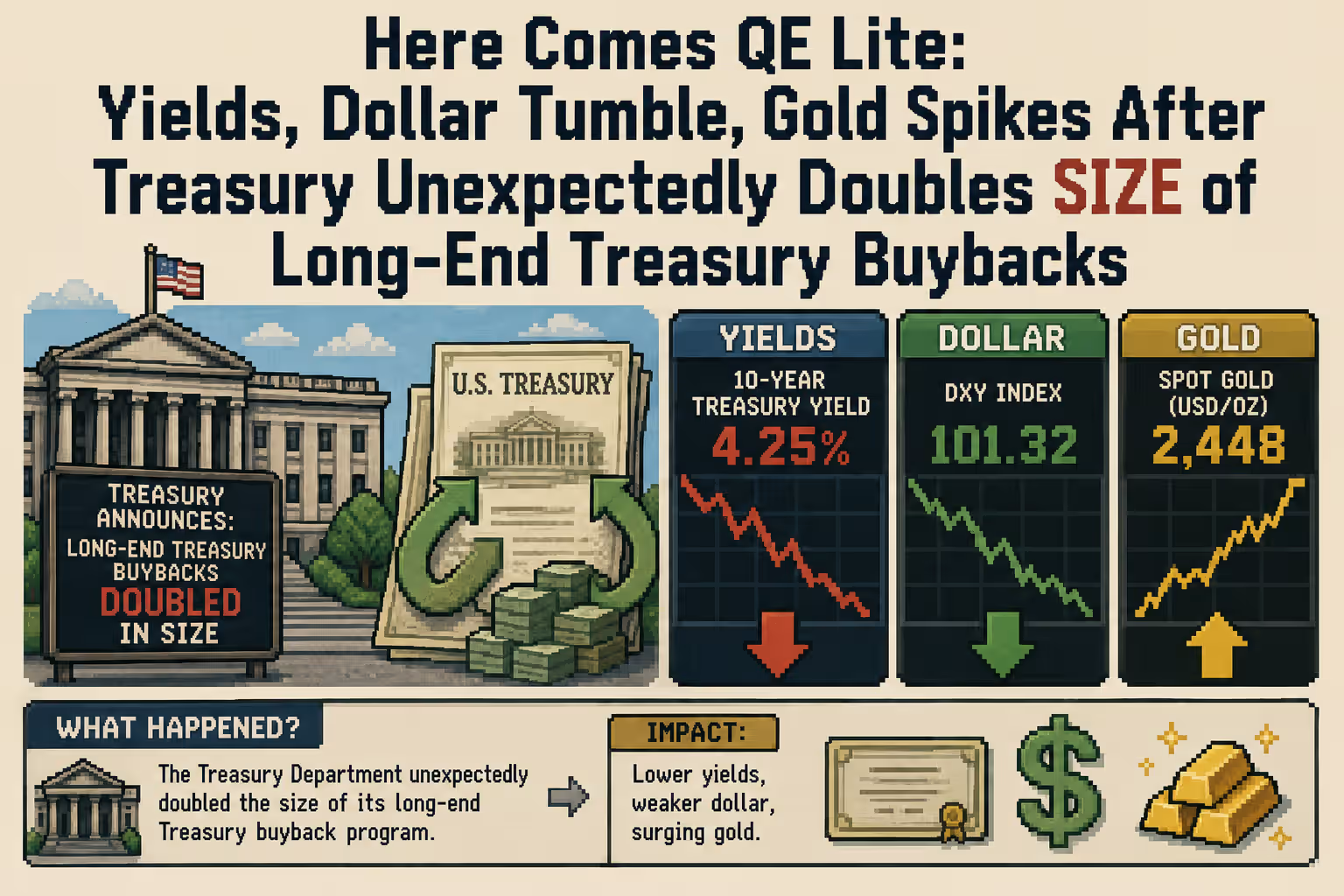
The Treasury announcement at 8:30am doubled the maximum size of long-end liquidity buyback operations, from $2 billion to at least $4 billion per operation, targeting the 10-to-20 and 20-to-30 year sectors. Yields fell 6bps on the headline in an instant. Stock futures surged. Gold broke higher. And the official language read like a plumbing memo: "greater liquidity support in longer-dated nominal sectors where there is consistent strong sponsorship."
Consensus took the memo at its word and moved on to the next macro print. That is the mistake. When a Treasury Secretary doubles his long-end bid on the morning that 30-year yields are sitting at 20-year highs and threatening to run higher, the operative word is not liquidity. It is panic. The relevant question is never what the buyback does to the bond it purchases. It is what the buyback forces everywhere else.
Why did gold move before the bond desk finished repricing?
Because gold is not pricing a bond. It is pricing the admission.
The bond desk saw a technical adjustment to an existing program and repriced the front of the curve accordingly: 2s30s flattened 7bps on the day, 10s30s flattened 2bps. Clean, mechanical, contained. The kind of move a rates trader books and forgets. Gold does not read the operation. Gold reads the motive. A government that must double its own long-end bid to keep 30-year yields from blowing out has told the market something it cannot un-tell: the marginal buyer of duration is now the issuer of duration.
That is the fear-gauge signal, and it is well established. Gold rallies sharply, often without an obvious dollar-weakness driver, when the market senses that the fiscal authority has quietly become a price-insensitive buyer of its own paper. The dollar tumbled alongside gold on the announcement, which the plumbing reading cannot explain. If this were genuinely about market functioning, the currency does not care. The currency cared. It cared because a doubled buyback with total US debt approaching $40 trillion is not a liquidity operation; it is the first visible seam in the fiscal-financing story.
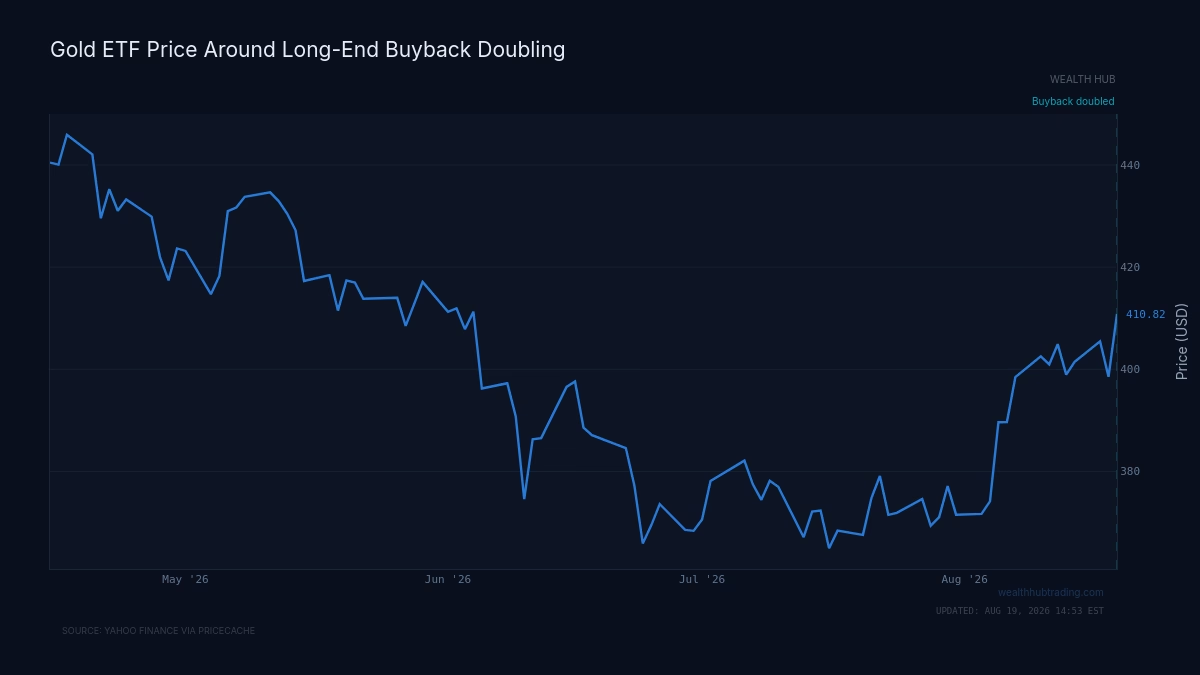
The part consensus misses is timing. Gold moved first because gold answers a different question than the bond. The bond asks what is the new supply-demand balance in the 20-year sector. Gold asks who blinked. Bessent blinked, and gold priced the blink inside five days of a skew that had already been screaming.
Is this actually QE, or does the label not matter?
The label is a distraction. The cash-flow mechanics are what matter, and they point one direction.
For years the debate over whether Treasury buybacks were "soft QE" was a semantic parlor game. One side insisted it was pure liquidity management; the other saw a central-bank operation wearing a Treasury nametag. Both sides were arguing about vocabulary. Strip the vocabulary. A buyback retires long-dated coupons using cash the Treasury raises elsewhere, compressing the free float of duration the private market must otherwise absorb. Double the operation on the day the long end is buckling and you have, in cash-flow terms, a duration-absorption program timed to a yield spike. Whether you file that under "QE" or "liquidity support" changes nothing about what it does to the term premium.
Here is the tell the official statement buried. The change is effective September 9, 2026 and runs only through November 4, 2026, the next Quarterly Refunding. Bessent bought himself three months of doubled long-end absorption without committing to a permanent framework, and without explaining his reasoning until the refunding. That is not the calendar of a technical liquidity tweak. That is the calendar of someone who needed a yield cap now and wanted maximum optionality to walk it back or extend it once the pressure passes.
The 2022 analog is instructive precisely because it inverts. In 2022 the fastest tightening in four decades drove long-duration bonds to their worst annual losses in decades and equities down roughly 20%; the fiscal authority was a spectator while the Fed broke the curve. This cycle, with the 10-year at 4.72% and the 2s10s spread positive at +0.53%, the curve is not the emergency. The emergency is the long end specifically, and the fiscal authority is no longer a spectator. It is the intervenor. That is the structural difference the QE-label debate obscured.
What is crowding out Treasuries at the long end?
The competing claim on capital is AI infrastructure paper, and the Treasury just told you it is losing that competition.
The stated justification, "strong sponsorship from market participants," is a strawman built backwards. If sponsorship for long-dated Treasuries were genuinely strong, yields would not be at 20-year highs and the buyback would not need doubling. The doubling is the evidence against the sentence that justifies it. What has actually happened over the past several weeks is that the enormous issuance of AI-related and infrastructure paper has begun competing for the same pool of duration-hungry capital, and Treasuries have been losing the marginal buyer. The skew in the long end had already blown out. The buyback is the response to the crowding, not proof of its absence.
This is where the cross-asset chain does real work. A long-end yield that the Treasury must physically cap changes the discount rate under every long-duration asset. Growth equities with earnings pushed far into the future derate first when the 10-year runs; that channel is well modeled and 2022 demonstrated it violently. The twist here is that the yield cap works in the opposite direction for a window. Suppress the long end artificially and you re-inflate the very long-duration equity multiples that a rising 30-year would have compressed. Bessent did not just rescue the bond. He handed a discount-rate reprieve to the AI-equity complex that was crowding out his own auctions.
That is the reflexive loop worth naming. AI paper crowds out Treasuries, yields spike, Treasury caps yields, the cap lowers discount rates, AI equities re-rate higher, and the appetite for more AI paper grows. Each turn of the loop makes the next long-end auction harder and the next buyback more necessary.
Where does the money actually flow from here?
Into duration, into gold, into the miners, and away from the dollar, and the positioning tape says the crowd is leaning the wrong way.
The commercials are net short the dollar at roughly -11.2% of open interest while speculators sit net long. On the Williams framework, that is the historically bearish configuration for the dollar: the participants who usually turn out to be right are positioned against the crowd. A doubled buyback that tumbles the dollar on announcement is the catalyst that starts resolving that divergence. The instrument most directly expressed by the thesis is the long end itself; TLT and IEF are the clean vehicles for a Treasury that has openly declared it will not let the long end blow out this quarter. TIPS and STIP are the hedge against the second-order consequence: a fiscal authority monetizing its own duration is the textbook setup for inflation expectations to un-anchor, even as the nominal yield is held down.
Gold is not a hedge here; it is the primary read. The sharp rally with no clean dollar-weakness driver is the fear-gauge chain firing on schedule, and the miners, GDX and NEM, carry the operating leverage to spot. If gold is pricing the fiscal admission, the miners price it with a multiplier.
I do not know whether the term-premium suppression holds through November 4. The bear case, that the long end stabilizes on its own and Bessent quietly lets the doubling lapse, is not a tail; it is a real minority outcome, and the buyback is time-limited precisely so it can vanish if the pressure lifts. But the most likely path the setup supports is not stabilization. It is a Treasury that finds it cannot stop, because each intervention lowers the cost of the AI issuance that necessitates the next intervention.
Kindleberger described the terminal phase of a mania as the moment the authorities intervene to arrest a fall they can no longer tolerate, only to find the intervention becomes the new floor everyone leans on. The doubled buyback is that floor being poured.
The buyback was never about liquidity. It was about a yield the issuer could no longer afford, and gold read the price of that admission before the bond desk finished the trade.