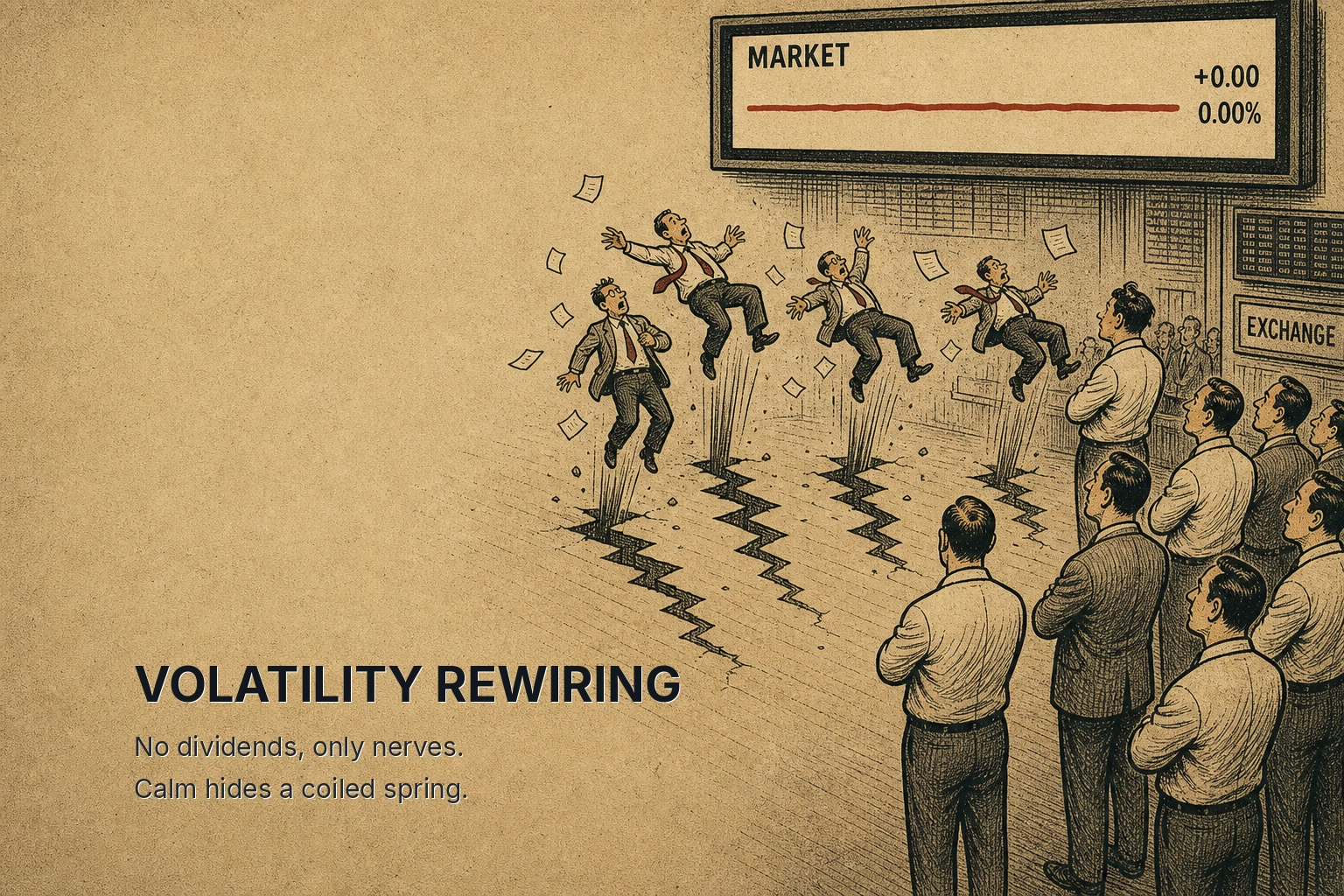
In November 2008, the Federal Reserve began buying mortgage-backed securities and Treasuries on a scale never seen before. Over the following six years its balance sheet grew from roughly $900 billion to $4.5 trillion. A generation of commentators predicted the consequence with total confidence: all those reserves would be lent out, the money supply would explode, and hyperinflation would follow. Gold would soar. The dollar would collapse.
None of that happened. Inflation stayed below the Fed's own 2% target for most of the decade. The people who predicted otherwise were not stupid; they were working from a model of banking that almost everyone is taught and that happens to be wrong.
The error is worth understanding precisely, because it is the same error that distorts commentary on quantitative tightening today.
What quantitative easing actually swaps
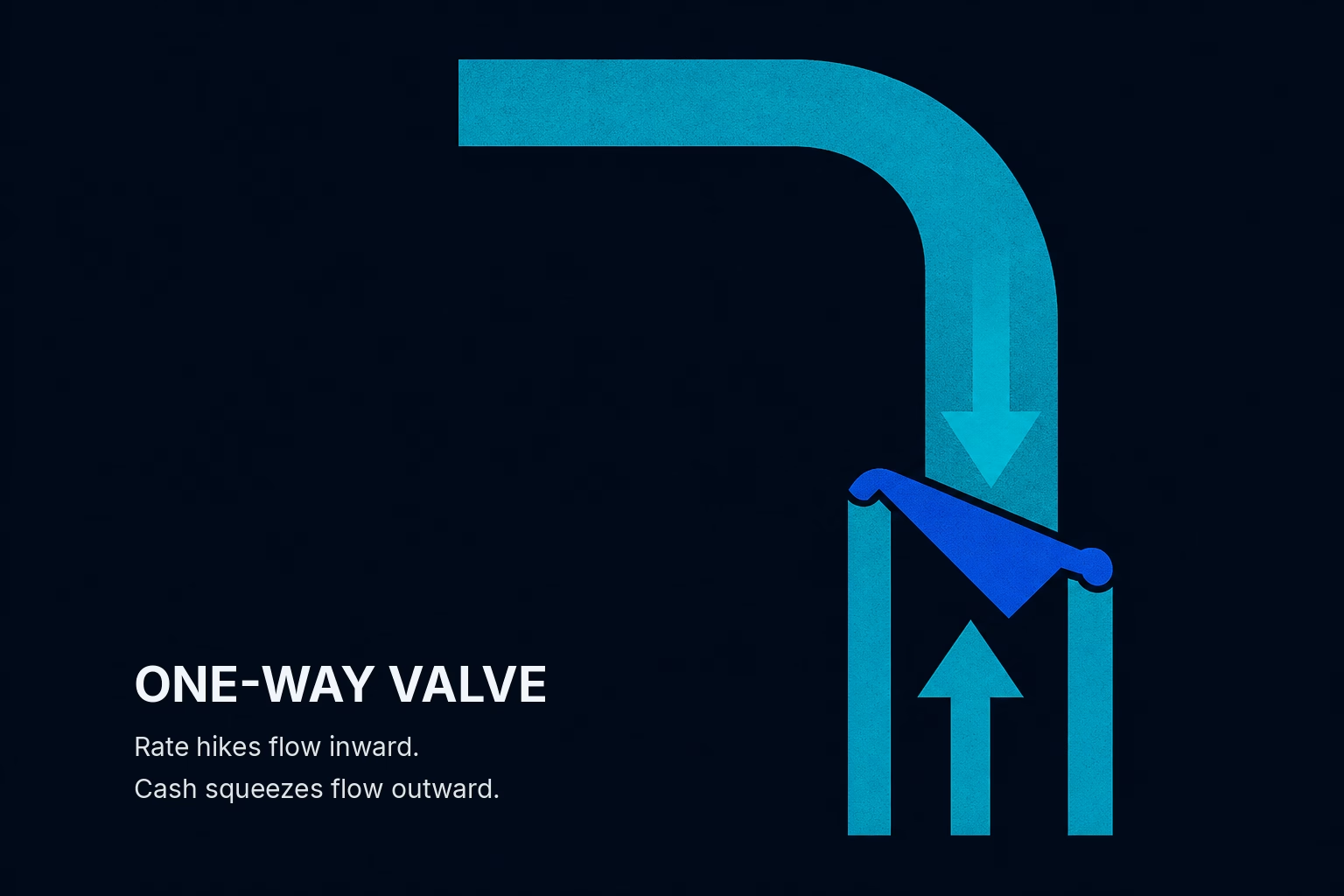
Start with the thing that gets misunderstood. Bank reserves are deposits that commercial banks hold at the central bank. They are the banking system's own checking account, and they exist only inside that closed loop. A bank cannot lend a reserve to a household or a business, because households and businesses do not have accounts at the Fed. Reserves are used to settle payments between banks, and nowhere else.
This single fact dismantles the "banks will lend out the reserves" story. There is no channel through which a reserve becomes a car loan.
So what does quantitative easing (QE) do? It is an asset swap. The central bank buys a bond, usually a Treasury or a mortgage-backed security, from a private holder. In exchange it credits the seller's bank with new reserves, and the bank credits the seller with a new deposit. The bond leaves the private sector; a deposit and a matching reserve take its place.
Notice what has and has not changed. The private sector's total financial wealth is roughly unchanged: a bond worth $100 became a deposit worth $100. What changed is the composition of that wealth. The private sector now holds fewer bonds and more cash-like deposits. QE does not inject net new money into the real economy in the way the myth implies; it changes what form the existing savings take.
The practical takeaway is that QE is a duration-and-safety operation, not a money-printing operation in the naive sense. It removes interest-bearing, longer-dated assets from private hands and replaces them with the most liquid instrument that exists.
Why quantitative tightening is the same swap in reverse
Quantitative tightening (QT) runs the operation backwards. The central bank lets bonds it owns mature without reinvesting the proceeds, or it sells them outright. When a bond it holds matures, the Treasury pays the Fed, and the reserves that the Treasury drew on to make that payment are extinguished. They do not go anywhere; they simply cease to exist, the same way the reserves created during QE were conjured from nothing.
Reserves are not a fixed pool that gets moved around. The central bank creates them by crediting an account and destroys them by debiting one. This is the part that trips up intuition trained on physical money. A dollar bill, once printed, persists until it is shredded. A reserve is a ledger entry, and a ledger entry can be created and unwound at will by the institution that maintains the ledger.
Under QT, the private sector ends up holding more bonds and fewer deposits. The composition shifts back. Someone has to absorb the bonds the Fed is no longer buying, which means the private sector's portfolio has to make room, and that is where the real effects live.
For a reader tracking policy, this reframes what a balance-sheet announcement means. The headline number, "the Fed is shrinking its balance sheet by $95 billion a month," tells you the size of the swap. It does not tell you the effect. The effect depends entirely on the next question. 
The question that actually matters: whose portfolio absorbs the swap
Here is the point the inflation-forecasters missed in 2008, and it is the point that matters today.
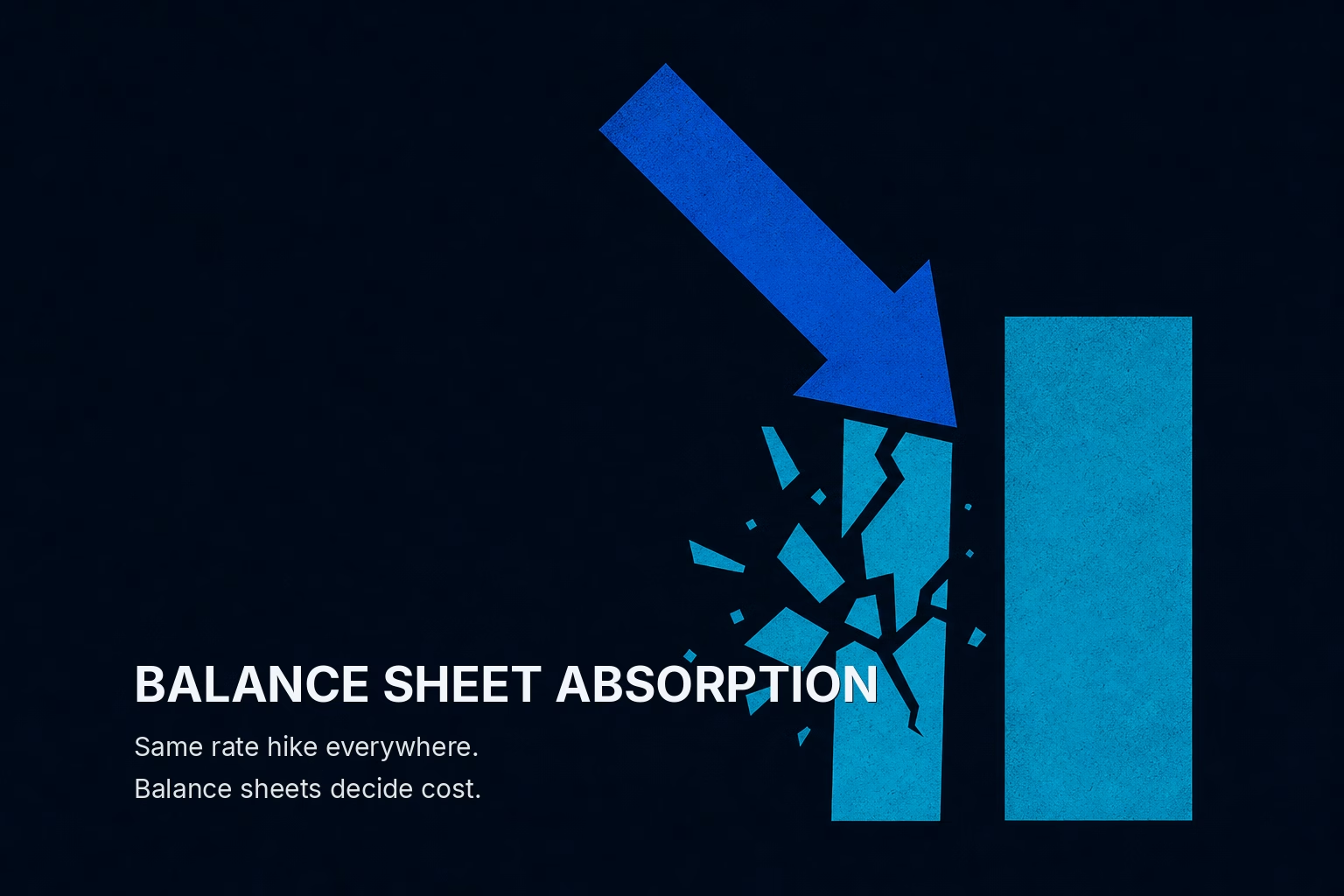
Whether a balance-sheet operation reaches asset prices depends on who sits on the other side of the swap and what they do next.
Consider two very different sellers during QE. Suppose the Fed buys a Treasury from a bank that was already going to hold it to maturity, purely for its safety and yield. The bank now holds a reserve instead of the bond. The reserve pays interest, it is perfectly safe, and the bank is happy to leave it sitting there. Nothing propagates. The liquidity stops at the bank's balance sheet. This is, broadly, what happened for much of the post-2008 decade: reserves piled up as excess reserves and did very little, because the institutions holding them wanted exactly what they were holding.
Now suppose instead the Fed buys the bond from a pension fund that has a mandate to stay fully invested. The fund is handed a deposit it does not want to hold as cash. It must redeploy into the next-best asset: corporate bonds, then equities, then whatever sits further out the risk curve. This is the portfolio-balance channel, and it is the mechanism through which QE actually influences asset prices. The seller who cannot sit still is the seller who transmits the effect.
So the same $100 billion of purchases can be nearly inert or highly stimulative, depending entirely on whose bonds were bought and what those sellers are obligated to do with the proceeds.
The practical implication is direct. When you read that the Fed is expanding or shrinking its balance sheet, do not ask "how big." Ask who is being forced to change their portfolio, and whether that party is a yield-indifferent bank content to hold reserves or a return-seeking investor who must chase the next asset. The first case is monetary theater. The second moves markets.
Why the 2008 forecasts failed, and where the mechanism still bites
The hyperinflation call failed because its authors assumed every reserve was a loan waiting to happen and every seller a spender waiting to spend. Neither was true. Reserves could not leave the interbank system, and the banks that ended up holding them were content to do so, especially once the Fed began paying interest on reserves in October 2008, which gave banks a risk-free reason to keep them parked.
The mechanism did not vanish, though. It surfaced in asset prices rather than consumer prices. Equities, credit, and real estate all inflated across the QE decade precisely because some sellers were return-seekers forced back out the risk curve. The liquidity went somewhere; it went where the portfolio-balance channel pointed it, into financial assets rather than groceries.
This mechanism has limits worth naming. When the banking system is short of reserves rather than swimming in them, the arithmetic changes character. In September 2019 the repo market seized and overnight rates spiked, because QT had drained reserves below the level banks needed to settle payments comfortably. There the quantity of reserves mattered enormously, because it had fallen to a genuine scarcity point. The lesson is that the portfolio-composition story dominates when reserves are abundant, and the raw-quantity story reasserts itself when they become scarce. Knowing which regime you are in is the whole game.
The reserves-are-created-and-destroyed picture, then, is not an accounting footnote. It tells you why the inflation everyone feared arrived in the stock market instead of the supermarket, and it tells you why the size of a QE or QT program is the least interesting number in the announcement. The number that matters is whose portfolio has to move, because that is what decides whether the liquidity ever leaves the ledger.