When Facebook went public in May 2012, its early backers could not sell for months. The first major lockup expiration in August 2012 released roughly 27...
When Facebook went public in May 2012, its early backers could not sell for months. The first major lockup expiration in August 2012 released roughly 271 million shares into a market already nervous about the company's mobile advertising. The stock traded near $20 that day, less than half its $38 IPO price. But here is the part that matters: the shares had already lost most of their value in the weeks leading up to the unlock, not on the unlock itself. By the time the actual sellers were free to sell, the price had done most of its adjusting.
That gap between when the damage happens and when the shares actually change hands is the whole mechanism. Understand it, and you stop confusing the calendar date with the trade.
What a lockup and a secondary actually are
A lockup is a contractual restriction that prevents insiders, early investors, and employees from selling their shares for a set period after an IPO, typically 90 to 180 days. The point is to stop a flood of insider selling from swamping a newly public stock before it has found stable hands. A secondary offering is different in timing but similar in effect: it is a sale of already-existing shares (by insiders or the company) into the public market, announced and priced on a known schedule.
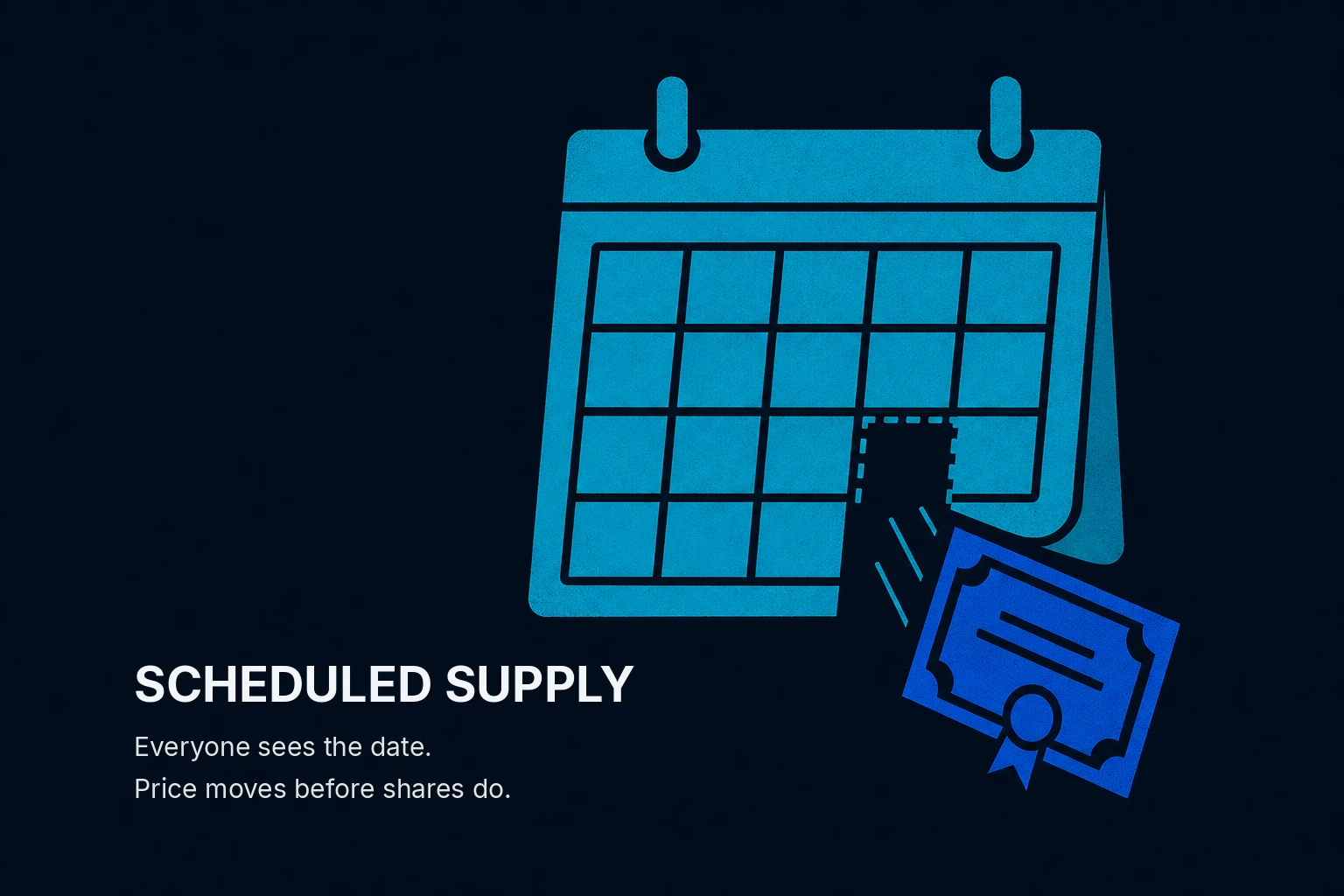
The feature both share is visibility. Lockup expiration dates are disclosed in the IPO prospectus. Secondary offerings are announced days in advance. This is supply you can mark on a calendar before it arrives.
Contrast that with an earnings surprise or a sudden downgrade, which the market cannot anticipate because the information does not exist until it is released. Known supply and unknown information behave in opposite ways. The practical consequence is that you should never treat a lockup date the way you treat a genuine surprise, because the market has had months to prepare for the first and no time at all for the second.
Why the price moves before the shares do
Why does the damage arrive early? Because markets price expected supply, not just realized supply.
Think through what a rational holder does when a large, known block of shares is about to become sellable. If you believe insiders will sell, and you believe the price will fall when they do, you do not wait until the unlock date to reduce your position. You sell in advance. So does the next holder who reasons the same way. The selling gets pulled forward as each participant tries to beat the crowd to the exit.
This is front-running in the descriptive sense: the market runs ahead of a known event. The stock drifts lower in the days or weeks before the unlock, short interest often builds, and the option market prices in extra downside. By the actual expiration date, much of the pressure has already been expressed in the price. 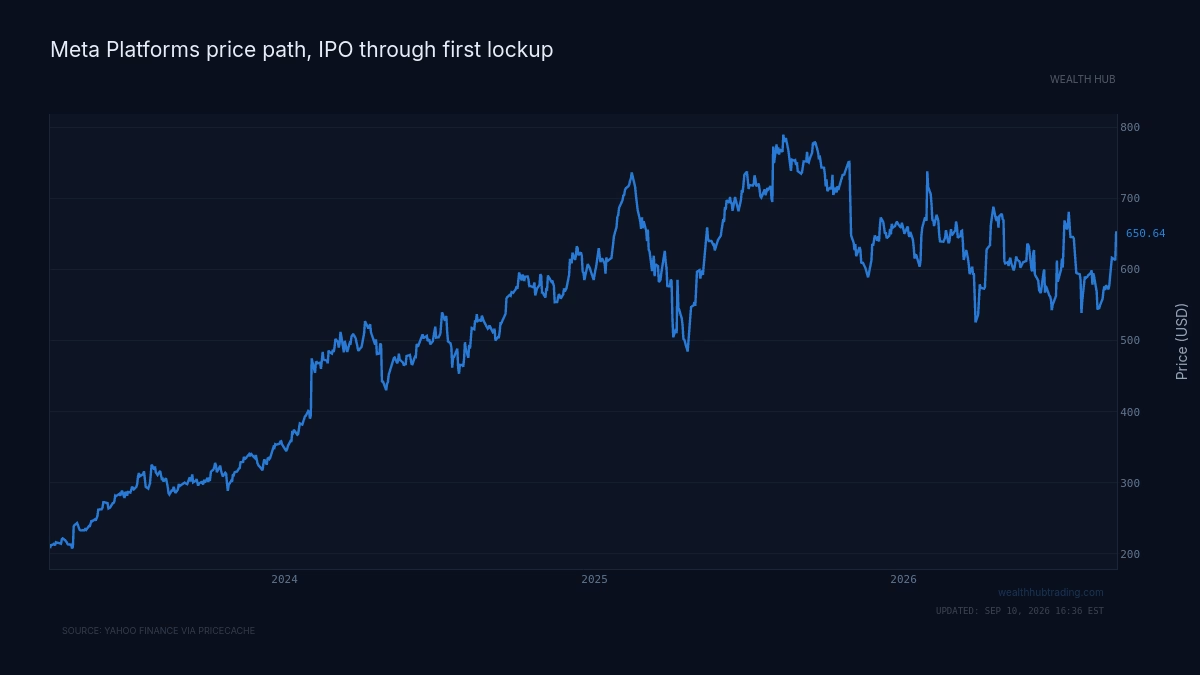
There is a second-order effect that most people miss. Because everyone expects weakness on the unlock date, the date itself frequently produces a relief bounce. The feared selling turns out to be smaller than positioned for, or the insiders who wanted out already sold through other channels, or the buyers who were waiting for cheaper shares step in. The supply was real, but the price had already absorbed it.
The practical implication here is direct: the unlock date is usually the worst day to short and often a reasonable day to start looking for a bottom. If you are trading the calendar, the setup is the flush that precedes the date, not the date.
The economic actors behind the flow
The mechanism only works because specific participants have specific incentives, and it is worth naming them.
Early venture investors and pre-IPO funds hold shares at a cost basis far below the public price. Their incentive is to lock in gains and return capital to their own investors, so a portion of them will sell mechanically once permitted, regardless of their view on the company. Employees holding vested stock have concentrated wealth in one name and a rational desire to diversify. Underwriters, who arrange secondary offerings, price them at a discount to the current market to ensure the block clears, which itself pulls the reference price toward the offering level.
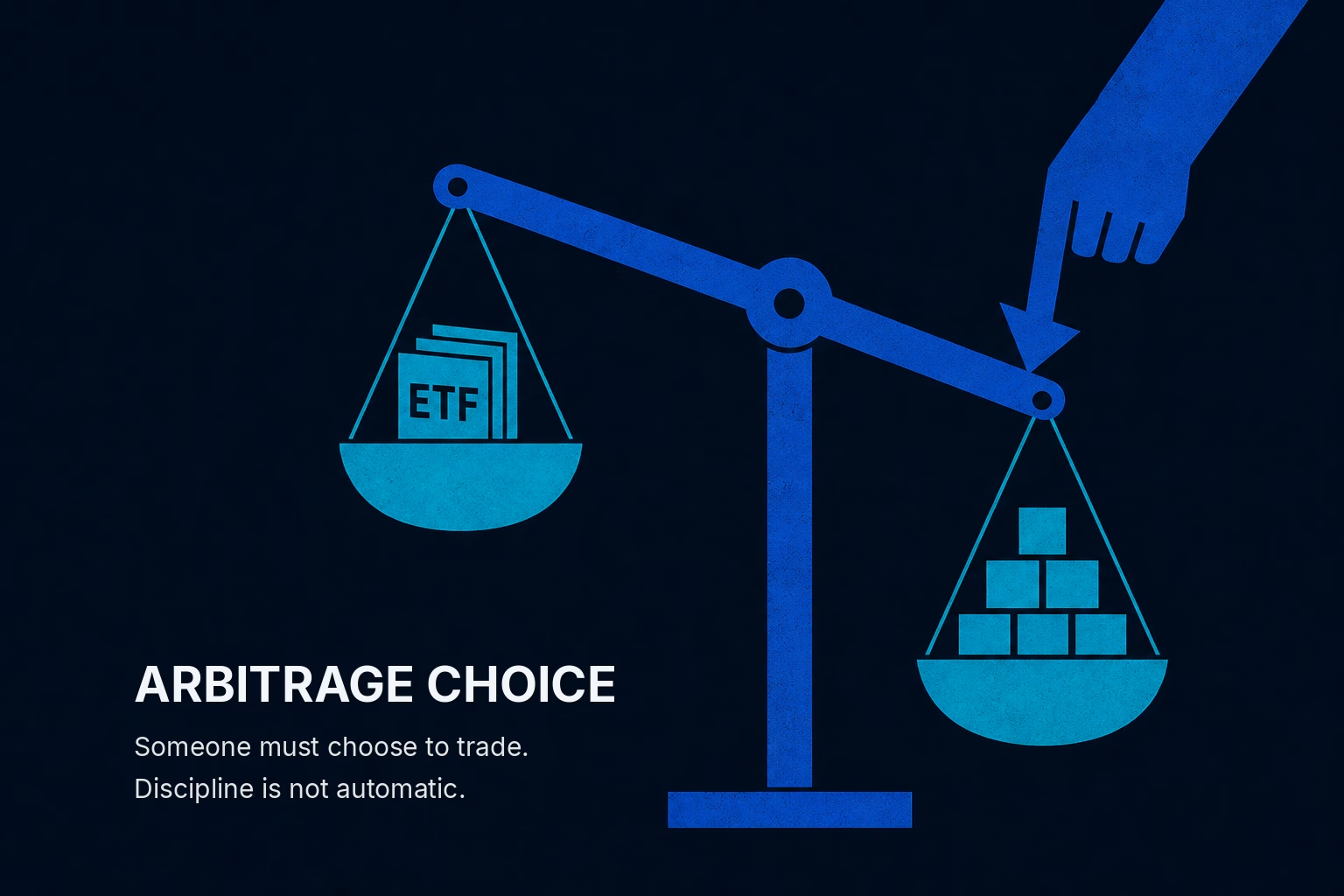
On the other side stand the buyers who want the shares but not at the pre-unlock price. Index funds may need to buy as the public float grows. Arbitrage desks that shorted into the unlock must eventually cover, which is buying pressure in disguise.
The date is where these two groups meet. The selling incentive is concentrated and predictable; the buying is patient and price-sensitive. That asymmetry is why the price tends to soften before the date and stabilize after, once the mechanical sellers have cleared and the patient buyers set the new floor. When you watch an unlock, you are watching a scheduled handoff from forced sellers to willing holders.
When the mechanism does not work
The pattern of early damage and post-date relief is a tendency, not a law, and it fails in identifiable ways.
The first failure mode is a lockup on a stock the market genuinely wants to own. If demand is strong and the float is tight, the new supply gets absorbed with barely a ripple, and there is no pre-unlock flush to trade at all. Some high-quality IPOs pass their unlock dates without any of the classic weakness because the marginal buyer outweighs the mechanical seller.
The second failure mode is when the unlock coincides with fresh bad news. If an earnings miss or a sector selloff hits in the same window, the price weakness is no longer just the calendar working; it is real information arriving on top of known supply. Here the post-date relief bounce does not come, because the supply was not the only problem. Separating scheduled supply from genuine deterioration is the hardest judgment in this setup, and getting it wrong is how a bottom-fisher catches a falling knife.
The third failure mode is crowding. When too many traders learn the same pattern, they all short into the unlock together, which can turn a modest drift into a sharp squeeze on the date as they scramble to cover. A well-known edge that everyone plays stops behaving predictably. The 2012 Facebook episode was legible partly because the mechanic was less crowded then than it is now.
What to do with this
Predictable supply is priced before it lands, so the calendar date marks the end of an adjustment that has mostly already happened, not the beginning of one. That single distinction reorders how you approach every lockup and secondary you encounter.
Read the prospectus for the unlock schedule the day the company goes public, so the dates are on your calendar months ahead. Watch the pre-unlock window for the drift and the buildup in short interest that tells you the market is front-running the supply. Then treat the date itself as the moment to check whether the selling was scheduled supply or something worse, and reserve your buying interest for the stabilization that follows a clean flush rather than the panic that precedes it. The shares you were afraid of are the shares the patient buyer wanted all along.