In February 2018, the S&P 500 fell about 10% in nine trading days, and the VIX, the market's benchmark index of expected 30-day volatility, more than do...
In February 2018, the S&P 500 fell about 10% in nine trading days, and the VIX, the market's benchmark index of expected 30-day volatility, more than doubled in a single session on February 5. What made the episode so violent was not the size of the equity drop. It was that so many participants had positioned for calm and so few for the break. Volatility-selling strategies that had worked for two years unwound in hours. The people who thought they were protected discovered that their protection was worth far less than the price they had paid for it.
That episode is the cleanest way to understand what put/call skew actually measures, and why the intuitive reading of it is backwards.
What the skew actually is
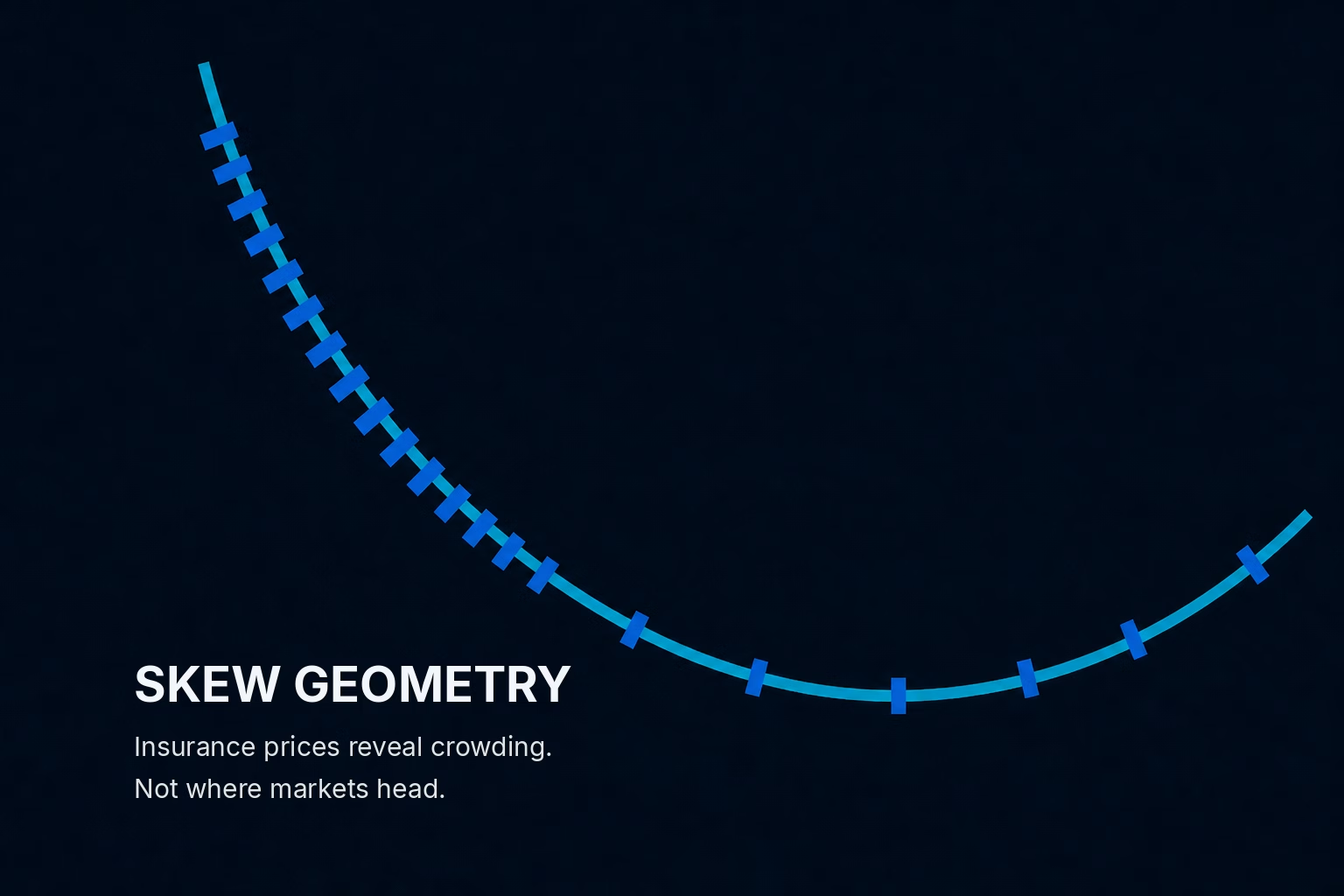
Put/call skew is the gap in implied volatility between out-of-the-money puts and out-of-the-money calls on the same underlying. Implied volatility is the market's estimate of future price movement, backed out of an option's price. When puts carry higher implied volatility than equidistant calls, the skew is steep, and steep skew is the normal state for equity indices. Investors pay more for downside protection than for upside participation because crashes happen faster than rallies.
Most readers treat a steepening skew as a fear gauge. Steeper skew, the reasoning goes, means the crowd is more afraid, and a fearful crowd is a bearish crowd. That reading is not wrong so much as it is looking at the wrong thing. Skew does not primarily tell you what the crowd feels. It tells you what the crowd has already bought.
Think of skew as an inventory reading rather than a sentiment reading. The price of downside protection rises when demand for it rises, and demand rises when buyers show up. By the time skew is extreme, those buyers have already transacted. The protection is now sitting in portfolios. What you are observing is not a warning that the crowd is about to hedge; it is confirmation that the crowd has finished hedging.
The practical consequence is immediate. When you see extreme skew, do not ask "what does the crowd fear?" Ask "who is left to buy the protection the crowd already owns?"
Why crowded protection pays less
Here is the mechanism that makes crowded hedges disappointing, and it runs through the dealers who sell the options rather than the investors who buy them.
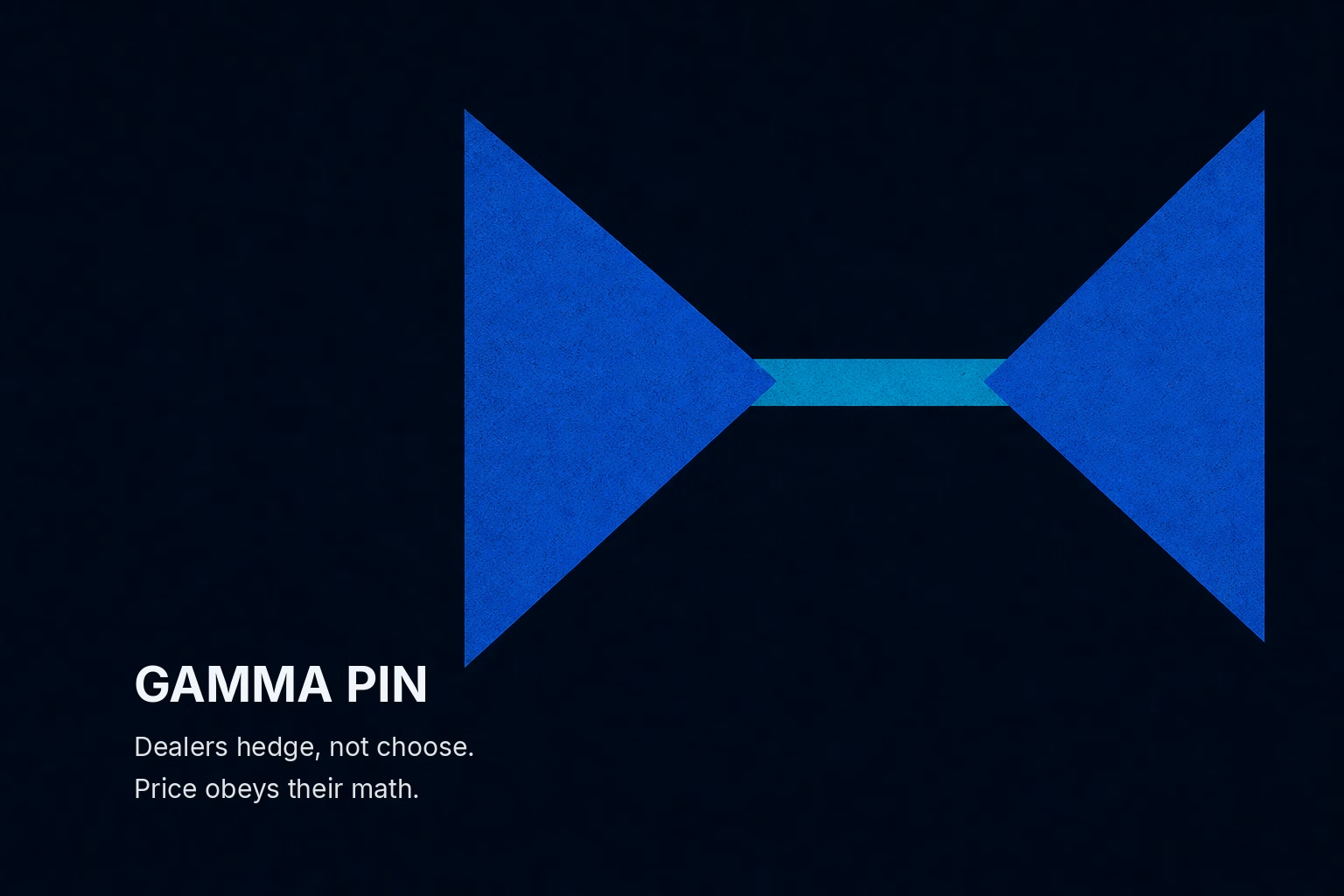
When you buy a put, someone sells it to you, and that seller is usually a market maker who does not want a directional bet. To stay neutral, the dealer hedges by shorting the underlying in proportion to the option's sensitivity to price, a quantity called delta. As the market falls, the put's delta grows, and the dealer must short more of the underlying to stay hedged. This selling into a falling market is the mechanical link between options positioning and the tape.
Now trace what heavy put ownership does to that link. When the crowd holds a large inventory of puts, dealers are on the other side, and their hedging behavior depends on whether they are net long or net short those options. When dealers are short large amounts of downside protection, a falling market forces them to sell more, which accelerates the decline. This is the negative-gamma condition, gamma being the rate at which delta itself changes. It is precisely the configuration that turned February 2018 from a correction into a cascade.
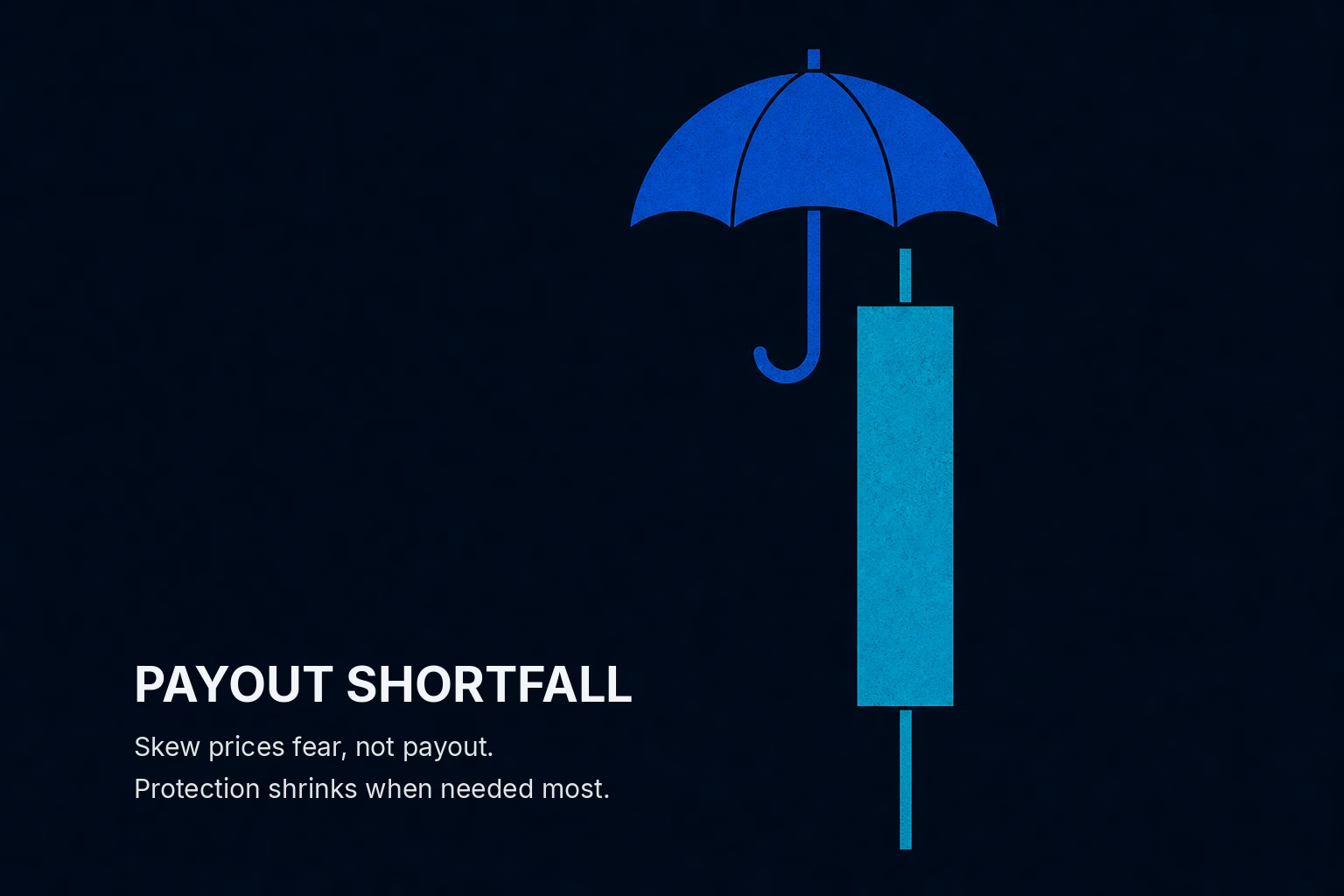
But the same crowding that can accelerate a move also caps the payoff for the people holding the protection. Consider what you paid. Extreme skew means downside puts were expensive when you bought them, because everyone else wanted the same thing. A protective position bought at a rich implied volatility has to overcome that premium before it pays. If the feared decline arrives but is smaller or slower than the option's pricing implied, the volatility you paid for never materializes, and the hedge expires worth less than it cost.
The payoff on a hedge is largest when you own protection nobody else wants. It is smallest when you own the protection everyone bought at the same time.
A worked example of the premium problem
Numbers make the premium drag concrete. Suppose the index trades at 100, and you want a put struck at 90, giving you 10 points of downside coverage before the option is in the money.
In a calm market with modest skew, that put might carry an implied volatility of 20%, and cost roughly 1.5 points. In a crowded, high-skew environment, the same 90-strike put might carry an implied volatility of 35%, and cost roughly 3.5 points. Same strike, same coverage, more than double the price.
Now the decline arrives, and the index falls to 88. Your put is 2 points in the money. In the first case you paid 1.5 and collect 2, a net gain of 0.5 points. In the second case you paid 3.5 and collect 2, a net loss of 1.5 points. The identical market outcome produced a profit for the cheap hedge and a loss for the expensive one. The difference was not the forecast. It was the entry price, and the entry price is exactly what extreme skew inflates.
The lesson is that a correct directional call can still lose money when the protection was bought into a crowd. What you must test before hedging is not only whether the decline will come, but whether it will be large enough and fast enough to clear the premium the skew has already priced in.
When the reading breaks
Skew as a crowding gauge is a probabilistic edge, not a law, and it fails in identifiable ways.
The first failure is the genuine tail. Sometimes the crowd hedges heavily because a real, large decline is coming, and the protection pays enormously despite being expensive. October 1987 and March 2020 were episodes where even richly priced downside protection delivered, because the moves were violent enough to swamp any premium paid. Extreme skew is a warning that payoffs are compressed, not a promise that the tail will not arrive. The compression is real; so is the occasional tail that overwhelms it.
The second failure is confusing the level of skew with its change. A steep skew that has been steep for months carries different information than a skew that just lurched steeper. The inventory reading depends on flow, on protection being freshly bought, not on protection that has sat in place through several expirations and been partly rolled off. Reading a static high level as fresh crowding is a common error.
The third failure is index skew masking single-name behavior. Index puts and single-stock options price different fears, and a calm index skew can coexist with violent skew in individual names during a rotation. The gauge is only as good as the match between the instrument you are reading and the exposure you actually hold.
None of these failures overturns the core mechanism. They define its boundaries. The edge is in knowing that crowded protection tends to pay less, while remembering that "tends to" is not "always."
What to do with the reading
The practical use of put/call skew is not to read it as a mood ring for the market. Read it as a measure of how crowded the insurance trade has become, and let that shape when you buy protection rather than whether you fear a decline.
When skew is extreme, the crowd has already paid up for downside coverage, dealer hedging is positioned to accelerate a move if it comes, and your own protection will be expensive and lower-yielding than it looks. That is the worst moment to join the crowd buying puts, and often a reasonable moment to be the one selling the overpriced protection to them, provided you can survive the tail if it arrives.
When skew is unusually flat, the opposite holds. Protection is cheap because nobody wants it, which is usually the best time to own it.
The single sentence to keep: the price of a hedge tells you how many people already own it, and the payoff on a hedge is largest exactly when the fewest people do.