In February 2018, a product called XIV lost more than 90% of its value in a single evening. XIV was an exchange-traded note that made money when stock m...
Traders who held it had collected steady gains by effectively selling insurance against a market panic that never came. Then, on February 5, the VIX (the index that measures expected S&P 500 volatility) roughly doubled in one session. The note was designed to invert the VIX daily, and a doubling of the underlying was mathematically close to a wipeout. By the next morning, the issuer announced it would shut the product down.
The people who owned XIV had been harvesting something real. They were not fools chasing a mirage. They were collecting the volatility risk premium, a genuine and persistent feature of options markets. What destroyed them was not that the premium was fake. It was that they had no capacity to survive the single day on which the premium was collected back.
What the premium actually is
The volatility risk premium is the gap between two numbers that sound similar and behave very differently.
Implied volatility is the volatility priced into an option today. It is the market's forward guess, extracted from what people are willing to pay for protection. Realized volatility is what actually happened, measured after the fact from the price moves that occurred. The premium is simply the tendency of the first number to sit above the second.
Across long histories of the S&P 500, implied volatility has averaged a few points higher than the realized volatility that followed. An option seller who repeatedly sold protection at the implied level and paid out only the realized level would, on average, keep the difference. That difference is the premium. It is not an anomaly that arbitrage should have erased, and it has survived decades of people knowing about it.
Why does it persist? Because it is not free money. It is payment for a job nobody wants: standing ready to cover a rare, violent loss.
Why sellers demand payment
Consider who is on each side of an index put option. The buyer is usually a pension fund, an insurer, or a portfolio manager who wants protection against a crash. For them, a market collapse is not just a loss; it arrives at the worst possible moment, when their other assets are also falling and their clients are panicking. They will pay more than the mathematically fair price to offload that specific risk, because the risk is concentrated in exactly the states of the world they most fear.
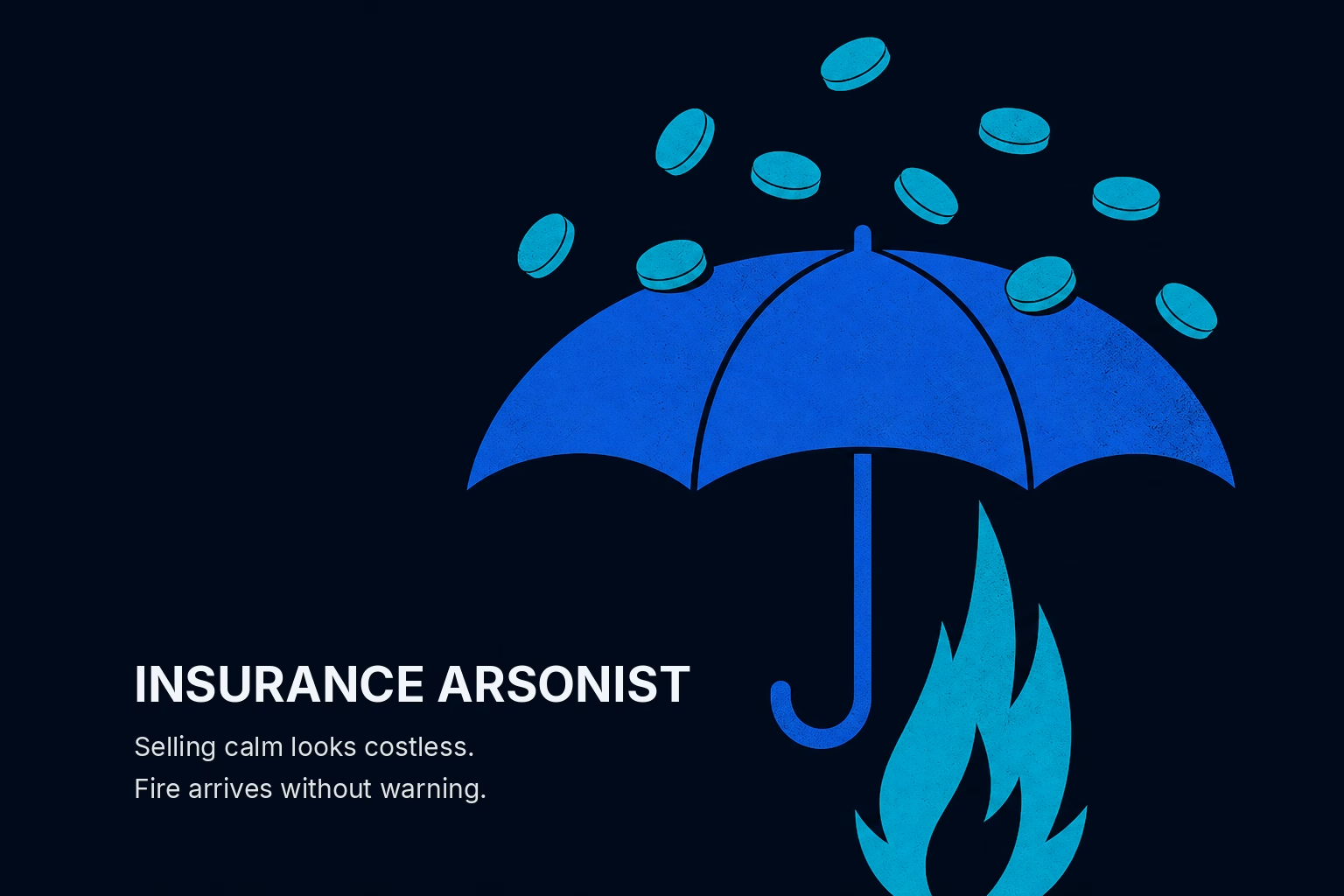
The seller takes the opposite position. To be willing to hold it, the seller demands compensation above the expected payout. This is the same logic that governs fire insurance. An insurer charges more than the average expected claim, because the claims do not arrive smoothly. They arrive in clusters, when a whole neighborhood burns at once, and the insurer must hold enough capital to survive that clustered demand.
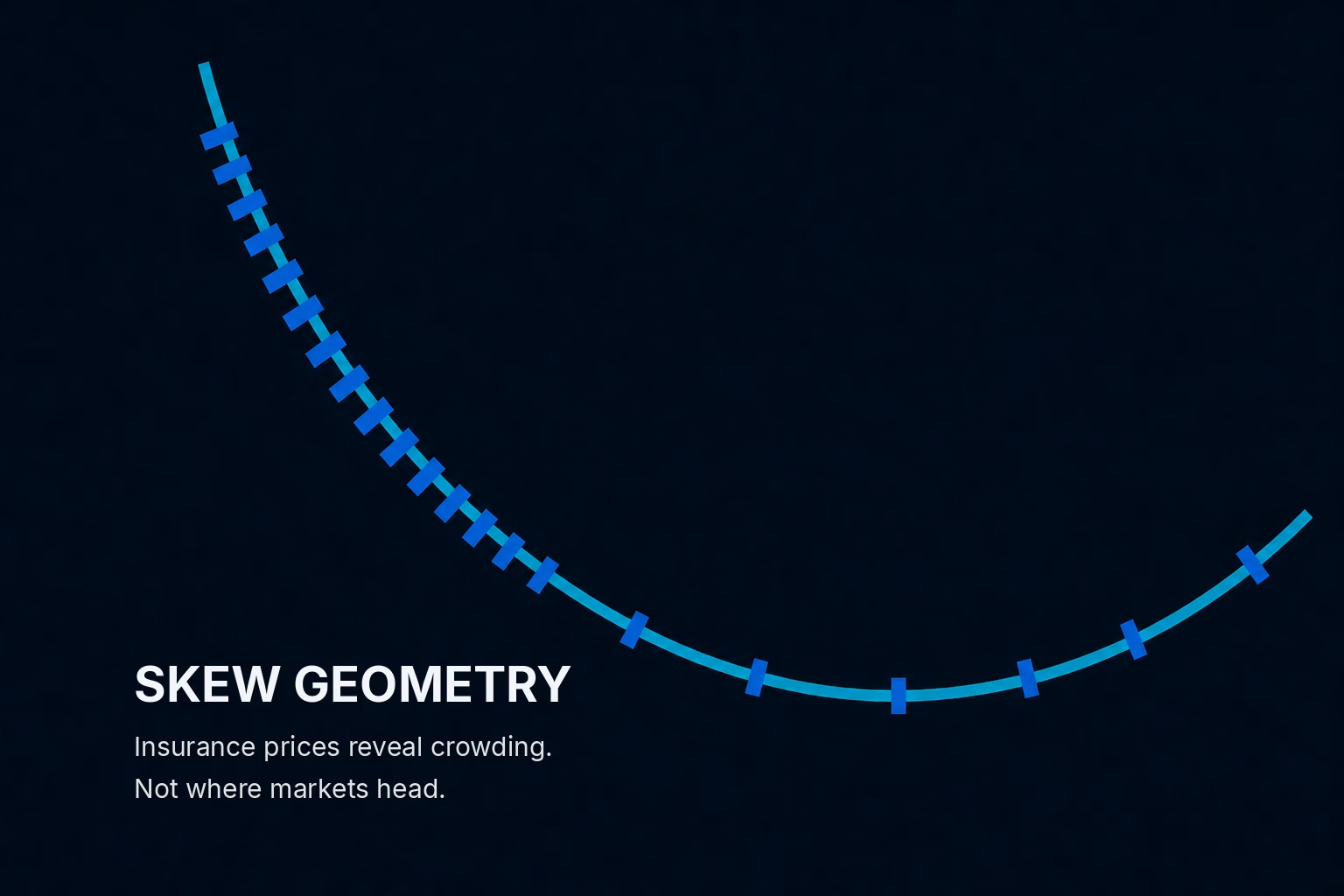
The technical name for the shape of this risk is negative skew. The return distribution of an option seller is not symmetric. Most outcomes are small positive gains, collected steadily. A few outcomes are enormous losses, arriving suddenly. The seller wins often and loses rarely, but the rare loss is large enough to erase a long run of wins.
What this means for you: the premium is not compensation for taking average risk. It is compensation for taking tail risk, and tail risk is invisible on every ordinary day.
The mechanism that moves the tape
Here is the part that consensus, watching price, tends to miss. On the days the premium is collected back, the losses are not random. They are amplified by the hedging behavior of the people who sold the options in the first place.
When a dealer sells a put, the dealer does not want the raw directional exposure. The dealer hedges it by selling a small amount of the underlying index, adjusting continuously as the market moves. This is called delta hedging. In calm markets, this hedging is minor and stabilizing. But when the dealer's position carries what traders call negative gamma, the required hedge grows as the market falls. A falling market forces the dealer to sell more, which pushes the market lower, which forces more selling.
This is the flow that turns an ordinary decline into an air pocket. The February 2018 event was not driven by news; there was no fresh catastrophe that afternoon. It was driven by mechanical selling. Products short volatility had to buy volatility back to cover their exposure as the VIX rose, and that buying itself drove the VIX higher, which forced more covering. The feedback loop was the story. The tape simply reported it.
Trend-following funds, known as CTAs, add a second layer. Their models cut equity exposure as volatility rises and momentum turns down, so they sell into weakness on a schedule that has nothing to do with valuation. When dealer hedging and CTA de-risking point the same direction at the same time, the decline accelerates far beyond what the underlying news would justify.
What this means for you: the days the volatility premium is collected from you are engineered to be worse than a normal drawdown, because the market's own hedging machinery is leaning on the same door you are trying to escape through.
Why the premium survives anyway
If everyone can see this, why has arbitrage not competed the premium away?
Because harvesting it requires capital that most participants cannot commit and a tolerance for ruin that most cannot stomach. To sell volatility safely, you must size the position so that the worst plausible day does not end you. That means holding far more capital in reserve than the average day appears to require, which drags your returns down toward the merely acceptable. The strategies that look most impressive on a smooth equity curve are precisely the ones that have not yet met their February.
The premium is real and harvestable. It is also exactly as durable as your ability to remain solvent on the day it is collected back in full. Those two facts are not in tension. They are the same fact stated from two sides. The compensation exists because the survival requirement is genuinely hard, and anyone who removes the survival requirement by using too much leverage is not harvesting the premium. They are selling a lottery ticket on their own continued existence and pocketing the difference until it comes due.
Long-Term Capital Management, the hedge fund that collapsed in 1998, was in the broad sense running related trades: collecting small, reliable spreads that assumed the tail would stay quiet. When Russia defaulted and correlations converged toward one, the tail arrived, the leverage that had made the strategy look brilliant became the mechanism of its destruction, and the fund was gone in weeks.
The practical takeaway
The volatility risk premium rewards sellers because buyers overpay to offload a risk that hurts most when everything else is already hurting, and the seller's payment is compensation for surviving that clustered, hedging-amplified tail.
If you intend to harvest it, the question is never whether the premium is real. It is. The only question that matters is whether you have sized the position so that the worst day the market's own hedging flows can manufacture leaves you still standing to collect again. Size for the day that ends the average seller, not for the average day. That single discipline is the entire difference between owning the premium and being owned by it.